What Is The Best Month To See The Great Barrier Reef From Cairns?
A month by month guide to the best time to see the Great Barrier Reef from Cairns, using Bureau of Meteorology climate averages, stinger and cyclone calendars, and the current reef condition data.
What Is The Best Month To See The Great Barrier Reef From Cairns?
For most travellers the best single month is July, when Cairns averages just 33.2 mm of rain, a daily maximum of 25.9 C and a minimum of 17.2 C, and the stinger risk that peaks from November is at its lowest. September and October run close behind: 34.1 mm and 47.2 mm of rain, tops around 28 to 30 C, warm water without peak-season crowds. There is no bad month, only trade-offs.
Those figures come from the Bureau of Meteorology's long-term averages for Cairns Aero, computed from records stretching back to 1942, so they describe the climate rather than any one fortnight. The same station records an annual average maximum of 29.1 C and about 2,025 mm of rain a year, most of it falling between January and April. That single fact shapes every reef day trip out of Cairns: the dry winter months give the most reliable sailing and the wet summer months give the warmest water and the greenest rainforest.
The practical picture is bigger than rainfall. Three calendars overlap on a Cairns reef trip, and the best month sits where all three line up in your favour: the weather calendar from the Bureau of Meteorology, the stinger calendar that Cairns Regional Council frames as November to June with a caveat that stingers are possible in any month, and the tropical cyclone season that runs officially from 1 November to 30 April. Add price and crowd cycles, and July edges the field for a first visit. Knowing the other side of the calendar matters just as much, and our guide to the months when Cairns stacks against a reef day trip shows which conditions to avoid and which tours still run anyway.
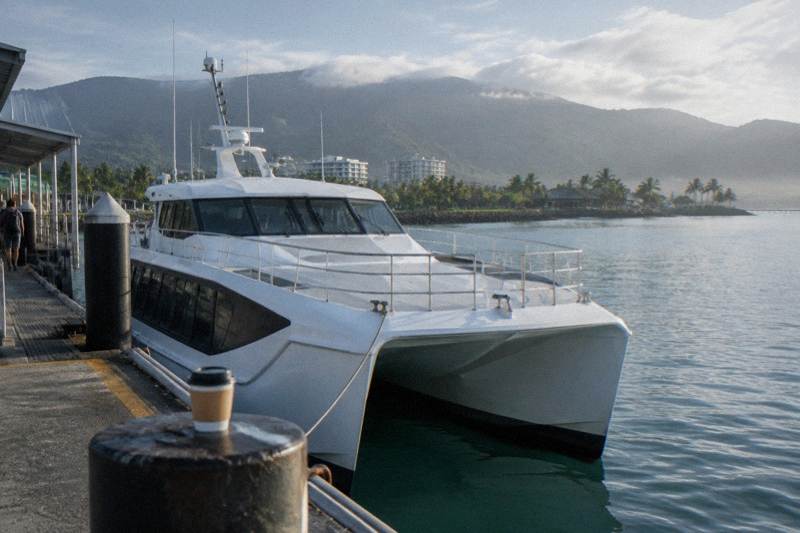
Every month of the year, some deck leaves Cairns for the reef. The Green Island Great Barrier Reef Tours site compares the ones that matter, from the big catamarans to small sailing boats, and this article works through which month suits each of them. The Great Adventures catamaran, rated 4.4 from 1,933 reviews and from A$112 per person, runs all year with a crossing of roughly 45 minutes, which is short enough that a choppy day matters less than it would on a two-hour outer-reef run.
Which Months Have The Best Weather In Cairns?
June through September is the most reliable weather window: monthly rainfall averages fall from 45.5 mm in June to 26.5 mm in August before rising to 34.1 mm in September, and daily maxima sit between 25.9 and 28.2 C. May and October are close behind, at 92.0 and 47.2 mm of rain. January to March, at 404.8 to 437.5 mm each, are the wettest months by a wide margin.
That August figure of 26.5 mm is the driest month on the Cairns record, and it arrives with a 26.7 C daily maximum and an 17.4 C overnight minimum, which is why winter is peak season for visitors from the southern states escaping the cold. Humidity is at its lowest, the trade winds blow steadily, and cancellation rates on reef trips drop simply because there are fewer thunderstorms to sail around. The trade-off is crowds and peak pricing on accommodation.
| Month | Average daily max (C) | Average daily min (C) | Average rainfall (mm) |
|---|---|---|---|
| January | 31.5 | 23.8 | 404.8 |
| February | 31.3 | 23.8 | 437.5 |
| March | 30.7 | 23.2 | 422.1 |
| April | 29.4 | 21.8 | 201.8 |
| May | 27.7 | 20.0 | 92.0 |
| June | 26.1 | 18.0 | 45.5 |
| July | 25.9 | 17.2 | 33.2 |
| August | 26.7 | 17.4 | 26.5 |
| September | 28.2 | 18.8 | 34.1 |
| October | 29.7 | 20.7 | 47.2 |
| November | 30.8 | 22.4 | 87.9 |
| December | 31.5 | 23.4 | 193.8 |
The table makes the pattern plain: rainfall collapses between June and September and rebuilds from December onward. The summer months are not uniformly drenched, they are burst-prone, and the winter months are not uniformly dry either, they are simply the least likely to interrupt a planned day on the water. Every row is a long-term average, so treat it as a probability sketch rather than a forecast.
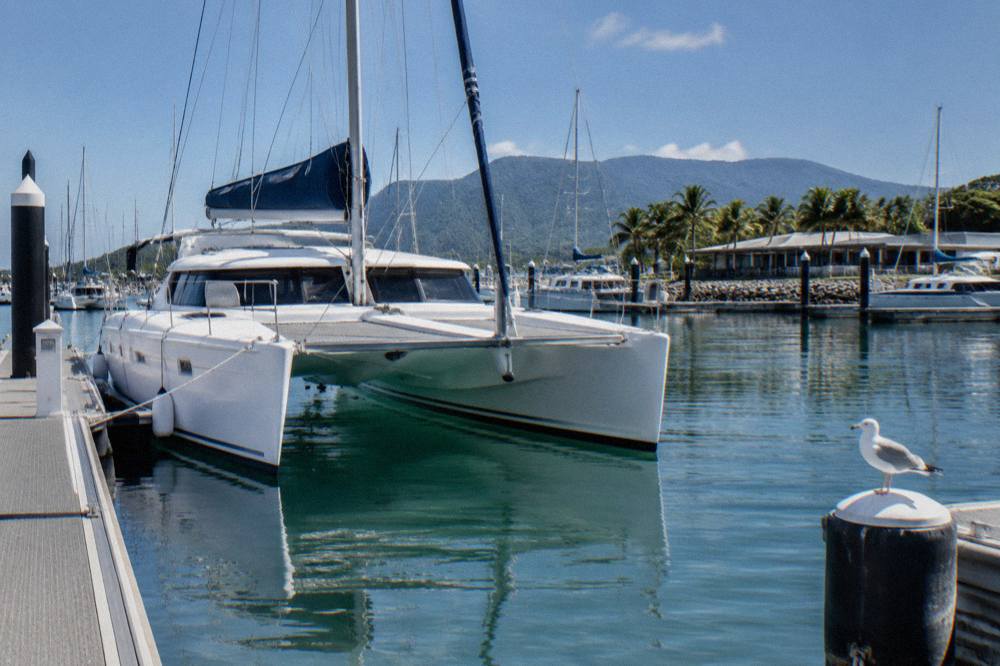
Shoulder months reward flexibility. May brings 92.0 mm of rain on average but a still-warm 27.7 C maximum, and October combines a 29.7 C top with only 47.2 mm. Both sit at the edge of the stinger and cyclone calendars, so a suit or a weather watch is wise, but the days are long, the water is warm, and the deck space is easier to find. The Ocean Free schooner, rated 4.9 from 682 reviews and from A$289 per person, is exactly the kind of small-group trip where a quieter month changes the feel of the whole day.
One caution: averages hide variance. A wet-season month can still string together a week of glassy mornings, and locals know the reef is often at its best early in the day before afternoon convection builds. Book the date you can, then book the earliest departure on it. The Great Adventures sailings leave Cairns at 8:30am and 10:30am, and the Big Cat full day leaves at 9am or 11am, so the morning option gives you the calmest water on most days of the year.
When Is Stinger Season And Does It Change The Answer?
Stinger season in Cairns runs from November to June, when marine stingers are of particular concern, though Queensland Parks warns they may be present in coastal waters at any time of the year. For reef trips the answer is a stinger suit, not a cancelled holiday: operators supply or hire lycra suits, and the safest months are July to October.
The Cairns Regional Council's guidance is blunt: wear a stinger suit during stinger season. Queensland Parks applies the same warning to Green Island specifically, adding that stingers occur more frequently in the warmer months rather than being confined to them. There is no stinger-free month, so any article promising one is guessing. What changes across the year is risk, and the austral winter sits squarely in the lower-risk window.
Suits are less of an imposition than visitors expect. A full-body lycra suit also protects against sunburn and, in the winter months, takes the edge off cooler water. On the Ocean Free sailing tours with optional diving, from A$289 per person and rated 4.8 from 413 reviews, wetsuits and lycra suits are listed among the included gear, so the stinger question is largely handled before you board. On the big catamarans, gear hire is stated on each listing, so check the fare type you selected.
The stinger calendar interacts with the family question. If you are travelling with young children in January, the combination of 31.5 C days, high humidity and suit requirements can test patience, while the same trip in July is a simpler proposition. For non-swimmers, the stinger question barely arises at all: the Seawalker helmet dive, from A$289 per person and rated 4.1 from 98 reviews, keeps your head dry inside a helmet, and the glass-bottom boat and semi-submarine options keep you out of the water entirely. Both run year round.
What About Cyclone Season And The Wet Months?
The official Australian tropical cyclone season runs from 1 November to 30 April, and the wettest Cairns months, January to March, sit inside it, averaging 404.8, 437.5 and 422.1 mm of rain respectively. A cyclone actually crossing near Cairns in any given week is uncommon, but January to March carries the highest chance of a trip being rescheduled.
Cyclones are a coast-wide fact, not a reef-trip footnote. The 2026 season delivered a live example: Severe Tropical Cyclone Narelle crossed the Far Northern region as a category 5 system in March, and GBRMPA's end-of-summer snapshot recorded wave damage to reefs between Cairns and Lizard Island. Day trips resumed as conditions allowed, and operators reschedule rather than sail into warnings, but the risk of losing a planned day is real in the deepest wet-season months.
The practical defences are boring and effective. Book with free cancellation, which every tour on this site carries, and keep a spare day in your itinerary if you travel between January and March. Check the Bureau of Meteorology's cyclone pages, which publish the official season dates and current watch information, in the week before you travel. If a system is anywhere near the Coral Sea, the operator will contact you about moving the date rather than risk the crossing.
Wet-season travel still has genuine appeal. Rain in the tropics often falls in heavy afternoon bursts rather than all day, the island rainforest is at its most lush, and prices on flights and rooms drop hard after the school holidays end. The two-islands day run by Big Cat, from A$196 per person and rated 4.1 from 187 reviews, splits its time between Fitzroy and Green Islands with over six hours on the water, and a flexible wet-season date can mean far more deck space per passenger than an August equivalent.
What Does The Latest Reef Condition Data Say About Timing?
The latest AIMS survey, released in August 2026, puts hard coral cover in the Northern Great Barrier Reef at 35.1 percent, up from 30.0 percent the year before and above the 27.0 percent long-term average, with the Central region at 31.6 percent. That is a recovery signal after the 2024 bleaching event, and it says the reef is worth visiting in any month you can get there.
The nuance matters. GBRMPA's snapshot for the summer of 2025 to 2026 recorded a regional coral bleaching event in the Northern region that became apparent in March 2026 after prolonged heat exposure, alongside the cyclone damage noted above. Yet the same monitoring programme found most surveyed reefs stable or improving, and by August 2026 GBRMPA reported sea surface temperatures close to average, with the Northern region around 0.1 to 0.3 C above. The reef is a dynamic system, and the long-term trend in this region is currently upward.
No official source publishes a Green Island-specific condition report, and this site will not invent month-by-month visibility or water-temperature figures, because none exist in citable form. What you can rely on is regional: the waters around Cairns are inside a region whose coral cover is above its long-term average, and the boats that take you there run 12 months a year. If reef health is your reason for timing the trip, the honest answer is that the data favours going sooner rather than later, in whatever month your life allows. Whenever you go, it helps to know why Cairns became the gateway city for reef trips, especially if the short hop to Green Island appeals more than a long day at sea.
For a deeper treatment of the health question, read the companion piece on whether the Great Barrier Reef is dead, which unpacks the AIMS and GBRMPA numbers in full. For the weather side of timing, the Green Island weather and best time to visit guide carries the fuller climate breakdown.
How Do You Choose A Month By What You Want From The Trip?
Pick July for the safest all-round mix of dry, mild and low-stinger conditions. Pick August for the driest air and smallest rain risk. Pick September or October for warm water, low rain and thinner crowds. Pick December to March if you want lush rainforest, warm nights and shoulder pricing, accepting suits, storms and a reschedule risk. April and May are the recovery months as rain falls away.
The month choice is really a traveller-type choice. A family with primary-school children is bound to school holidays, so the July window matters more to them than any average. A couple chasing a quiet sailing day will take an October weekday over an August Saturday without hesitation. A diver logging hours cares more about wind forecasts than rainfall totals, because wind is what stirs the surface. Match the month to your constraint, not to a single league table.
| Traveller goal | Best months | Why, from the record |
|---|---|---|
| Lowest rain risk | August, then July and September | 26.5, 33.2 and 34.1 mm monthly averages |
| Warmest days | December to March | Daily maxima of 30.8 to 31.5 C |
| Lowest stinger concern | July to October | Outside the November to June peak-risk window |
| No cyclone-season exposure | May to October | Season runs 1 November to 30 April |
| Quietest decks and lower prices | February, March, November | Wet-season and shoulder months outside peak travel |
| Lush rainforest, warm nights | January to March | Heavy rain feeds the island forest; minima above 23 C |
Money follows the calendar too. The Green Island tours compared here run from A$110 per person for the Big Cat full day, rated 4.5 from 1,727 reviews, up to A$429 for the fly-and-cruise package with GSL Aviation. Those from-prices hold year round, but flights and hotels around them do not. Travellers who can take a February or November date often find the total trip cost falls by more than the tour price difference between a budget catamaran and a small-group sail. If cost drives the decision, the cost breakdown for a Green Island trip from Cairns runs the full numbers.
Which Tour Suits Each Month Of The Year?
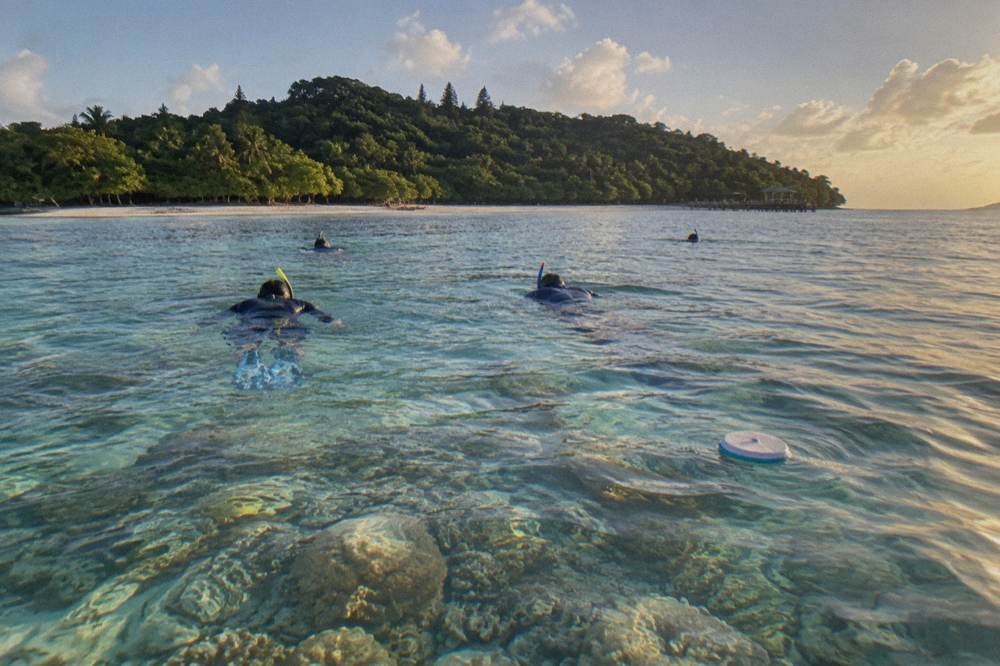
In the dry months of June to October, every product shines: the Great Adventures catamaran, the Big Cat full day and the Ocean Free schooner all run at their most reliable. In the wet months, favour short crossings and flexible fares: Green Island sits 45 minutes offshore, free cancellation is standard on every tour on this site, and full-day trips can be moved if a storm cell parks over the marina.
The Great Adventures cruise, from A$112 per person, is the most reviewed tour on this site: 4.4 from 1,933 reviews. That half-day and full-day structure also makes it the easiest trip to reschedule around weather, since it sails twice daily from the Reef Fleet Terminal. The Big Cat full day, from A$110 per person, is its direct rival on price. It departs Marlin Wharf at 9am or 11am. Both are big, stable catamarans, a genuine comfort factor in the shoulder months when the trade winds blow.
The Moore Reef pontoon combo changes the month calculus slightly. At from A$312 per person and rated 4.6 from 98 reviews, it pairs two hours on Green Island with three hours on an outer-reef platform, and a fixed platform is the most weather-tolerant way to spend half a day in the water, because the pontoon anchors the experience regardless of surface chop. For travellers who booked a wet-season date and still want maximum water time, that structure beats a drift snorkel from a boat.
Small-group sailing rewards the calm months most. The Ocean Free schooner carries fewer passengers, includes lunch and a complimentary glass of wine on the return leg, and its 4.9 rating from 682 reviews reflects the intimacy that a 9-hour small-boat day makes possible. That same intimacy is the reason to be choosy about the month: a 9-hour small-boat day in July is a different experience from the same day in a gusty February. Book the sail in the dry window and the big catamaran, with its shorter exposure, in the wet one.
Common Questions About The Best Reef Month
What Is The Best Month To See The Great Barrier Reef From Cairns?
July is the strongest single pick, averaging 33.2 mm of rain, a 25.9 C daily maximum and an 17.2 C overnight minimum, all with stinger risk at its annual low. September and October are close behind, with only 34.1 and 47.2 mm of rain and warmer days. There is no closed season; every listing on this site runs year round.
Is The Great Barrier Reef Worth Visiting In The Wet Season?
Yes, with adjustments. Rain often falls in afternoon bursts rather than all day, the rainforest is at its most lush, and prices drop. Accept a stinger suit, possible humidity and a small chance of rescheduling, and keep a spare day in your itinerary between January and March.
When Is Stinger Season In Cairns?
Cairns Regional Council frames stinger season as November to June, when marine stingers are of particular concern. Queensland Parks warns that stingers may be present in coastal waters at any time of the year. Wear a stinger suit in the warmer months, which most operators supply or hire, and swim between the red and yellow flags.
Do Cyclones Affect Green Island Day Trips?
The official cyclone season runs from 1 November to 30 April. A cyclone crossing near Cairns in any given week is uncommon, but operators reschedule rather than sail into warnings, so book with free cancellation and check the Bureau of Meteorology in the week before you travel.
Which Month Has The Least Rain In Cairns?
August, with a long-term average of 26.5 mm for the month, followed by July at 33.2 mm and September at 34.1 mm. June averages 45.5 mm. All four months sit well outside the January-to-April peak, when monthly averages run from 201.8 mm in April to 437.5 mm in February.
Is The Reef Healthier In Some Months Than Others?
Regional reef condition is measured annually, not monthly. The latest AIMS survey, released in August 2026, records Northern Great Barrier Reef hard coral cover at 35.1 percent, above the 27.0 percent long-term average. No official source publishes month-by-month condition or visibility figures for Green Island, so treat any you see elsewhere with caution.
Whichever month you land on, the same three tours cover most travellers: the most reviewed catamaran, the cheapest full day on offer, and the highest-rated small-group sail. Check availability on each, keep the free-cancellation terms in mind, and let the calendar work for you rather than against you.