When Not To Visit Cairns?
The months when Cairns rain, cyclone risk and stinger season stack against a reef day trip, with Bureau of Meteorology rainfall figures and honest advice on which tours still work.
When Not To Visit Cairns?
When Not To Visit Cairns?
The weakest months to visit Cairns are January, February and March, when Bureau of Meteorology records show monthly rainfall of 404.8 mm, 437.5 mm and 422.1 mm respectively, roughly ten times the August figure, with the official cyclone season running and marine stingers of particular concern. Any month can bring a storm, but these three stack every risk at once. If you would rather plan around the good months instead, our month by month guide to reef conditions from Cairns shows when the water is clearest and stinger risk drops away.
Those rainfall numbers come from the Bureau of Meteorology's long-term averages for the Cairns Aero station, which has kept records since 1942. They describe the pattern every local operator plans around: a marked wet season from roughly December to April, and a dry, cooler stretch from May to October when rainfall drops to between 26.5 mm and 92.0 mm per month. The wet season is not a reason to cancel a Far North Queensland trip entirely, but it changes what a reef day looks like, which tours are worth booking, and how flexible your plans need to be.
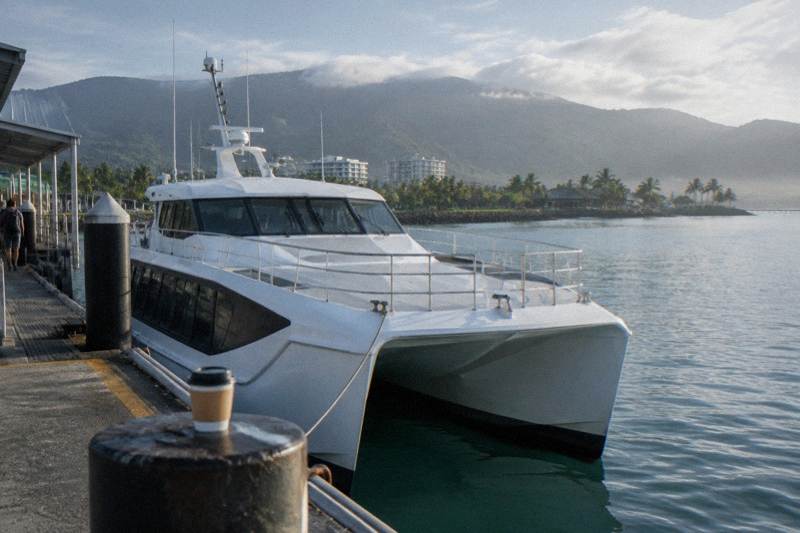
The reason the calendar matters so much here is simple geography. Cairns sits inside the tropics, facing a Coral Sea that stores enormous amounts of heat in summer. That heat drives both the monsoon rains and the cyclones, and the same warm water is what brings marine stingers close to shore between November and June. A day trip to Green Island on the Great Adventures catamaran, the most reviewed Green Island cruise on this site at 4.4 from 1,933 reviews, runs in every month of the year, but the experience of a February crossing and an August crossing can feel like two different trips.
The honest framing is not "avoid Cairns in the wet" but "know what each month costs you". This article works through the three risks that shape the calendar, rain, cyclones and stingers, then looks at which tours hold up well in the off season and which ones lose value. For the flip side of the question, the guide to Green Island weather and the best time to visit covers the months that work in your favour.
Which Months Get The Most Rain In Cairns?
Cairns averages 437.5 mm of rain in February, 422.1 mm in March and 404.8 mm in January, against just 26.5 mm in August and 33.2 mm in July. The wettest three months deliver well over half of the annual total of 2,025.5 mm, making January to March the rainiest stretch by a wide margin.
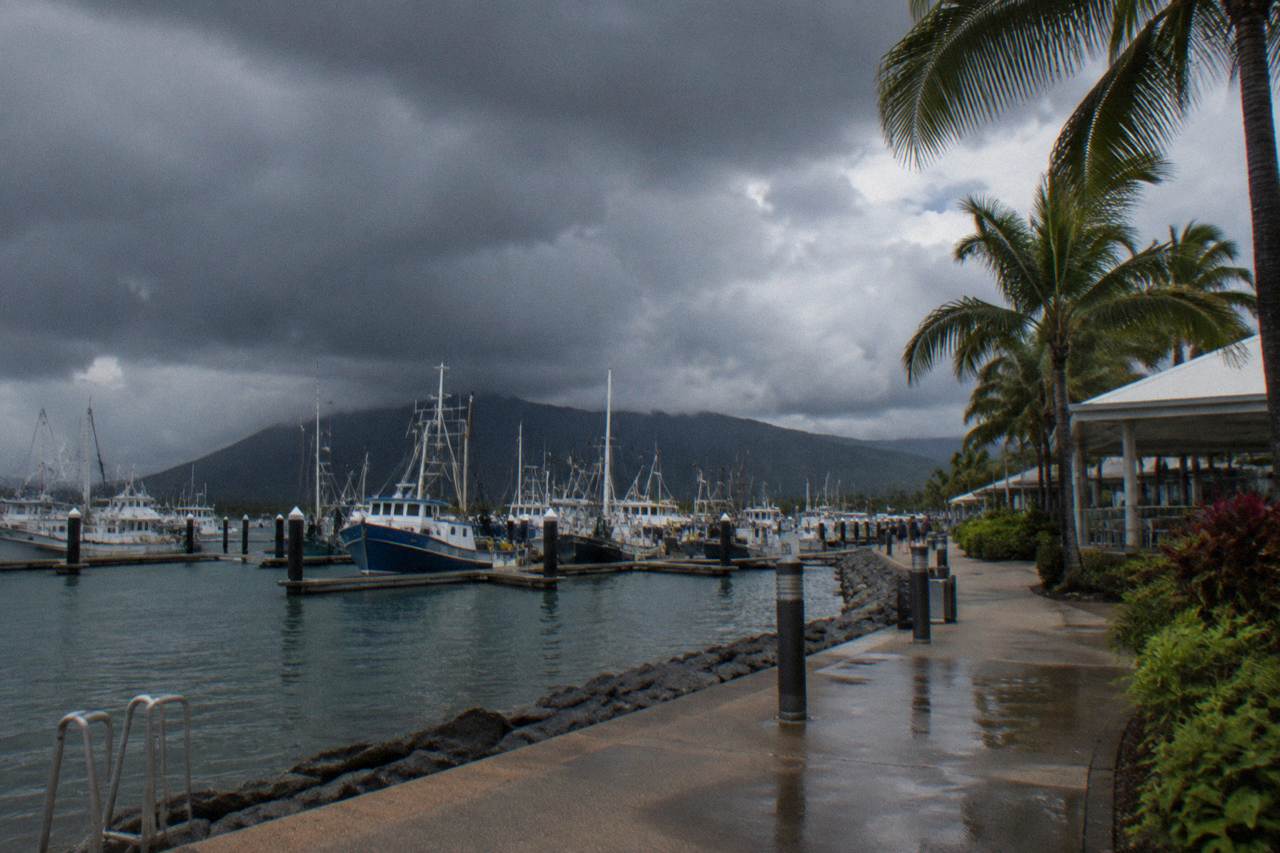
Tropical rain does not fall evenly through the day. The classic wet season pattern is hot, humid mornings followed by building cloud and a heavy afternoon or evening downpour, and many days still deliver usable morning hours. But the monthly totals tell you the probability of a washout day is far higher in February than in July, and a reef trip that costs from A$110 per person deserves better odds than a coin toss.
| Month | Average rainfall (mm) | Average max temp | Character of the month |
|---|---|---|---|
| January | 404.8 | 31.5 C | Wet season peak, humid, storm risk |
| February | 437.5 | 31.3 C | Wettest month, monsoon troughs |
| March | 422.1 | 30.7 C | Wet, late cyclone risk |
| April | 201.8 | 29.4 C | Rain easing, transition month |
| May | 92.0 | 27.7 C | Dry season beginning |
| June | 45.5 | 26.1 C | Cool, dry, clear |
| July | 33.2 | 25.9 C | Driest month, mildest days |
| August | 26.5 | 26.7 C | Lowest rainfall of the year |
| September | 34.1 | 28.2 C | Dry, warming |
| October | 47.2 | 29.7 C | Hot and dry, humidity building |
| November | 87.9 | 30.8 C | Humid, storms return, stinger season |
| December | 193.8 | 31.5 C | Wet season building fast |
The numbers come from the Bureau of Meteorology climate averages for Cairns Aero, the station that has measured the city's weather since 1942. One thing the table cannot show is variability: a given February can be drier than a given April, because monsoon bursts arrive in multi-week cycles rather than a steady drizzle. The averages describe risk, not a forecast.
For a Green Island day trip, rain matters less than you might expect on the water itself, since snorkellers get wet anyway, and more on the margins: the 45 minute crossing can be lumpier, the island's rainforest boardwalk less pleasant, and the views from the glass-bottom boat dulled by grey light. The Big Cat full day cruise, 4.5 from 1,727 reviews and from A$110 per person, gives you up to about 5.5 hours on the island, which is a long time to fill under a shower. The half day options, also from A$110, hedge that risk by halving your exposure.
What Is Cyclone Season And When Does It Run?
The official tropical cyclone season in the Australian region runs from 1 November to 30 April, according to the Bureau of Meteorology, with the peak threat to Far North Queensland falling between January and March. Outside those six months, cyclones are effectively off the table, which is a large part of why the dry season is peak season.
Cyclones are rare at any single point in the season, and most years pass without a crossing near Cairns. But the consequences are severe enough that the season shapes the whole regional calendar: operators keep flexible cancellation policies, travel insurance terms tighten, and last-minute itinerary changes become normal in the wet months. The Bureau's cyclone season page is the authoritative reference for the official dates.
Recent seasons show how real the risk is without being constant. Severe Tropical Cyclone Narelle crossed the Far Northern region of the Great Barrier Reef in March 2026 as a category five system, and the GBRMPA end-of-summer snapshot recorded wave damage to reefs between Cairns and Lizard Island. Cyclone Koji, a category one system, crossed the Central Great Barrier Reef in January 2026 with only minor coral losses. Neither stopped Cairns functioning as a city, but both remind you that a February booking carries a small chance of a cancelled boat.
The practical advice for a wet season visitor is to book refundable products and keep one buffer day. Every Green Island cruise on this site comes with free cancellation, including the Great Adventures catamaran, the Big Cat fleet and the Ocean Free schooner, so a cyclone watch does not strand your money. What it can strand is your only free day, which is the strongest argument for not planning a single-day Cairns stopover in February.
When Is Stinger Season In Cairns?
Marine stingers are of particular concern between November and June, per Cairns Regional Council, and Queensland Parks warns they may be present in coastal waters at any month of the year. There is no stinger-free month, only months of lower frequency, and the cooler dry season from June to October is when the risk sits lowest.
Box jellyfish and Irukandji are the two species behind the season. The council's advice is to wear a stinger suit during stinger season, and tour operators either supply suits or make them available; the Ocean Free sailing tour, for instance, lists wetsuits and lycra suits among its included snorkelling gear. The full picture, including what suits actually cost and how they fit, is in the guide to stinger season and stinger suits in Cairns.
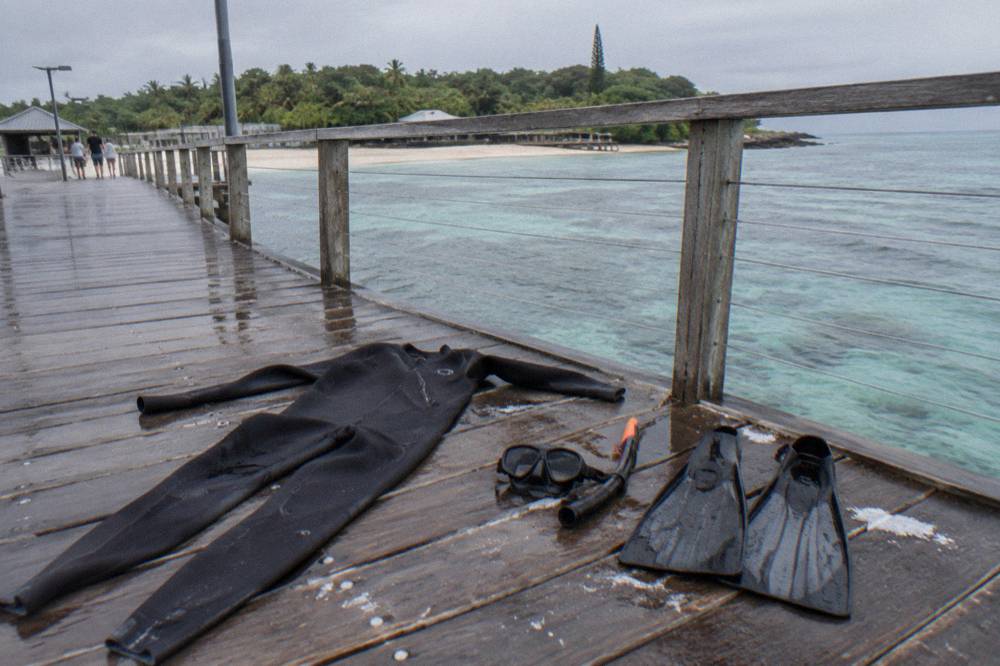
The stinger calendar matters for Green Island specifically because the island's snorkelling happens in shallow, inshore water rather than at a distant outer reef platform. Queensland Parks tells snorkellers to swim between the red and yellow flags, and the risk profile of inshore sites peaks in the same warm months as the rain. A November to June visitor who plans to snorkel should treat a stinger suit as standard equipment, not an optional extra, and should check what each listing actually includes, since inclusions differ: some fares bundle snorkel gear, others charge it as an add-on.
The temptation in writing an article like this is to name a "safe month", and the honest answer is that no official source supports one. The correct reading of the advice is a gradient: highest concern in the warm months from November through the wet season, lower in the cooler months, never zero. Visitors who want the lowest possible stinger risk combined with the lowest rainfall should aim for the June to August window, when both curves bottom out together.
Which Months Are The Busiest In Cairns?
The June to August dry season is Cairns' busiest visitor period, combining the lowest rainfall of the year with mild daytime temperatures around 26 C and the lowest stinger frequency. The trade-off is crowds and peak pricing, while the wet months of January to March bring the quietest boats and the emptiest island walks.
Busy season in Cairns is relative; the city never feels like Sydney in summer. But the pattern is real: dry season departures fill earlier, island facilities such as the day visitor pool and eateries queue longer, and the patrolled swimming area holds more snorkellers per square metre. Anyone who has done both a July Green Island full day and a February one will describe two different islands.
| Period | Weather | Stinger concern | Crowds | Verdict for a reef day |
|---|---|---|---|---|
| Jan to Mar | Wettest, hot, cyclone season | High | Lowest | Cheapest and quietest, highest weather risk |
| Apr to May | Rain easing, warm | Moderate, easing | Moderate | Strong shoulder option |
| Jun to Aug | Dry, mildest days | Lowest | Highest | Best conditions, book early |
| Sep to Oct | Dry, heating up | Low, rising | Moderate | Excellent, humidity building |
| Nov to Dec | Storms return, humid | High, rising | Moderate to low | Workable with suits and flexibility |
The shoulder months deserve more attention than they get. April still averages 201.8 mm of rain, but May drops to 92.0 mm while the sea stays warm from summer, and September and October combine 34.1 mm and 47.2 mm of rain with steadily building heat. These are the months where a visitor gets most of the dry season's reliability without its peak crowds, which is why many repeat travellers to the region target May or September.
For the boats themselves, quiet season has a genuine upside: smaller groups on the water. The Ocean Free schooner, a small-group sailing tour rated 4.9 from 682 reviews and priced from A$289 per person, is precisely the kind of product that feels different with twenty guests rather than a full manifest. The same logic applies to premium add-ons like the Moore Reef pontoon combo or the fly-and-cruise package, where wet season availability is easier to find at short notice.
Does The Wet Season Ruin A Green Island Day Trip?
No, the wet season does not ruin a Green Island trip, but it changes the arithmetic: rain is intermittent rather than constant, the crossing still takes about 45 minutes, and every cruise compared here runs year-round. What you trade is reliability of conditions, and what you gain is lower crowds and easier booking, so it suits flexible travellers over fixed-itinerary ones.
The key insight is that tropical rain is episodic. A February week might deliver three storm hours and four clear mornings, and reef trips that leave at 8:30am or 9am often beat the afternoon build-up. The Great Adventures departures leave Cairns at 8:30am and 10:30am, and the Big Cat full day sails at 9am or 11am, so early starts are available from both operators. Snorkelling in light rain is genuinely fine; the water does not care, and fish activity is often unaffected. Heavy rain with wind is a different matter, and that is when a glass-bottom boat or semi-submarine earns its keep as the dry option.
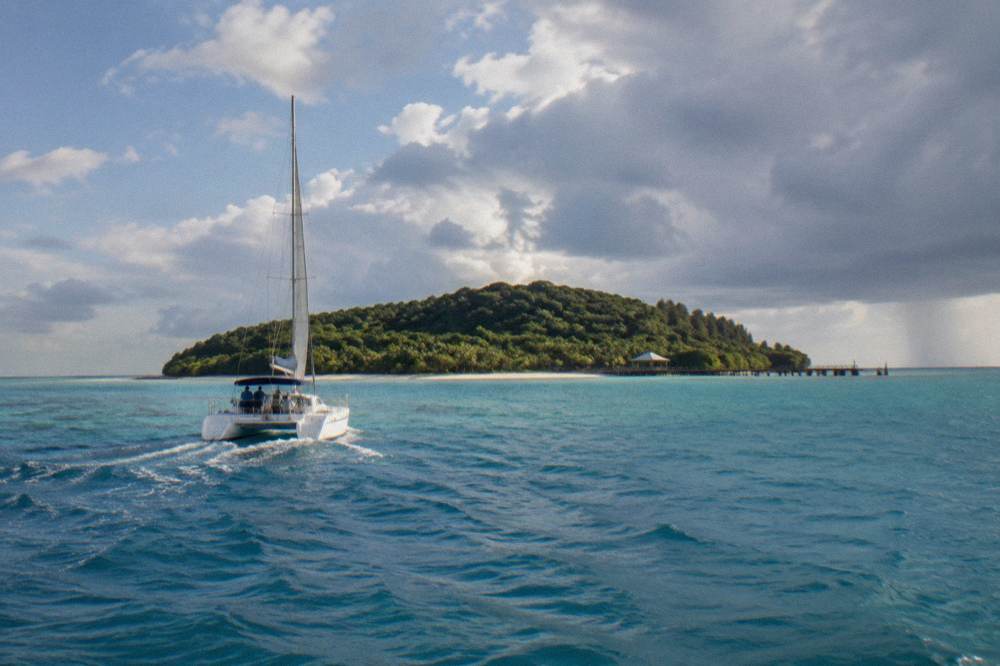
The one thing wet season visitors should not do is stack a tight itinerary. If your entire Far North Queensland visit is two days and one of them is your only possible reef day, a storm cell over the Cairns marina can wipe out the highlight of the trip. Build a spare day, or choose products with generous inclusions so a shorter island stay still delivers value: the two-islands day that pairs Fitzroy and Green Island, for example, or the outer reef pontoon combo that splits its time between the island and a Moore Reef platform with a hot and cold buffet lunch included.
Reef condition is a separate question from weather, and the latest official data is quietly encouraging. The Australian Institute of Marine Science reported Northern Great Barrier Reef hard coral cover of 35.1 percent, up from 30.0 percent the previous year and above the long-term average of 27.0 percent, with GBRMPA's reef health updates noting sea surface temperatures close to average through late winter. Those are regional figures, not Green Island measurements, but they counter the idea that wet season means a damaged reef.
What Is The Worst Single Month To Visit Cairns?
February is the weakest single month: it averages 437.5 mm of rain, the highest of any month, sits inside the cyclone season peak, and falls squarely in the higher-risk stinger months of November to June. January and March are close behind it, each averaging well over the wettest shoulder months, while carrying the same combined risks.
February is not a month to avoid Cairns outright, and travellers who come then report cheaper accommodation, empty walkways and dramatic tropical skies. But it is the month where all three of this article's risks peak together, so it demands the most flexibility and the most realistic expectations. If your heart is set on a postcard day of turquoise water and dry boardwalk strolls, February is the month most likely to disappoint.
The contrast with August is stark. August averages 26.5 mm of rain across the whole month, daytime maxima around 26.7 C, the lowest stinger frequency of the year, and no cyclone risk. That is why winter is peak season and why boats fill. The months either side of the peak, May and September, capture much of that reliability at a fraction of the crowd, which makes them the connoisseur's choice.
A useful planning exercise is to match the month to the product. Fixed-date, single-opportunity travellers belong in the June to October window. Flexible travellers who can shift a day or absorb a cancellation can book the wet months with confidence, take the cheaper and quieter island, and lean on the free cancellation every tour on this site carries. For a deeper comparison of the individual cruises, the operators and all fare options, see the Green Island tours compared guide on this site.
Should You Book A Reef Tour In The Wet Season At All?
Yes, if you book refundable options and keep a buffer day. Every Green Island cruise compared here includes free cancellation, and the wet season often delivers fine mornings between storms. The Great Adventures catamaran from A$112 per person, the Big Cat full day from A$110 and the Ocean Free schooner from A$289 all run through the wet months.
The economics favour the bold. Wet season pricing on accommodation in Cairns drops sharply, boats sail below capacity, and the experiences that sell out weeks ahead in July, such as small-group sailing and dive options, can sometimes be booked days or even a day ahead in February. Green Island Great Barrier Reef Tours exists precisely for comparisons like these: sixteen bookable tours, each with free cancellation, priced from A$110 to A$429 per person.
The buffer day is the part people skip and regret. A cyclone watch or a sustained storm cell can cancel a single morning's departures, and a visitor whose itinerary allows a retry the next day loses nothing but time. A visitor on a hard departure schedule loses the reef day entirely. Two nights minimum in Cairns before any booked reef cruise is the standard local recommendation, and it applies doubly in January to March.
One last wet season note: the Seawalker helmet dive and the introductory scuba options are more weather-sensitive than deck-based activities, so anyone whose heart is set on diving rather than snorkelling should weight their booking even further towards the dry half of the year. The two-islands day and the pontoon combo carry their own flexibility, since both split time across multiple environments, giving the operator more scope to adapt the day to conditions.
Common Questions About When Not To Visit Cairns
When Not To Visit Cairns?
Avoid January, February and March if you have a fixed itinerary and no spare days: those months average 404.8 mm, 437.5 mm and 422.1 mm of rain respectively, sit inside the 1 November to 30 April cyclone season, and fall in the November to June stinger period. Flexible travellers can manage them, and June to August is the most reliable window.
What is the wettest month in Cairns?
February, averaging 437.5 mm of rain, ahead of March at 422.1 mm and January at 404.8 mm, according to Bureau of Meteorology long-term averages for the Cairns Aero station.
Is there a stinger-free month in Cairns?
No. Cairns Regional Council flags marine stingers as of particular concern from November to June, and Queensland Parks warns they may be present in coastal waters at any time of year. The cooler months carry lower frequency, never zero risk, and a stinger suit is the standard precaution in season.
Do Green Island tours run in the wet season?
Yes. The Great Adventures catamaran, the Big Cat fleet and the Ocean Free schooner all operate year-round, and every tour on this site carries free cancellation, which covers you if a departure is affected by weather.
Is cyclone season a reason to skip Cairns?
Not by itself. The season runs 1 November to 30 April, most years bring no direct hit on Cairns, and operators and insurers plan around it. Book refundable tours, keep a buffer day, and check the Bureau of Meteorology for current watches rather than avoiding the region outright.