Green Island Weather: Month-By-Month Cairns Conditions For Your Day Trip
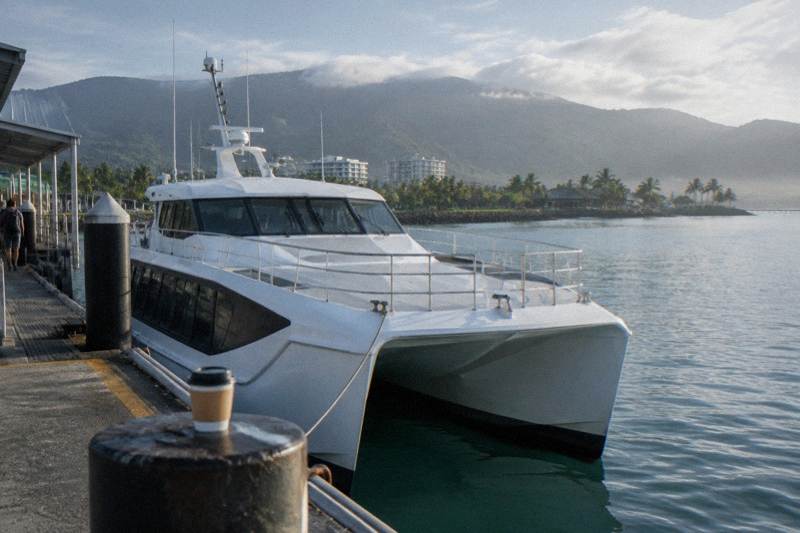
Green Island sits 27 km offshore from Cairns, close enough that its weather is Cairns weather carried out to sea on a 45-minute catamaran crossing. This guide lays out the Bureau of Meteorology monthly averages, the cyclone and stinger seasons, and what each month means for the boats that actually run out there.
Short answer
Green Island shares Cairns' tropical climate: warm all year, with monthly maximums between 25.9 and 31.5 degrees and a wet season that peaks January to March with over 400 mm of rain per month. May to October is drier and slightly cooler. Cyclone season runs 1 November to 30 April, and stingers are a concern November to June.
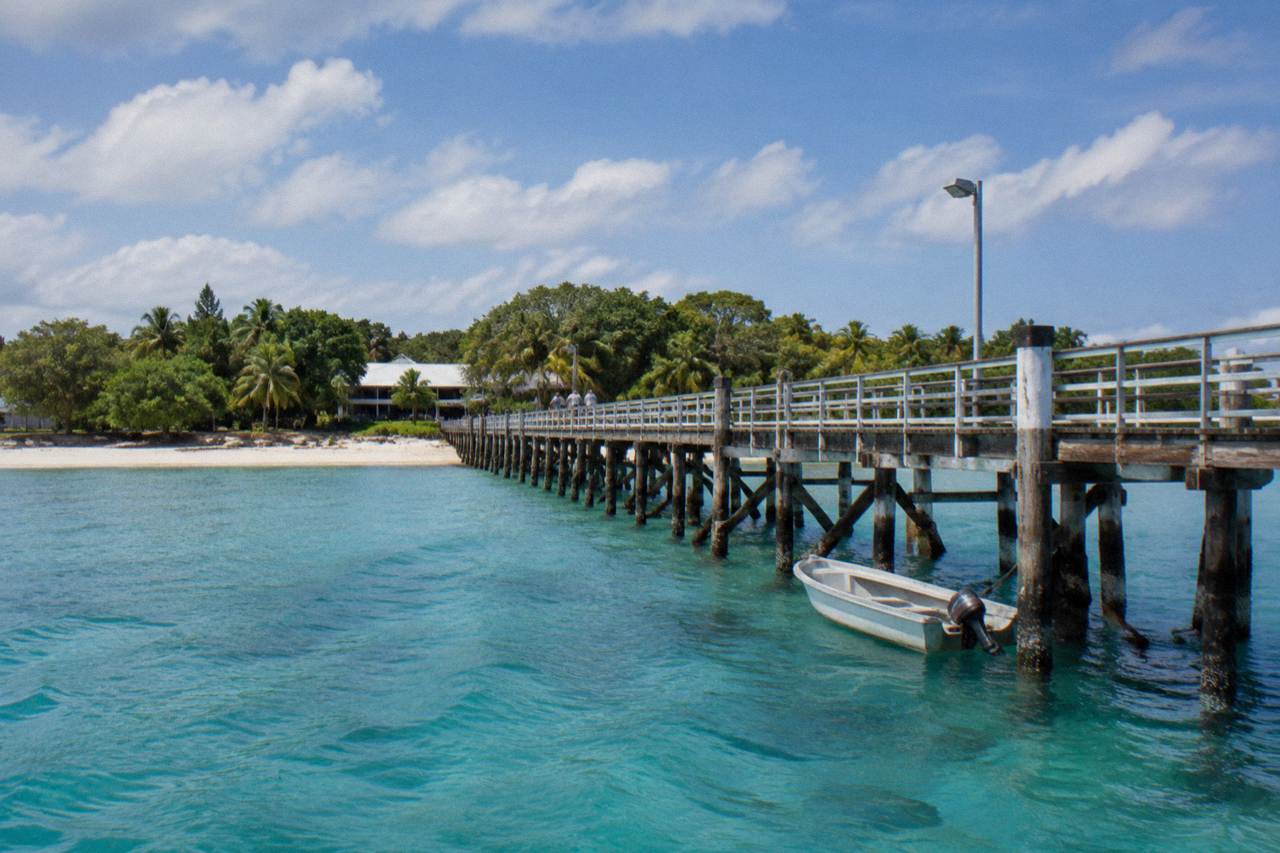
Green Island is a coral cay 27 km offshore from Cairns, and the same air mass that makes Cairns humid in February and pleasantly dry in July sits over the island too. The crossing is short, roughly 45 minutes on the Great Adventures fast catamaran or the Big Cat vessels, so a day trip runs on whatever weather the Cairns coast is having that morning. That makes the Bureau of Meteorology's Cairns Aero station, with records going back to 1942, the single most useful dataset for planning a visit.
What the raw averages hide is how much the seasons differ in character rather than temperature. July is barely five degrees cooler than January at the daily maximum, but it rains twelve times less. The real planning questions are about rain, storm season and marine stingers, and those answers shape which tour you book: a covered catamaran like the Great Adventures cruise handles a shower differently to a small schooner, and the Ocean Free sailing tour, from A$289 per person with a 4.9 rating from 682 reviews, is a different proposition in a fresh south-easterly than on a glassy calm day.
What Is The Weather Like On Green Island?
Green Island has a tropical climate with two distinct seasons rather than four: a warm, dry and sunny stretch from roughly May to October, and a hot, humid and much wetter stretch from November to April. Monthly maximum temperatures only range between 25.9 and 31.5 degrees, so heat is never the deciding factor, but rainfall swings from 26.5 mm in August to 437.5 mm in February.
The island is close enough to the coast that it shares Cairns conditions almost exactly. There is no separate Green Island microclimate in the meteorological record; the Bureau of Meteorology measures the region from Cairns Aero, station 031011, and every operator's schedule, from the 8:30am Great Adventures departure to the 9am and 11am Big Cat full days, is built around that coast's weather patterns. When a southerly change sweeps up the coast, the catamarans feel it on the crossing, and when the dry season settles in, the island gets the same long run of clear days that Cairns does.
Two seasonal forces matter more than the thermometer. The first is the Australian tropical cyclone season, which the Bureau defines as 1 November to 30 April, a window that sits almost exactly over the wet months. The second is the marine stinger season, which Cairns Regional Council puts at November to June, with the Queensland Parks service noting stingers may be present in coastal waters at any time of year. Neither of these closes the island, but both belong in your planning, and both are covered in their own sections below.
For a day-tripper, the practical read is this: the wet season delivers most of its rain in afternoon and evening storms, and the morning catamaran crossings frequently leave Cairns in sunshine even when the forecast shows a high chance of showers. Dry-season months trade that volatility for reliable, settled days. The trade-off is crowds and prices, which peak in the June-to-September window when southern travellers escape winter.
Which Month Has The Best Green Island Weather?
On weather alone, the best months are May, June, July, August and September, when rainfall drops to between 26.5 and 92 mm per month, maximums sit in the comfortable 25.9 to 28.2 degree range, and cyclone and peak stinger risk have both receded. September stands out as the sweet spot: 28.2 degrees on average, only 34.1 mm of rain, and warmer water than the mid-winter months.
The shoulder months reward attention too. April is the exit from the wet: rainfall falls to 201.8 mm, roughly half of March's total, and the landscape is still lush. October is the last of the dry heat, 29.7 degrees on average with 87.9 mm of rain, before humidity climbs again. Both are quieter on the island than the July peak, and both sit inside the stinger season window, so a stinger suit is part of the snorkelling conversation either way.
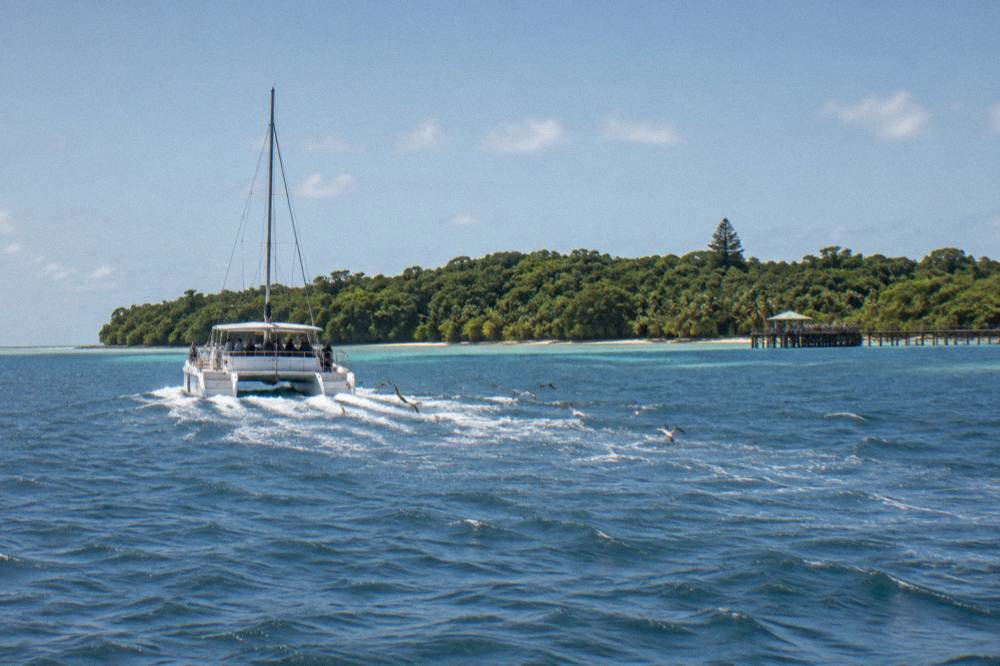
The boat you choose matters as much as the month. The Great Adventures catamaran, the most reviewed listing on this site at 4.4 from 1,933 reviews and from A$112 per person, is a large air-conditioned vessel, which is a genuine comfort in the February humidity and on a bumpy crossing. The Big Cat full day, from A$110 per person with a 4.5 rating from 1,727 reviews, offers the same covered-catamaran practicality. The Ocean Free schooner tour is the weather-sensitive one: a small sailing vessel, from A$289 per person, that is at its best in the gentle dry-season breezes.
If your dates are locked to school holidays or a conference week, the month picks you, and the rest of this guide tells you what that month actually delivers. If you have freedom, aim for the May-to-September window and lean toward September for the balance of warmth, dry skies and manageable crowds. The deeper month-by-month breakdown, including which month to pick for the reef overall, lives in our piece on the best month to see the Great Barrier Reef.
When Is Cyclone Season In Cairns And Green Island?
The official Australian tropical cyclone season runs from 1 November to 30 April, and Green Island sits inside that window every summer. Actual cyclones near Cairns are uncommon in any given season, but the season's broader weather, humid heat, thunderstorms and occasional wet-system days, is the everyday reality of visiting between November and April.
The Bureau of Meteorology is explicit about the dates, and the 2026 season illustrated both the risk and the recovery. Severe Tropical Cyclone Narelle crossed the Far Northern region in March 2026 as a category five system, part of a summer that also brought a regional coral bleaching event to the Northern Management Region, according to the Great Barrier Reef Marine Park Authority's end-of-summer snapshot. Yet by August 2026, the same authority reported sea surface temperatures close to average, and the Australian Institute of Marine Science's annual survey recorded Northern Reef hard coral cover at 35.1 percent, up from 30.0 percent the previous year and above the long-term average of 27.0 percent. The reef absorbs these summers and keeps operating, and so do the tour operators.
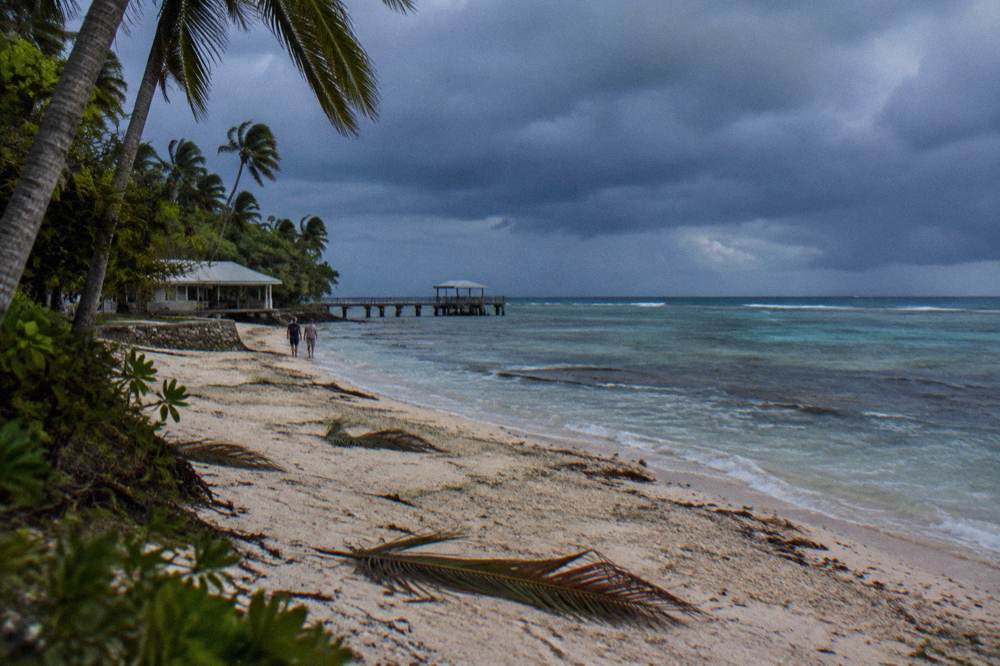
For a day-tripper the cyclone question is really a cancellation question. Operators do not sail into named systems, and a cyclone anywhere near the Cairns coast will suspend sailings for the days it takes to pass. Every listing on this site carries free cancellation, which is the practical protection: book ahead, watch the forecast in the days before, and rebook if a system forms. The Great Adventures cruise, from A$112 per person, checks in at the Reef Fleet Terminal on Spence Street, and the operator's listing states the fare includes the Environmental Management Charge of A$8.50 per person for full-day passengers.
A wet-system day that is not a cyclone is a different matter, and most of them still sail. The catamarans handle rain and moderate chop without issue, and a shower over Green Island often clears within the hour. If you are travelling in the wet season, the covered-vessel tours are the sensible booking: the Big Cat full day and the Great Adventures catamaran both give you an air-conditioned cabin to retreat to between snorkelling sessions.
When Is Stinger Season On Green Island?
Marine stingers are of particular concern in Cairns waters from November to June, according to Cairns Regional Council, and Queensland Parks warns they may be present in coastal waters at any time of year. There is no stinger-free month. In practice, risk is highest in the warm wet-season months and lowest in the dry-season middle of the year, and stinger suits are the standard mitigation.
The council's guidance for the tropical coast is direct: wear a stinger suit during stinger season. The Queensland Parks service, which manages Green Island National Park, adds the nuance that matters for planning: stingers occur more frequently in warmer months but are possible in any month. That is why this guide, and every honest one, refuses to name a guaranteed safe month. What changes through the year is probability, not possibility. Everything else covered here is indexed on Green Island Great Barrier Reef Tours.
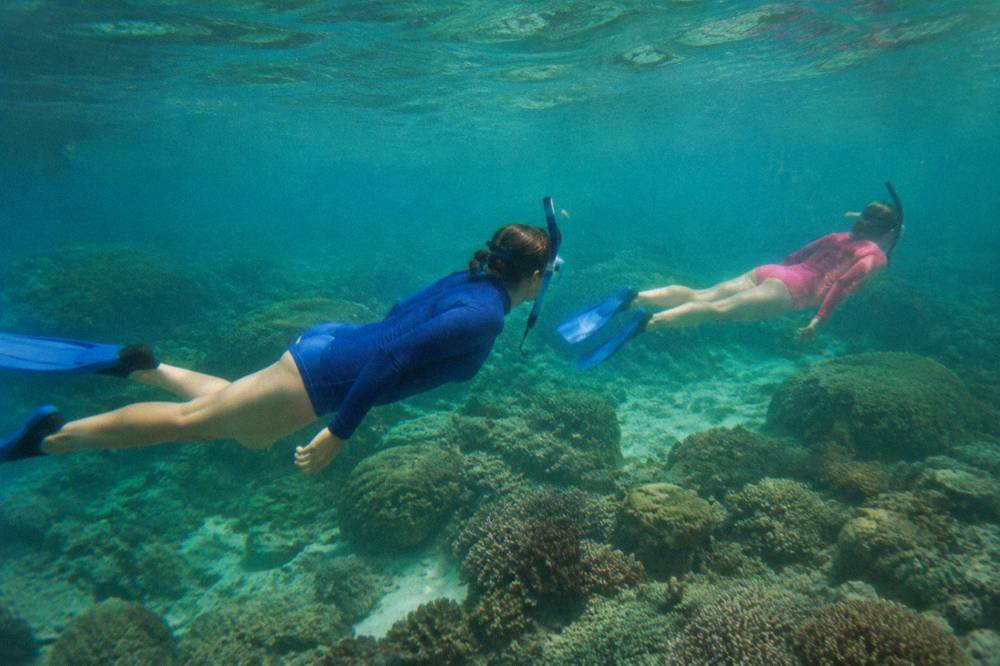
For tour bookings, the suit question is handled differently by different operators. The Big Cat listings include snorkel gear or a glass-bottom boat in the fare, with stinger suit supply not stated on the listing, so check the booking page for your month. The Ocean Free sailing tours include wetsuits and lycra suits in the listed inclusions, which covers the wet-season snorkeller well. The Great Adventures Discovery-style fares include snorkel equipment, with suits available as the operator provides them. If you are snorkelling independently from the beach, Queensland Parks says to snorkel between the red and yellow flags, and suits can be hired on the island.
| Season | Months | What it means for Green Island |
|---|---|---|
| Wet season | November to April | Heat, humidity, afternoon storms, heaviest rain January to March |
| Cyclone season | 1 November to 30 April | Official Bureau window; sailings pause if a system approaches |
| Stinger season | November to June | Council's concern window; suits recommended, any month possible |
| Dry season | May to October | Lower rainfall, milder maximums, peak visitor months June to September |
The stinger months overlap heavily with the wet season but not perfectly: June is officially a stinger month while being one of the driest and mildest on the coast. Our full guide to stinger season and stinger suits in Cairns covers suits, flags and first aid in detail, and it is worth reading before any wet-season snorkelling trip, whether on a tour or from the beach.
How Hot And Wet Is Each Month On Green Island?
February is the wettest month with 437.5 mm of rain on average, August the driest with 26.5 mm, and monthly maximums run from 31.5 degrees in January and December down to 25.9 in July. Overnight minimums never drop below 17.2 degrees on average, so cold is simply not part of the Green Island calendar.
The table below is the Bureau of Meteorology's long-term Cairns Aero averages, station 031011, using records from 1942 to 2026. These are means, not forecasts: any individual February day can be dry and gorgeous, and any August day can bring a shower. But as a planning baseline for choosing a month, they are the most reliable numbers that exist for this coast.
| Month | Average max (C) | Average min (C) | Average rain (mm) |
|---|---|---|---|
| January | 31.5 | 23.8 | 404.8 |
| February | 31.3 | 23.8 | 437.5 |
| March | 30.7 | 23.2 | 422.1 |
| April | 29.4 | 21.8 | 201.8 |
| May | 27.7 | 20.0 | 92.0 |
| June | 26.1 | 18.0 | 45.5 |
| July | 25.9 | 17.2 | 33.2 |
| August | 26.7 | 17.4 | 26.5 |
| September | 28.2 | 18.8 | 34.1 |
| October | 29.7 | 20.7 | 47.2 |
| November | 30.8 | 22.4 | 87.9 |
| December | 31.5 | 23.4 | 193.8 |
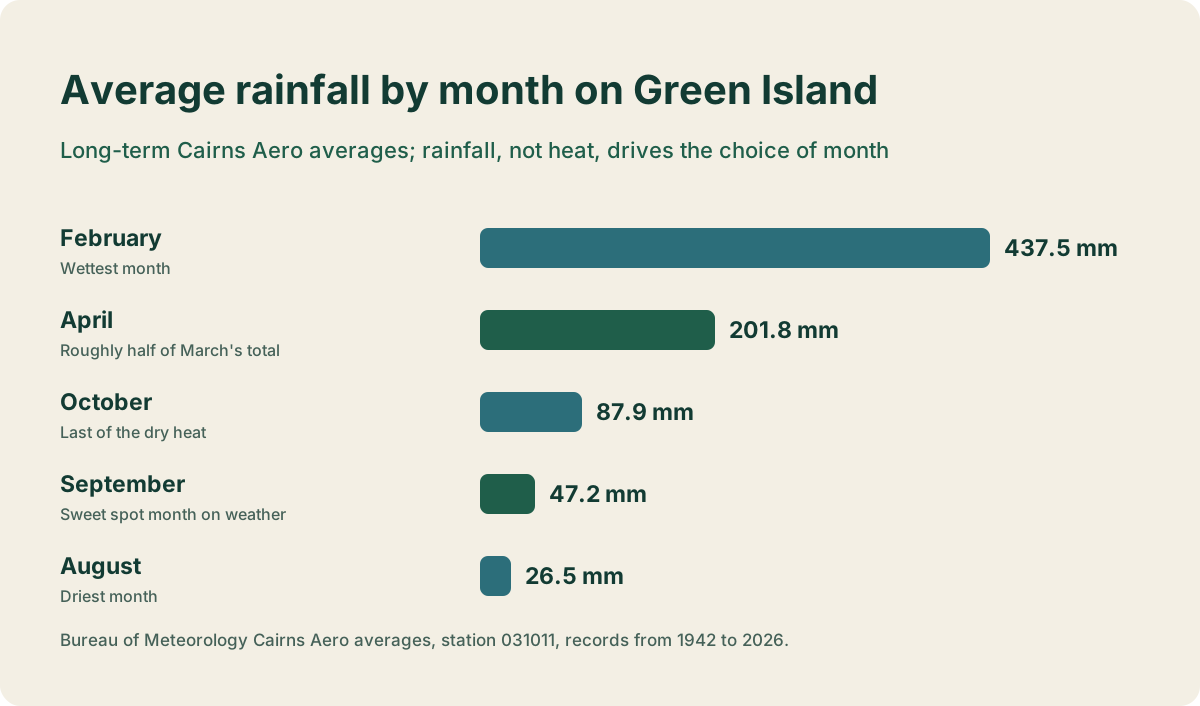
Read the rainfall column as a probability signal rather than a promise. A February average of 437.5 mm typically arrives as intense afternoon and overnight downpours, not all-day drizzle, and morning crossings often beat the worst of it. July's 33.2 mm, by contrast, might be one passing shower across the whole month. The temperature column tells you packing is simple year-round: beachwear, a hat and a light layer for air-conditioned vessels cover every month on the list.
The Bureau's own climate pages publish these averages and the cyclone season dates, and the Bureau of Meteorology's cyclone season page is the authority to check before any wet-season booking. The Great Barrier Reef Marine Park Authority's reef health updates are the matching authority for what the water itself is doing.
What Should You Pack For Green Island Weather?
Pack for heat and sun in every month: reef-safe sunscreen, a hat, a rash shirt or stinger suit for the water, and a light layer for the air-conditioned catamaran. Add a compact rain jacket from November to April, when afternoon storms are routine, and you have the complete list. There is no month that needs cold-weather gear.
The sun is the one constant. Even in July, when the average maximum is 25.9 degrees, the tropical latitude makes the UV fierce, and a day on the water doubles the exposure through reflection. Queensland Parks' guidance for Green Island lists sun protection alongside stingers as the primary safety considerations for the island. Footwear wants to handle coral and hot boardwalks: reef shoes for the beach, something light for the rainforest tracks.
| Month you visit | Add to the base list | Why |
|---|---|---|
| May to September | Light layer for the cabin | Milder mornings, air-conditioned vessels |
| October, April | Nothing extra | Shoulder warmth, low rain risk |
| November to April | Compact rain jacket, dry bag for electronics | Afternoon storms, heavy rain months from 193.8 to 437.5 mm |
| Any month in the water | Lycra suit or full stinger suit | Stingers possible in any month, sun protection too |
The vessel choice shapes the packing list a little. The Great Adventures catamaran and the Big Cat fleet are large, air-conditioned and stable, so motion-sickness concerns are modest on most days; our piece on avoiding seasickness on a Green Island cruise covers the rough-crossing days. The Ocean Free schooner is smaller and more exposed to the elements by design, which is exactly what its fans love about it, and it supplies wetsuits and lycra suits as part of the listed inclusions.
Does Rain Ruin A Green Island Day Trip?
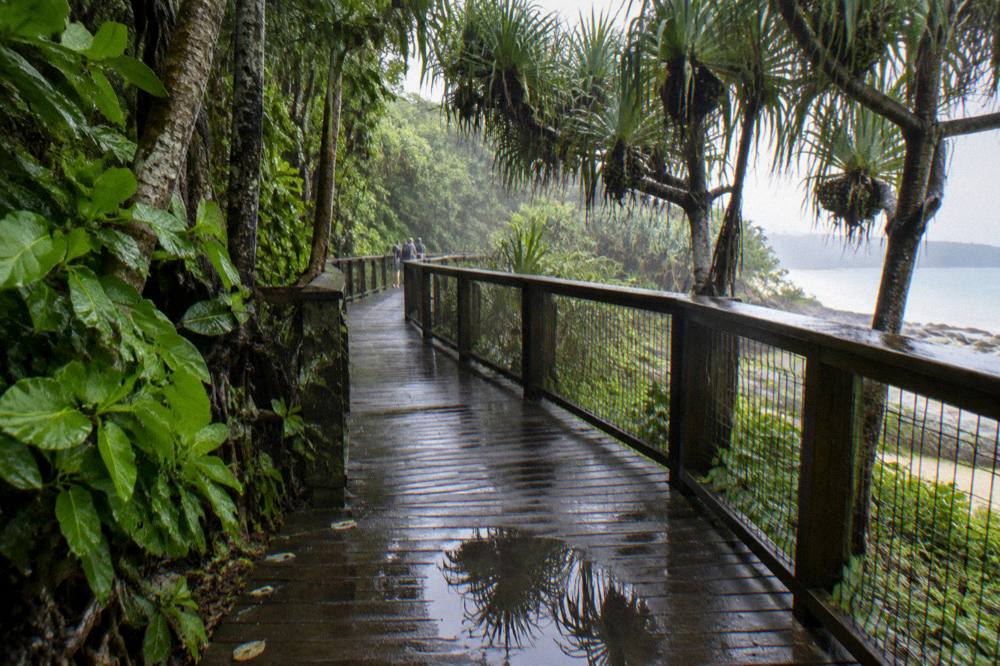
Usually not. Wet-season rain on this coast arrives mostly as afternoon and overnight storms, so morning departures often sail in sunshine, and a passing shower on the island rarely stops snorkelling, glass-bottom boat tours or the rainforest boardwalk. Only a genuine weather system, a cyclone or a sustained gale, cancels sailings, and operators call those days individually.
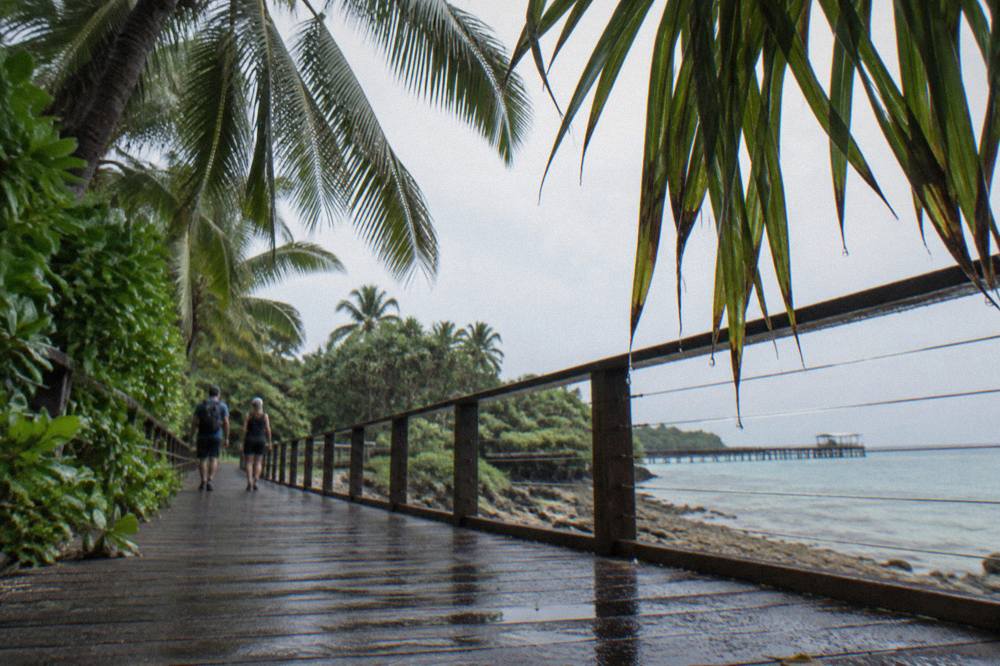
The pattern matters more than the daily percentage. A February forecast showing an 80 percent chance of rain commonly means a humid, sunny morning, a violent but short mid-afternoon storm, and a clear evening. The standard full-day itineraries are built around this: the Great Adventures catamaran departs Cairns at 8:30am or 10:30am, and the Big Cat full day runs from 9am, both landing you on the island before the typical storm build-up. The rainforest boardwalk, 1.3 km return and graded easy, is arguably at its best in a shower, and the island's covered attractions, from the semi-submarine to the resort facilities, keep the day moving.
The honest caveat is about the water, not the sky. Heavy wet-season rain can reduce clarity close to shore as runoff moves through the inshore reefs, and no official source publishes month-by-month visibility figures for Green Island, so this guide will not invent them. What can be said is regional and official: the Australian Institute of Marine Science's 2026 survey recorded improving hard coral cover across the Northern and Central Great Barrier Reef, the regions that include the Cairns coast, and the Marine Park Authority reported near-average sea temperatures through August 2026. If clear water is the priority for your trip, the dry-season months are the safer bet, and an outer-reef option adds distance from inshore runoff: the Green Island and outer reef pontoon combo, from A$312 per person with a 4.6 rating from 98 reviews, spends two hours at Green Island and three at the Moore Reef platform, where the water is typically clearer than the island's fringing reef.
Between those extremes sit the half-day options, which are a smart wet-season hedge. The Big Cat morning half day, four hours from A$110 per person with a 4.1 rating from 469 reviews, gets you out and back before the afternoon build-up, and the later-start full day suits travellers who want a sleep-in without losing the island. On a storm-threatened forecast, a shorter commitment is often the better day.
One more weather-adjacent option deserves a mention for the dry-season traveller: the fly-and-cruise package, from A$429 per person, pairs a 40-minute reef flight with guaranteed window seats and the full Big Cat day cruise with buffet lunch. The flight is the one part of a Green Island day that is genuinely weather-dependent in the other direction, it needs reasonable visibility rather than calm seas, so it shines in the settled May-to-October months.
Common Questions About Green Island Weather
What is the best month to visit Green Island?
May to September delivers the driest, most settled weather, with average rainfall between 26.5 and 92 mm per month and maximums from 25.9 to 28.2 degrees. September is the warmest of those dry months at 28.2 degrees on average. The trade-off is peak crowds in the July school-holiday window.
What is the wettest month in Green Island?
February, with an average of 437.5 mm of rain at the Cairns Aero station. January and March are close behind at 404.8 and 422.1 mm. Most of this rain falls in afternoon and overnight storms rather than all-day rain.
When is cyclone season for Green Island?
The official Australian tropical cyclone season runs from 1 November to 30 April. Operators pause sailings if a named system approaches the Cairns coast, and every listing on this site carries free cancellation so you can rebook if that happens.
Is it safe to swim at Green Island in stinger season?
Stingers are of particular concern from November to June, and Queensland Parks says they may be present in any month. Swim between the red and yellow flags, wear a stinger or lycra suit, and follow the crew's instructions on tours. A full guide to stinger season and suits covers the details.
Is Green Island weather different from Cairns?
Not meaningfully. The island is 27 km offshore with a 45-minute crossing, and it shares the Cairns coast's air mass. The Bureau of Meteorology's Cairns Aero averages are the standard reference for both.
Does it rain all day in the wet season?
Rarely. Wet-season rain on this coast typically arrives as intense afternoon and overnight storms, and mornings are frequently clear. Morning departures such as the 8:30am Great Adventures sailing usually beat the worst of the build-up.
Planning around the weather is only one half of the decision; the other half is picking the right boat for the month you have. The homepage comparison on Green Island Great Barrier Reef Tours breaks every tour on this site down by price, inclusions and departure time, and the Green Island day trip from Cairns guide walks through the full day from terminal check-in to the return sailing. Whatever month you choose, book with free cancellation, watch the Bureau's forecast in the final week, and let the coast do the rest.