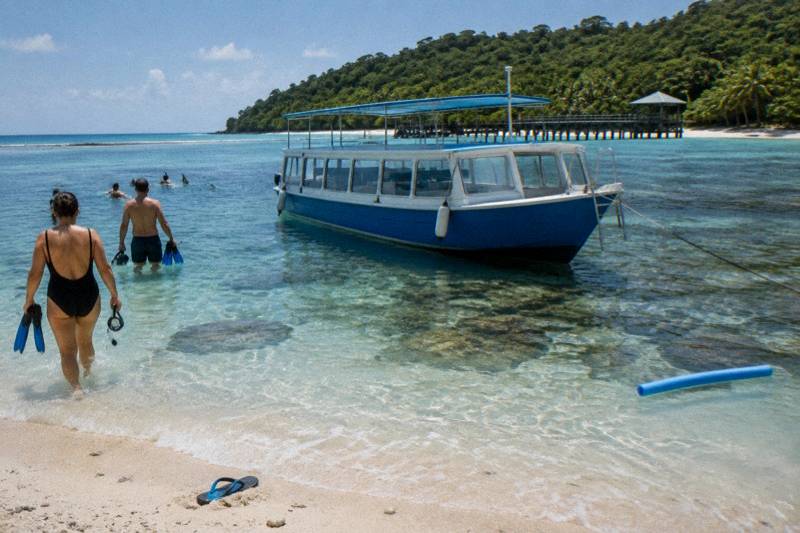
Is It Safe To Snorkel On Green Island?
An honest look at snorkelling safety on Green Island: the patrolled swim area, stinger season, weather calls, general safety advice and the tours that suit nervous snorkellers.
Is It Safe To Snorkel On Green Island?
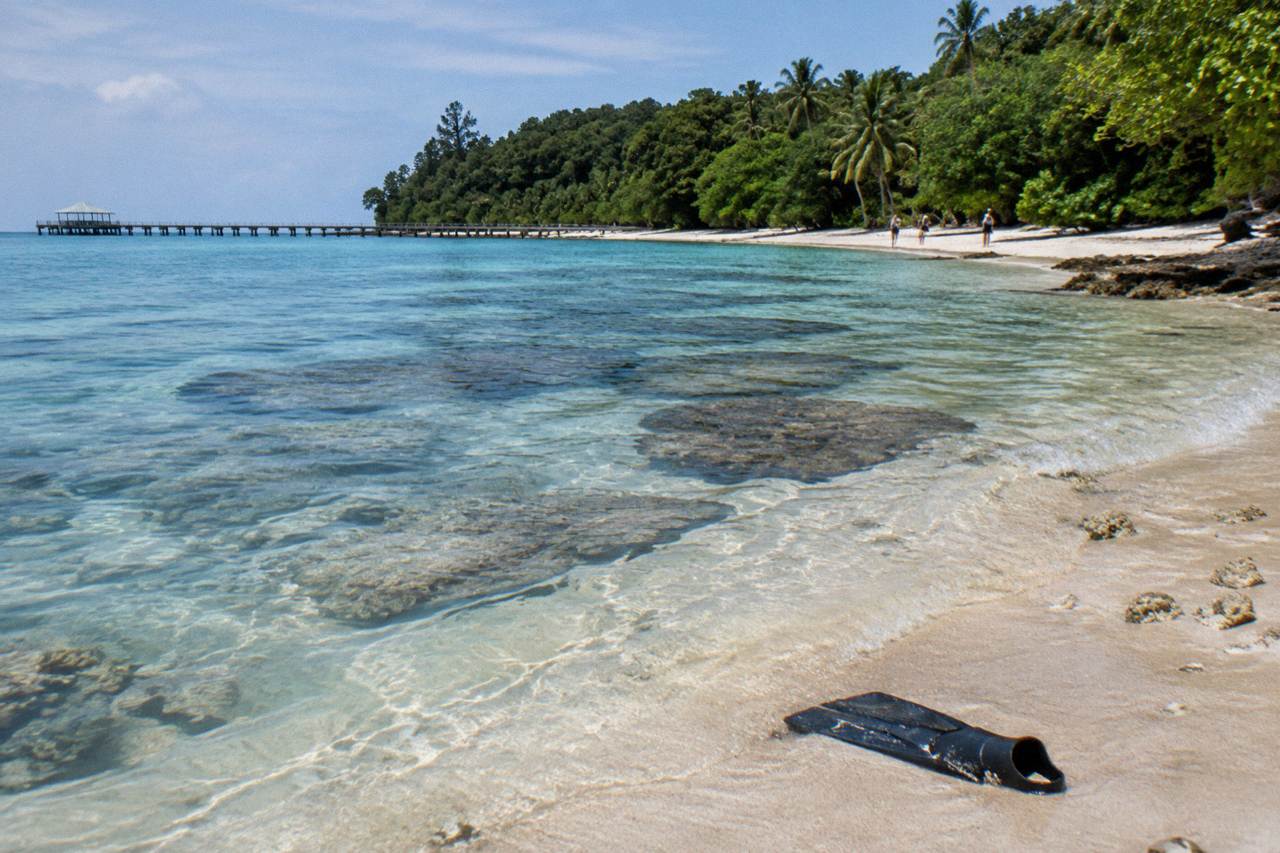
Green Island sits 27 km offshore from Cairns on a coral cay roughly 6,000 years old, surrounded by the seagrass beds and coral bommies of the Great Barrier Reef Marine Park. It is the closest reef snorkelling to Cairns, a 45 minute catamaran ride from the Reef Fleet Terminal, which is exactly why so many first-time snorkellers and families end up in the water here. The short answer for anyone weighing up the risk is that yes, it is safe for most people who follow a handful of well-established rules, and the official guidance is refreshingly specific about what those rules are.
Yes, snorkelling on Green Island is widely considered safe for swimmers of modest ability, on the condition that you stay inside the patrolled swimming area between the red and yellow flags, wear a stinger suit from November to June, and let your tour operator decide whether the day's weather and water conditions are suitable. Queensland Parks and Wildlife Service describes a flagged, patrolled swimming area at the island and instructs snorkellers to swim between the flags. Marine stingers are its other headline concern, and it notes plainly that they may be present in coastal waters at any time, though more often in the warmer months. Neither warning is a reason to stay on the boat. Both are manageable with the gear and habits this article sets out, drawing only on official sources: Queensland Parks, the Great Barrier Reef Marine Park Authority, Cairns Regional Council and the Bureau of Meteorology. Clothing choice is the other half of the safety picture, and our guide to which colors to avoid in the water explains why some shades attract marine life and which Cairns tours supply stinger suits, rash vests and snorkel gear.
The honest framing matters. Nothing in this article promises a turtle sighting, perfect visibility or calm water on any given day. The reef is wild and conditions vary. What the official record does support is a set of structural safety factors: a patrolled beach, a no-take marine park zone with strict wildlife rules, commercial operators carrying safety gear and making go or no-go weather calls, and a stinger season with a well-understood dress code. Readers who want the broader turtle picture can pair this with where turtles appear around Green Island, and anyone still choosing a boat can start with the Green Island tours compared guide.
Where Is It Safe To Enter The Water On Green Island?
The safest place to enter the water is the patrolled swimming area near the jetty, where Queensland Parks' discovery guide instructs snorkellers to swim between the red and yellow flags. This supervised zone is watched by lifeguards, and vessel traffic is kept out, making it the official recommendation for swimming and snorkelling on Green Island. That single instruction carries most of the safety story, because the flagged zone is where the lifeguard supervision, the calmer water and the boat-free area coincide. The island's snorkelling is concentrated on this beachfront, where the coral and seagrass sit close enough to shore that you can stand up in the shallows, adjust your mask and try again, which is a genuine comfort for beginners and children.
The guide also records toilets, showers, picnic tables, a heliport and beach hire to the left of the jetty, so the flagged beach is the island's service hub as well as its swim zone. Snorkellers who wander outside the flags leave the patrolled area and move toward boat traffic and unreferenced deeper water. There is no verified official statement on whether the swimming enclosure is netted, so this article makes no claim either way; the flagged area, not a net, is the official safety mechanism on the page.
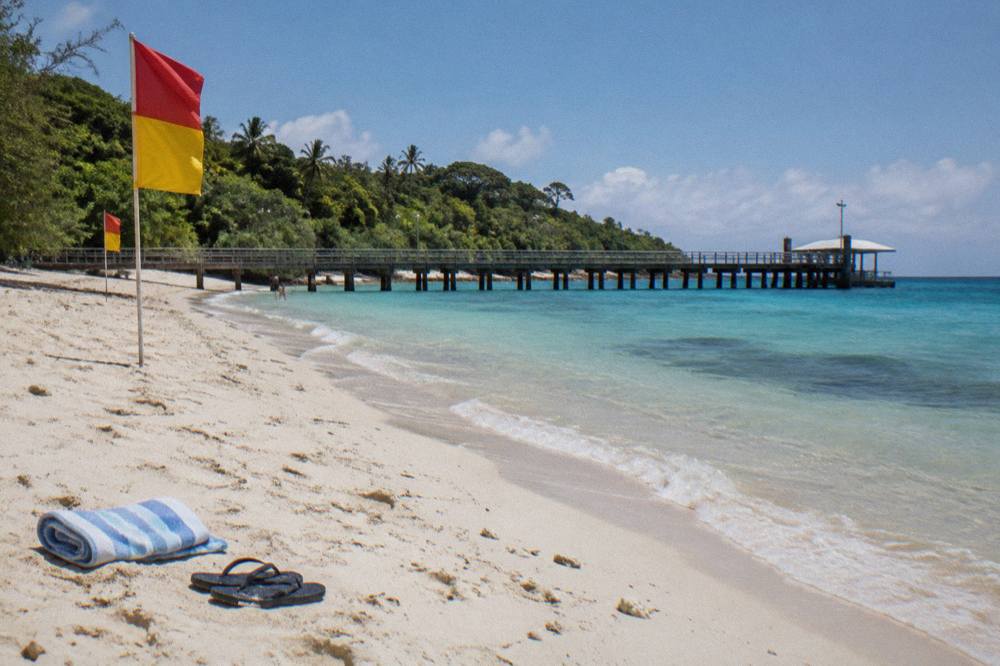
A few practical points follow from the geography. The jetty is where the Great Adventures and Big Cat vessels berth, and the walk from the jetty to the flagged beach is short and flat, so there is no strenuous access involved. The beach walk around the whole island is a 1.5 km circuit that takes about an hour, and the jetty walk is 500 m return, so a snorkeller who tires easily can plan rest stops around a small, contained shoreline. Children and hesitant swimmers can stand and play in the shallows within sight of the flags while stronger snorkellers paddle out over the coral, which is one reason the island works so well for mixed-ability families.
For anyone who wants a dry look at the same reef, the glass-bottom boat and semi-submersible options on the island cover the same bommies without a mask. The glass-bottom boat and semi-submarine guide compares those options, including the operator's own published fare of A$32 for a glass-bottom boat ride booked on the island.
| Safety factor | What applies at Green Island | Source |
|---|---|---|
| Patrolled swim area | Flagged swimming area; snorkellers told to swim between the red and yellow flags | Queensland Parks discovery guide |
| Lifeguard supervision | Listed with the patrolled swimming area among island facilities | Queensland Parks |
| Netting of the swim area | No verified official statement either way | Not published in official sources |
| Boat exclusion | Flagged zone separates swimmers from vessel traffic at the jetty | Queensland Parks |
| Access | Short flat walk from jetty; beach walk 1.5 km circuit, about 1 hr | Queensland Parks |
What About Marine Stingers On Green Island?
Marine stingers, including the tiny Irukandji, are of particular concern from November to June according to Cairns Regional Council, so wear a full-body stinger suit in those months, and treat stingers as possible in any month because Queensland Parks says they may be present in coastal waters at any time. There is no stinger-free month and this article will not invent one. The suit is the mitigation: full-body lycra or a proper stinger suit covering arms, legs and torso, worn snug at wrists and ankles. Queensland Parks also links the Beachsafe programme for first aid guidance, and the standard field response to a sting in tropical Australia is vinegar and emergency help, so knowing where the lifeguards are before you enter the water is part of the routine.
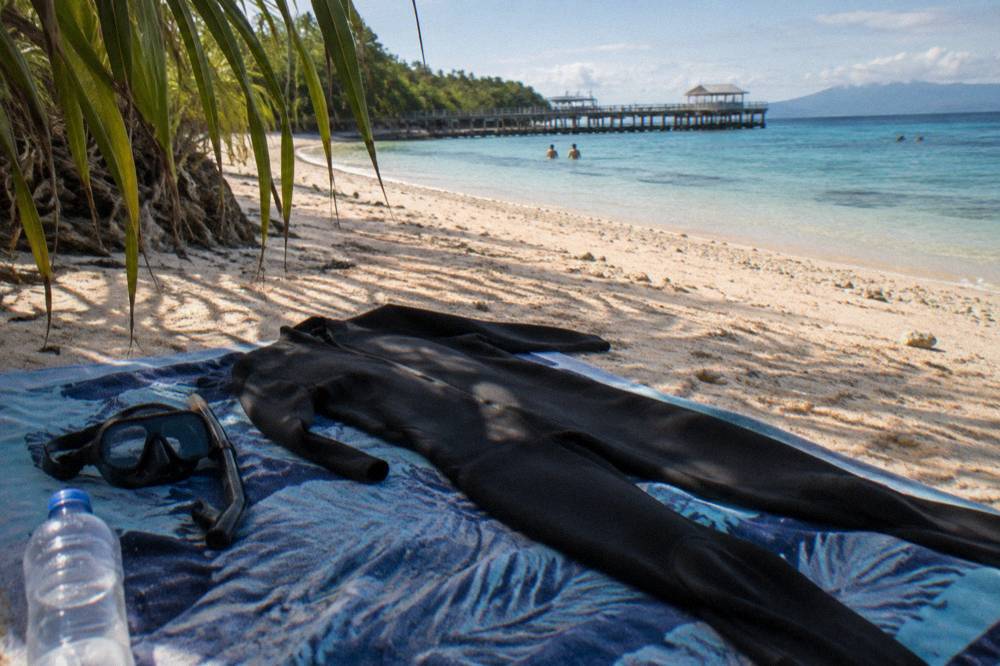
These tours show what the supply side looks like. The Great Adventures Discovery day, from A$156 per person and rated 4.2 from 410 reviews, includes snorkelling equipment as part of the fare; it does not state that a lycra suit is included, so check the booking page before assuming. The Ocean Free schooner sailing, by contrast, lists "wetsuits, lycra suits and buoyancy vests" among its included top-quality snorkel gear, which removes the guesswork for a full-day trip in the warmer months. The stinger season timing also interacts with the calendar: it overlaps the wet season and cyclone season, which runs officially from 1 November to 30 April. The stinger season and stinger suits guide covers suits, season timing and what the councils actually advise in more depth.
Can You Still Snorkel Outside The Flagged Area?
Queensland Parks' instruction to snorkel between the flags is the guidance on the record, and this site repeats it rather than improvising around it. The waters around the island are part of the Great Barrier Reef Marine Park, and the state park guide describes the surrounding reef as primarily a no-take zone with no fishing and no motorised water sports. For a snorkeller, the flagged area remains the supervised, boat-separated option, and the offshore alternative is a guided one: several operators run boat snorkel trips from the island, with crew in the water, which is a different risk profile than swimming off the beach alone. The Great Adventures operator lists a boat snorkel trip at A$68 and a marine-biologist guided snorkel at A$89 as optional extras, both with crew supervision built into what they sell. For swimmers weighing the beach against the boat, our guide to swimming on Green Island and the wider reef covers the flagged area, stinger season, and what reef scientists are reporting right now.
| Stinger season fact | Official wording | Who says it |
|---|---|---|
| Season timing | "Of particular concern between November and June (stinger season)" | Cairns Regional Council |
| Year-round possibility | "May be present in coastal waters at any time" | Queensland Parks |
| Recommended protection | Wear a stinger suit during stinger season | Cairns Regional Council |
| First aid reference | Queensland Parks links Beachsafe guidance | Queensland Parks |
Do You Need To Be A Strong Swimmer?
No, you do not need to be a strong swimmer to snorkel here: the flagged beach has stand-up shallows where you can rest at any moment, the tour boats carry buoyancy vests and in-water crew, and the Seawalker helmet dive from A$289 per person requires no swimming at all. The operators make the buoyancy vest point directly. The Ocean Free tours include "buoyancy vests" in their gear, the Great Adventures outer reef combo covers "snorkelling equipment, buoyancy vests and lycra suits", and the Big Cat full day cruise lists safety gear among its inclusions. Wearing a vest while snorkelling is normal on the reef, not a mark of a beginner, and nervous snorkellers should ask for one rather than defaulting to a bare mask and fins.
For swimmers who want the water but not the effort, the guided formats do the heavy lifting. The Seawalker helmet dive listing, rated 4.1 from 98 reviews, puts a helmet on your shoulders and lets you walk the reef floor breathing normally, with the listing's card name stating the point plainly: no swimming needed. At the other end of the effort scale, the Ocean Free schooner sailing, 4.9 from 682 reviews and from A$289 per person, includes "snorkelling tuition, tours and in-water crew assistance if required" alongside lunch, morning and afternoon tea and a complimentary glass of wine on the sail home. That level of instruction is the difference between bobbing alone off a beach and being shown the reef by people who do it daily.
Age and ability questions also come back to format. The Green Island with kids and accessibility guide covers pram-friendly tracks, the wheelchair-accessible boardwalk (which Queensland Parks grades Easy, noting assistance may be required) and the family logistics of the island generally. A useful pattern for a family day is to split the water time: one adult takes the confident child over the coral while the other stays in the shallows with the weaker swimmer, then swap. The Big Cat full day, from A$110 per person and rated 4.5 from 1,727 reviews, gives up to about 5.5 hours on the island for exactly that kind of unhurried rotation, with a buffet lunch available as a selectable option.
What Weather Conditions End A Snorkel Trip?
Skippers cancel or redirect trips when wind, swell or storms make the crossing or the snorkel unsafe, and free cancellation on the listed Green Island tours means a weather call rarely costs you the fare; your job is simply to book the format that suits your comfort and turn up on time. The official climate record gives the backdrop. Bureau of Meteorology averages for Cairns show the driest months are July and August, at 33.2 mm and 26.5 mm of rain respectively, while the January, February and March averages run 404.8 mm, 437.5 mm and 422.1 mm. Cyclone season runs from 1 November to 30 April. None of that means a wet-season trip is unsafe; it means the margin for a storm interruption is higher and the operator's cancellation judgement matters more.
Every Green Island tour compared here includes free cancellation, from the A$110 Big Cat half days to the A$429 fly-and-cruise package. The practical reading is that the safety decision sits with the operator, whose vessels and permits depend on making it correctly. If you are sailing with Great Adventures, boarding opens 30 minutes before departure. GBRMPA's August 2026 Reef Health Update also noted sea surface temperatures close to average through August, with the Northern region around 0.1 to 0.3 C above, a context fact for the season but not a safety figure for any particular swim.
The in-water conditions that matter most to a snorkeller are wind chop and current, both of which the flagged beach absorbs better than an open reef site. On a blowy day, the glass-bottom boat keeps the reef on the itinerary, and the island's rainforest boardwalk, 1.3 km return and about 50 minutes, plus the Marineland Melanesia crocodile shows at 10.30am and 1.30pm, fill a day comfortably without a mask. The weather and best time to visit guide works through the monthly rainfall and temperature averages in detail for anyone timing a trip.
What Rules Apply When You Snorkel Green Island?
Green Island is a no-take marine park zone where touching coral, touching or chasing wildlife and feeding animals are all prohibited, and drones are banned, so the safest snorkel is a hands-off, respectful-distance one, and those rules are set by Queensland Parks and GBRMPA rather than by any tour operator. The Queensland Parks discovery guide for Green Island sets them out plainly: the area is no-take, you must never touch or take plants or animals from land or sea, feeding wildlife is prohibited, stay on the walking tracks, and drones are not permitted. GBRMPA's responsible reef practices repeat the marine version: no touching coral, no standing on coral, no chasing or touching wildlife including turtles, sharks and rays.
These rules have a safety dividend. Turtles live and feed in the island's seagrass, Queensland Parks says, and a snorkeller who keeps distance from a turtle is also a snorkeller who does not startle a large animal in shallow water. There is no official minimum approach distance for turtles; the official wording is respectful distance and no touching. The Gunggandji people welcome visitors to the island, whose traditional name is Wunyami, and the park guide frames the whole place as "a rainforest cay built entirely by coral", which is a fair reminder that the thing under your fins took millennia to build and minutes to damage.
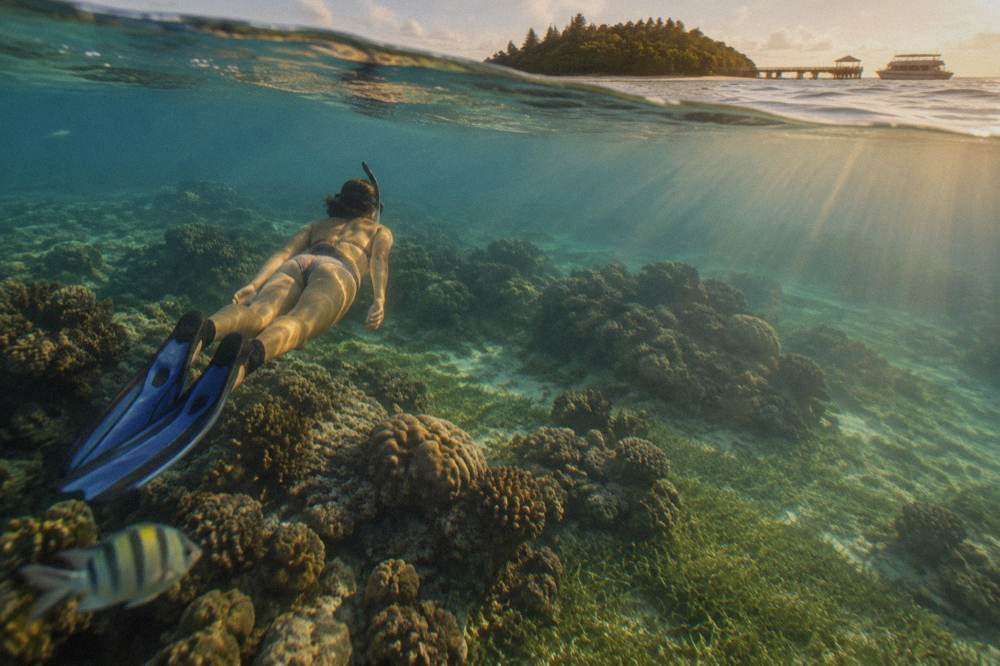
Snorkel etiquette inside the flags rounds out the picture. Fins stay off the coral, hands stay off everything, and tired snorkellers exit rather than push. The no-feed rule extends to fish feeding from the jetty unless an operator runs it as a listed activity, as the fly-and-cruise package does. Readers planning a longer reef itinerary can extend the same rules across the region, and Green Island Great Barrier Reef Tours keeps the full comparison of the 16 bookable Green Island listings in one place, every one of them operating inside the same marine park framework.
| Rule | What it means in the water | Who sets it |
|---|---|---|
| Swim between the flags | Stay in the patrolled swimming area | Queensland Parks |
| No touching coral | Hover, do not stand on or grab bommies | GBRMPA responsible reef practices |
| No touching or chasing wildlife | Respectful distance from turtles, rays, reef sharks | GBRMPA |
| No feeding | Do not hand-feed fish or birds | Queensland Parks |
| No drones | Drones are not permitted on the island | Queensland Parks |
| No-take zone | No fishing or taking shells or coral | Queensland Parks / GBRMPA |
Common Questions About Snorkelling Safely On Green Island
Is It Safe To Snorkel On Green Island?
Yes, for most swimmers who follow the official guidance: stay between the red and yellow flags in the patrolled swimming area, wear a stinger suit from November to June, keep a respectful distance from wildlife and let the operator make the weather call. Queensland Parks describes a flagged, patrolled swim area and warns that stingers are possible in any month, more often in warmer months.
Do I need a stinger suit to snorkel Green Island?
Cairns Regional Council advises wearing a stinger suit during stinger season, November to June, and Queensland Parks says stingers may be present in coastal waters at any month of the year. A full-body lycra or stinger suit worn snug at the wrists and ankles is the standard protection; some tour listings, such as the Ocean Free sailing, include lycra suits in the fare, while others list snorkel gear only, so check the booking page.
Can children snorkel at Green Island?
Yes. The flagged swimming area has stand-up shallows near the beach, the island's facilities include toilets and showers, and tour options from the A$110 Big Cat half days upward give families several hours of unhurried time. Buoyancy vests are included or available on the tour listings, and guided formats add in-water crew assistance.
What happens if the weather is bad on a tour day?
The operator decides whether the catamarans sail. Every Green Island tour on this site offers free cancellation, so a weather call rarely costs you the fare. On blustery days the island itself still delivers: the rainforest boardwalk, the beach circuit, the glass-bottom boat and the Marineland Melanesia shows at 10.30am and 1.30pm all run off the water.
Are there crocodiles at Green Island?
No specific 2026 warnings or frequent crocodile sightings are reported for Green Island, which is an offshore coral cay, and Queensland Parks' official visiting-safely guidance for the island focuses on stingers, sun, tides and coral rather than crocodiles. General caution around any Far North Queensland water remains sensible. The full discussion is in the crocodiles article on this site.
Is snorkelling safer from the beach or from a tour boat?
They are different risk profiles rather than a ranking. The beach inside the flags offers lifeguard supervision and stand-up shallows; tour boats and guided snorkels offer buoyancy vests, tuition and crew in the water over deeper reef. Nervous snorkellers often start at the beach and graduate to a guided trip such as the Ocean Free sailing, which lists snorkelling tuition and in-water assistance as included.