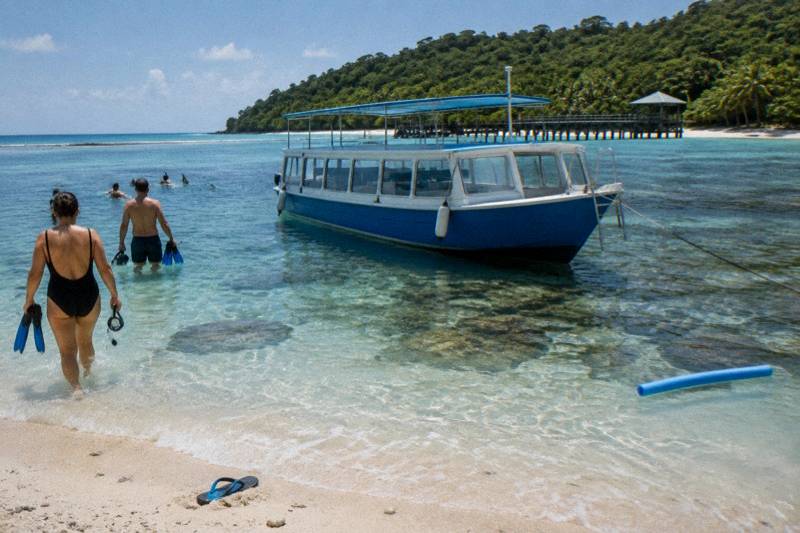
Glass Bottom Boat And Semi-Submarine Tours On Green Island
Not everyone wants to swim to see the reef. Green Island offers two dry ways to look below the surface, the glass bottom boat and the semi-submarine, and the difference between them decides which ticket you should buy.
Short answer
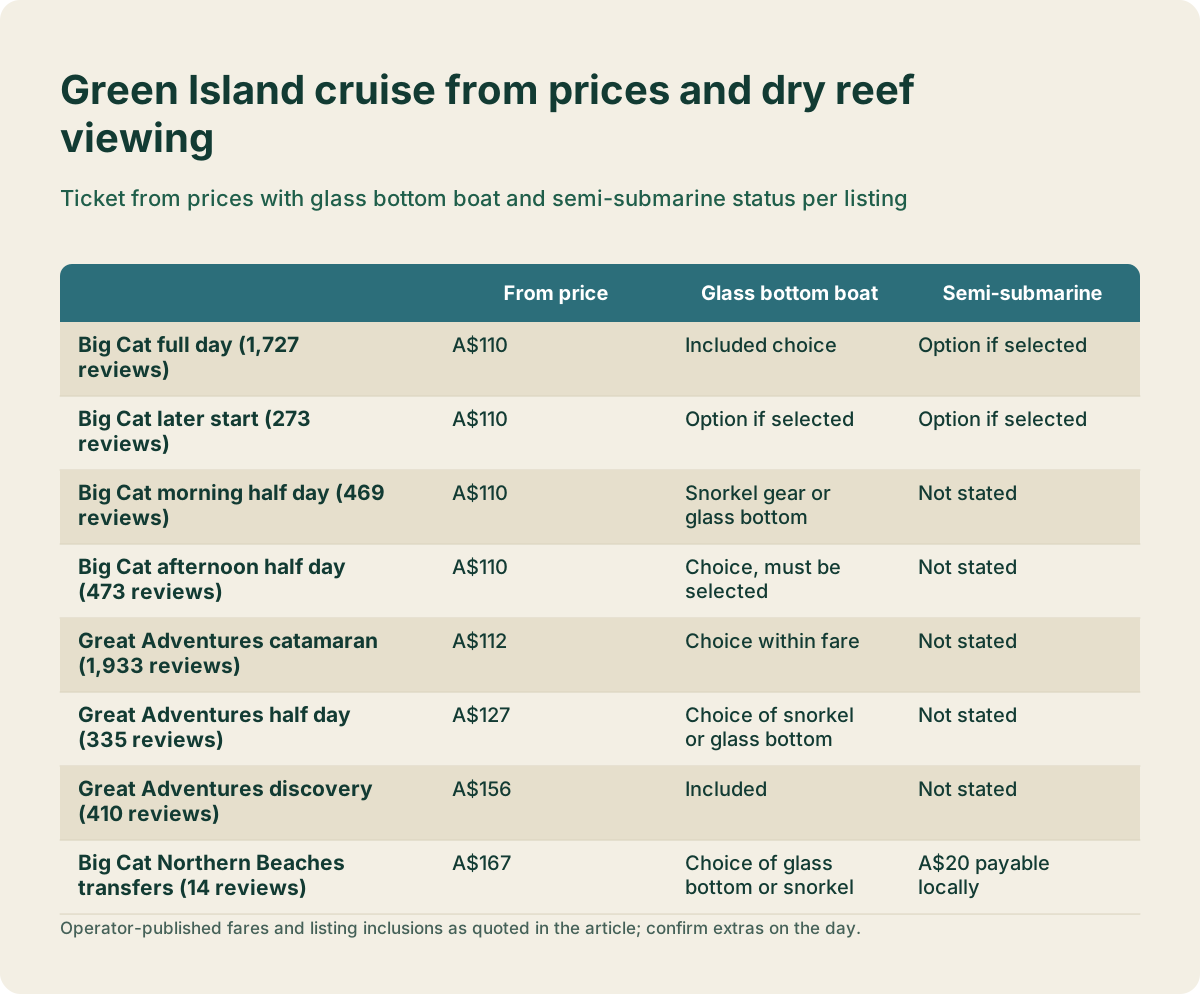
A glass bottom boat ride is included or selectable on most Green Island cruises from A$110 to A$167 per person, including the Big Cat full day at A$110 and the Great Adventures discovery fare at A$156 with both snorkel gear and a glass bottom boat tour. Semi-submarine rides are a select-and-pay option on Big Cat listings. Glass bottom boat hire on the island is A$32 as the operator's own published add-on fare.
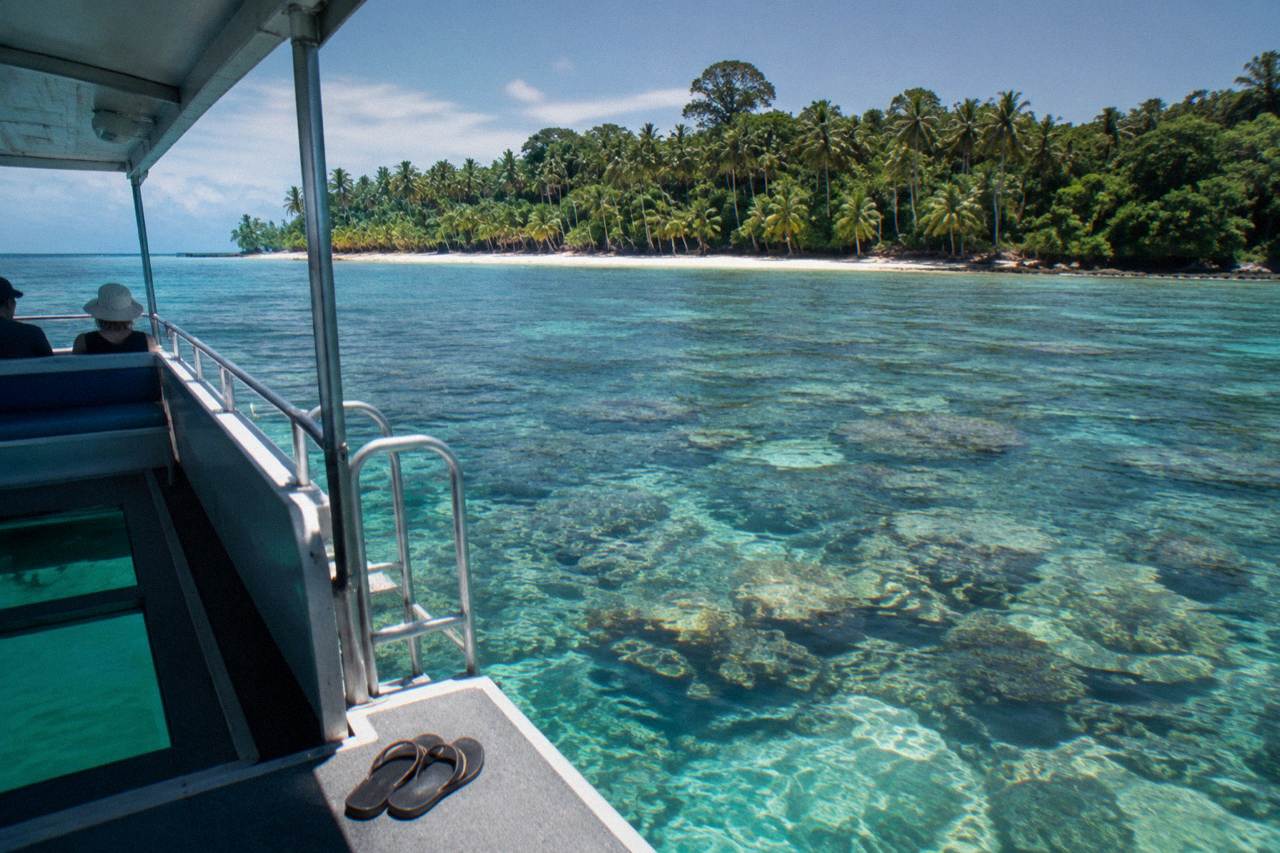
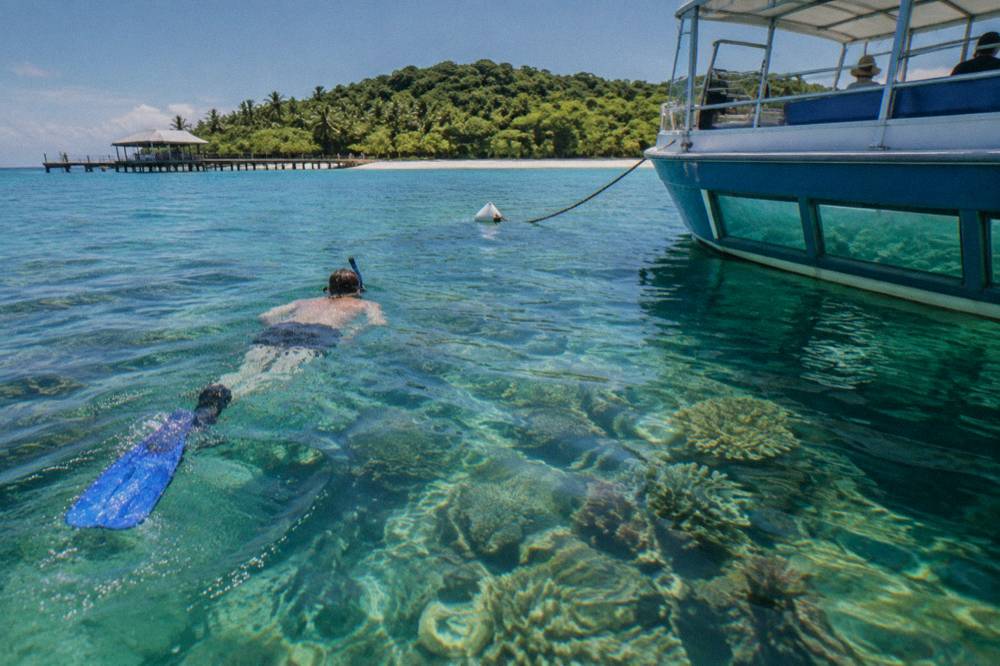
Green Island sits 27 km offshore from Cairns, and the reef that built it fringes the sand in water shallow enough to read from a boat window. Queensland Parks describes the island as a rainforest cay built entirely by coral, with seagrass beds where turtles feed and coral bommies crowded with tropical fish. For swimmers that world is a mask away. For everyone else, toddlers, nervous swimmers, people who get seasick in a washing machine, and travellers who simply do not want to get their hair wet, there are two dry options, and they are not the same product.
This guide compares the glass bottom boat and the semi-submarine across every tour on this site. It covers who each one suits, which cruise tickets bundle a glass bottom boat ride into the fare, what a semi-submarine adds, and what the add-ons cost when bought on the island. The wider worth-it debate, whether the glass bottom boat is worth it as an experience, is handled separately in the blog. What follows is the practical comparison: the boats, the tickets, the prices, and the fit.
What Is A Glass Bottom Boat Tour On Green Island?
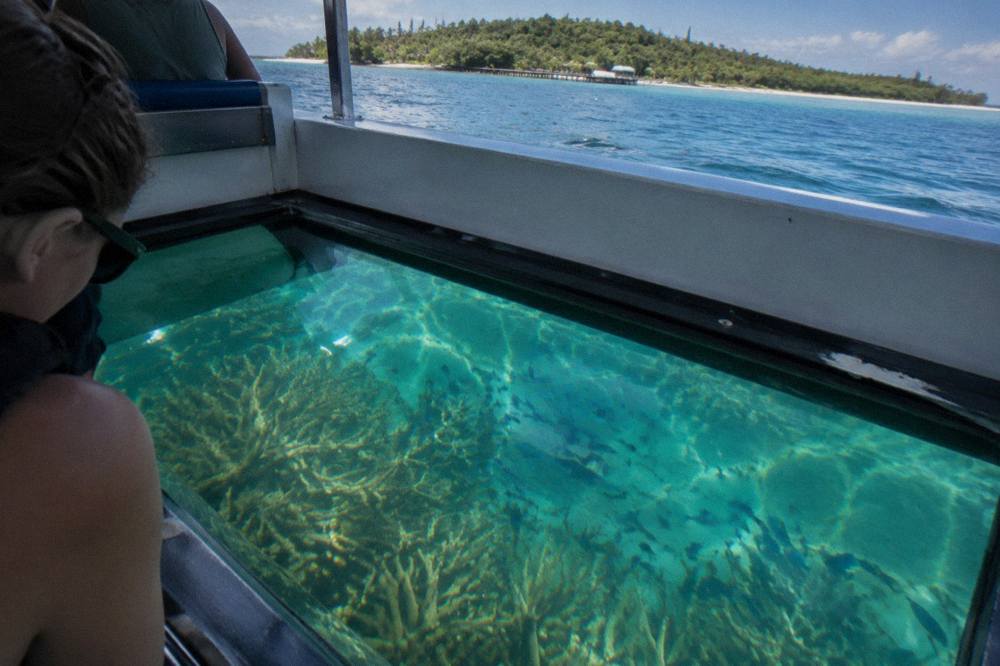
A glass bottom boat tour is a short guided coral-viewing ride in a boat with transparent panels set into the hull, operating from Green Island on the Great Barrier Reef, in which passengers stay completely dry while a driver positions the vessel over coral bommies and seagrass beds and narrates what passes underneath. It runs in almost all weather a cruise still sails in, needs no swimming ability, and is the standard dry reef experience on the island.
Think of it as a seated aquarium tour that moves. The boats hold rows of bench seating around central viewing windows, glide at low speed over the shallows near the jetty, and loop back within roughly half an hour. Because the island's reef starts close to shore, the boat spends its whole run over live coral rather than open water, which is what makes Green Island unusually good for this format compared with an outer reef pontoon transfer.
The glass bottom boat matters on Green Island for a structural reason: the surrounding waters are part of the Great Barrier Reef Marine Park, and Queensland Parks states the snorkel area is between the red and yellow flags with no-touch, no-take rules applying to the reef and its wildlife. A window is the simplest way to look closely at a place you are not allowed to touch.
On the island itself, a glass bottom boat ride can be bought separately. The operator's own published fare on the Great Adventures pricing page lists the glass-bottom boat at A$32 per person as an optional extra, the same price as a day's snorkel hire from the same counter. If your cruise ticket already includes one, buying a second ride on the island is a choice, not a necessity.
Glass Bottom Boat Or Semi-Submarine: Which Suits You?
Choose the glass bottom boat if you are a family, a first-timer, or anyone after a short, cheap, open-air reef look; pick the semi-submarine if you are a serious viewer who wants to sit below the waterline, looking sideways through portholes rather than down through a floor. The glass bottom boat is included in more tickets, while the semi-submarine is almost always a paid selection on Big Cat listings.
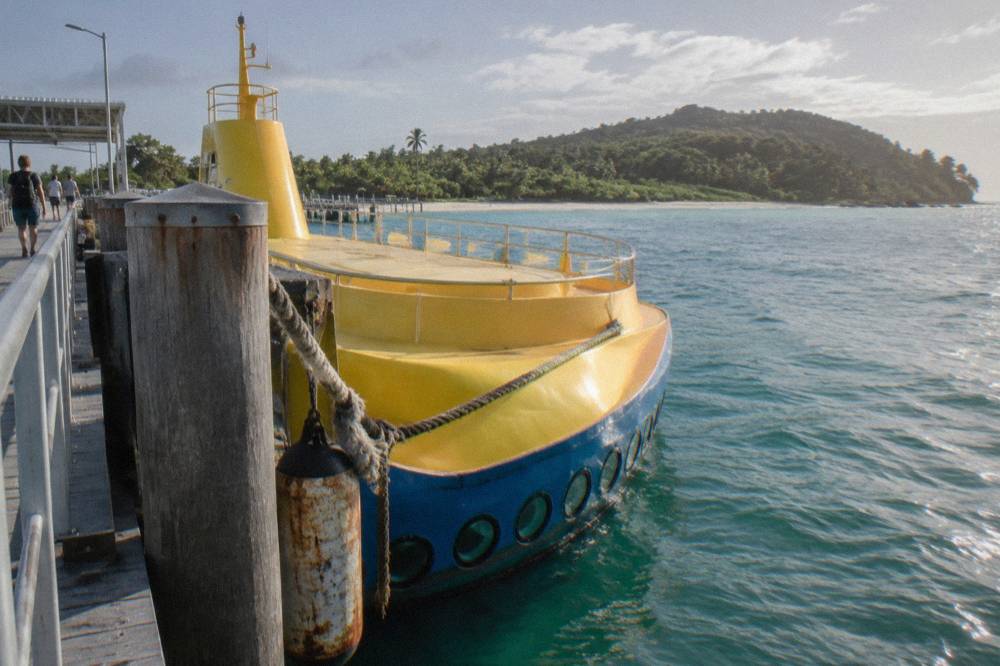
The core mechanical difference is the window. A glass bottom boat puts glass in the floor and you look down, topside, in the open air, with the horizon visible. A semi-submarine never fully submerges but seats you in a lower deck beneath the waterline, so you look out horizontally through portholes at coral walls and fish at eye level. The semi-sub feels closer to a submarine ride; the glass bottom boat feels closer to a wildlife cruise.
That difference maps neatly onto travellers. Children under snorkelling confidence, and there is no minimum swimming requirement for either, generally love the semi-sub's novelty but are well served by either. Non-swimmers can do both without hesitation. Photographers get better results from the semi-sub's shaded portholes, because surface glare through a floor panel frustrates phone cameras. Motion sensitivity favours the semi-sub too: sitting low in the hull near the centre of rotation reduces the roll you feel, though no boat ride is motion-free and both are gentle, short runs in sheltered water.
The decisive practical difference is how you pay. Across the Green Island tours compared here, the glass bottom boat comes as an inclusion or a choice within the base fare of most day cruise options, while the semi-submarine appears only as a select-and-pay extra on Big Cat products. That asymmetry alone settles the question for most travellers.
| Feature | Glass Bottom Boat | Semi-Submarine |
|---|---|---|
| How you view | Down through floor panels, open air | Sideways through portholes, below waterline |
| Included in base fares | Yes, on most day cruise options compared here | No, a select-and-pay option on Big Cat tours |
| On-island operator add-on price | A$32 (Great Adventures published fare) | A$20 payable locally per the transfer listing's own exclusions |
| Swimming needed | None | None |
| Best for | Families, value, first reef look | Photographers, comfort, eye-level coral |
| Motion feel | Light roll, open deck | Lower centre, shaded cabin |
The A$20 semi-sub figure above comes from the Northern Beaches transfer listing's own stated exclusions, which list the semi-submersible coral viewing tour as payable locally at that price. Treat it as a current operator-published fare and confirm on the day, since optional extras on the island can change between fare years.
For the deeper experience question, whether the ride actually justifies its cost against simply snorkelling, read the separate verdict in is the glass bottom boat worth it. This page sticks to the mechanics and the tickets.
Which Cruise Tickets Include A Glass Bottom Boat Ride?
Most Green Island day cruises compared here include a glass bottom boat tour either outright or as a selectable choice within the base fare: both Great Adventures discovery and half-day fares bundle or offer it, and every Big Cat cruise offers glass bottom boat or snorkel gear as the fare choice. Prices run from A$110 to A$167 per person for a ticket with the ride included or selectable.
Cairns operators sell Green Island as a cruise-plus-activity fare, not a bare ferry seat. That is the pattern worth knowing. The Big Cat fleet, the Great Adventures catamaran and their bookable variants all let you choose between snorkel equipment hire and a glass bottom boat tour at the same price, which is why the cheapest Green Island tours compared here are also glass-bottom-eligible. The Big Cat full day, from A$110 per person and rated 4.5 across 1,727 reviews, spells out "snorkeling or glass-bottom boat tour" in its inclusions. Its later-start sibling carries the same from-price, with glass-bottom selectable alongside the semi-sub.
The Great Adventures side works the same way one step up the price ladder. The most reviewed of the Green Island tours compared here is the Great Adventures catamaran cruise, from A$112 with 4.4 from 1,933 reviews. Its fares cover cruise only, or cruise plus a choice of glass bottom boat or snorkel equipment. The discovery fare, the Great Adventures discovery cruise, is the clearest dry-option ticket among the Green Island tours compared here: from A$156 per person, 4.2 across 410 reviews, seven hours, with both the glass bottom boat tour and snorkelling equipment folded into the one fare, so a couple can split up on a single booking, one at the window, one in the water. Check availability.
| Listing | From price | Glass bottom boat | Semi-submarine |
|---|---|---|---|
| Great Adventures catamaran (1,933 reviews) | A$112 | Choice within fare | Not stated |
| Big Cat full day (1,727 reviews) | A$110 | Included choice | Option if selected |
| Big Cat later start (273 reviews) | A$110 | Option if selected | Option if selected |
| Big Cat morning half day (469 reviews) | A$110 | Snorkel gear or glass bottom | Not stated |
| Big Cat afternoon half day (473 reviews) | A$110 | Choice, must be selected | Not stated |
| Great Adventures discovery (410 reviews) | A$156 | Included | Not stated |
| Great Adventures half day (335 reviews) | A$127 | Choice of snorkel or glass bottom | Not stated |
| Big Cat city transfers (23 reviews) | A$157 | Not stated in inclusions | Option if selected |
| Big Cat Northern Beaches transfers (14 reviews) | A$167 | Choice of glass bottom or snorkel gear | A$20 payable locally |
Two honest notes on that table. The transfer listings carry small review pools, 23 and 14 reviews respectively, so their ratings say little; and where a cell reads "not stated", the listing genuinely does not state it, which is not the same as the option being unavailable. The later-start listing is the sleeper pick for dry-option travellers: an 11am departure, from A$110, with the semi-sub and glass-bottom both selectable, reviewed 4.3 from 273 guests, and detailed in the Big Cat cruise guide.
One more layer: the two-islands day, from A$196 with 4.1 from 187 reviews, includes a glass bottom boat tour at Fitzroy Island if selected, meaning a dry-reef traveller can see two islands and two reef views without swimming once.
How Much Do A Glass Bottom Boat And Semi-Submarine Cost?
Dry reef viewing costs nothing beyond your cruise fare when the ride is an inclusion, from A$110 for a Big Cat full day with the glass bottom choice. Bought separately, it runs A$32 as the operator's own published on-island add-on fare. The semi-submarine is A$20 payable locally, a figure the exclusions on the transfer option's booking page spell out. Across the day cruises compared here, the all-in ceiling is A$167 per person.
The economics are simple once you see the fare structure. Because the glass bottom boat is bundled into the base price of the mainstream cruises, the cheapest way to get one is not to buy it at all, it is to buy the right cruise. A Big Cat full day at from A$110 with the glass-bottom choice selected delivers the crossing, roughly five and a half hours on the island, and the reef ride in one fare, and the Great Adventures fares page states the government Environmental Management Charge of A$8.50 per person is already included in its fare prices, so there is no surprise levy at the counter on that side.
Buying on the island suits a different traveller: someone on a bare ferry-style ticket, or someone whose first ride was rained off, or a repeat visitor. At A$32 for the glass bottom boat and the same A$32 for a day's snorkel hire per the Great Adventures published fares, the counter prices are level, which makes the dry choice a preference call rather than a budget one. The semi-submarine's A$20 local price undercuts both, and it is the one format you cannot bundle into a Great Adventures fare at all.
Note the reef tax rules if you are pricing from scratch. The Great Barrier Reef Marine Park Authority charges A$8.50 per person for a full day in the Marine Park, A$4.25 part-day, rising to A$9.00 and A$4.50 from 1 April 2027, collected by the tour operator. Great Adventures states it is included in its fares; the Big Cat transfer listings list the Environmental Management Charge in their inclusions; on other listings the fare is silent, in which case check the booking page rather than assuming either way, a point covered fully in the reef tax and inclusions guide.
| Way to get a dry reef view | Cost | What you get |
|---|---|---|
| Big Cat full day, glass bottom choice | From A$110 pp | Cruise, island time, glass bottom boat or snorkel gear |
| Great Adventures half day | From A$127 pp | Cruise, choice of glass bottom boat or snorkel equipment |
| Great Adventures discovery | From A$156 pp | Glass bottom boat and snorkel gear both included |
| On-island glass bottom boat add-on | A$32 | Single ride bought at the island counter, operator's published fare |
| On-island semi-submarine | A$20 | Coral viewing tour, payable locally per transfer listing |
Is The Glass Bottom Boat Or Semi-Sub Better For Kids And Non-Swimmers?
Both formats work for children and non-swimmers because neither requires entering the water. The glass bottom boat is the family default: it is included in more fares, boarding is a simple step-on from the jetty area, and the open deck lets a nervous child see the whole scene. The semi-sub's lower cabin is the stronger pick for a child who wants the submarine feeling, and for a non-swimmer who would otherwise see nothing of the reef.
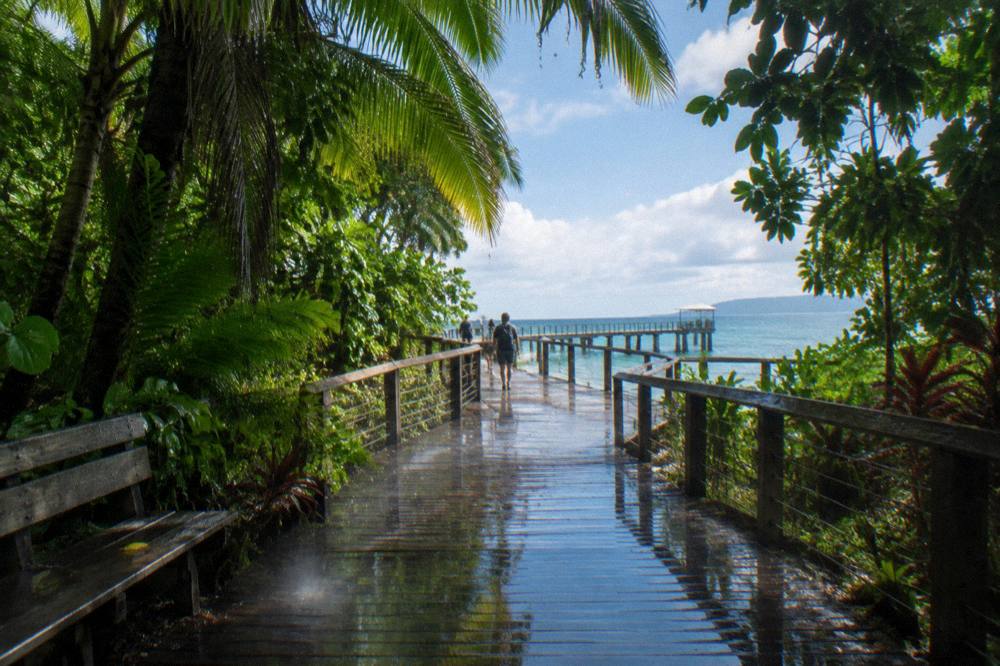
Queensland Parks materials for the island note wheelchair access on the island's walking tracks with assistance possibly required, and the family angle of the whole island, covered in the kids and accessibility guide, leans the same way: Green Island is the Cairns reef option built around short walks, a patrolled swimming area and tame logistics, a 45-minute crossing each way from Cairns. Within that, the dry boat rides are the lowest-effort reef experiences of all.
Practical differences worth weighing with small children: the glass bottom boat is a shorter commitment, and if a toddler melts down mid-ride the deck is right there; the semi-sub's cabin is a stairwell away from open air, which matters for some children and not others. For the mix-and-match family, the Big Cat transfer listings are quietly useful, hotel pickup from Cairns city or the Northern Beaches included, from A$157 and A$167 respectively, buffet lunch and the semi-sub as selectable options, so nobody in the car has to drive to the marina.
For the family member who wants to be in the water while everyone else stays dry, the pairing logic reverses, and that is the moment to consider the Seawalker helmet dive, from A$289 with 4.1 from 98 reviews, which walks non-swimmers on the seafloor in a helmet while the glass bottom boat carries the rest of the family overhead.
What Do You Actually See From A Dry Boat At Green Island?
From a glass bottom boat or semi-submarine at Green Island you can expect coral bommies with tropical fish, seagrass beds, and the turtles that Queensland Parks says live and feed in that seagrass, with green turtles commonly described as sighted near the jetty by Queensland tourism and the resort; no operator promises a turtle on any given ride, and an honest page says a quiet viewing is always possible. Queensland Parks' own guide to the island describes coral reef and seagrass beds surrounding the cay and turtles feeding in the seagrass, per the official national park page. Guest reviews from 2026 trips frequently report turtles seen from the pier and the glass bottom boat, alongside rays and reef sharks, but those reports are anecdotal for any given day, and this site does not repeat them as promises.
Reef condition context, honestly framed: the Australian Institute of Marine Science reported in August 2026 that hard coral cover across the Northern Great Barrier Reef averaged 35.1 percent in 2026, up from 30.0 percent and above the long-term average of 27.0 percent, with the Central region, which takes in the Cairns vicinity, at 31.6 percent. Those are region-wide survey figures, not a Green Island measurement, and no official Green Island-specific snorkel reef condition report exists. What they honestly support is this: the reef system around a cay like Green Island is a living, currently recovering system, and a window onto it shows real coral, not a museum diorama.
Because the rides stay in the shallows near the jetty, the view is close and slow rather than panoramic. Fish cluster around bommies, the boat's shadow occasionally draws curious ones, and the marine biologist reef talks that Great Adventures runs exclusively for its passengers give the window view a narration layer. The no-touch, no-feed marine park rules apply to boats as much as swimmers, so do not expect feeding spectacles; expect natural behaviour.
How Do You Book A Glass Bottom Boat Tour From Cairns?
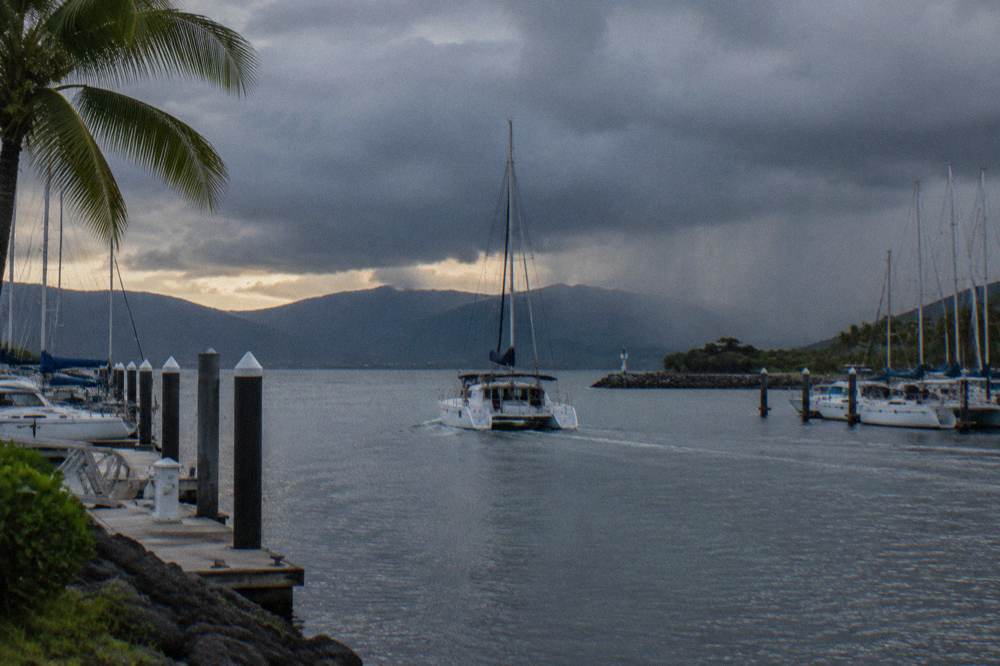
Book a cruise fare that includes the glass bottom boat choice, from A$110 for a Big Cat full day or A$127 for the Great Adventures half day, through the live booking page; Big Cat vessels depart Cairns Marlin Marina with check-in at the vessel, Great Adventures checks in inside the Reef Fleet Terminal at 1 Spence Street, and boarding opens 30 minutes before departure. Every tour on this site carries free cancellation.
The logistics are short: the crossing takes about 45 minutes each way, Great Adventures departs Cairns at 8:30am and 10:30am with island returns at 2:30pm and 4:30pm, and Big Cat runs full days from 9am or 11am returning around 5pm, with half days in morning and afternoon blocks, all covered in detail in the ferry times and tickets guide. From Green Island Great Barrier Reef Tours to the moment you step aboard, the only real decision is which fare structure you picked, because that determines whether the glass bottom boat is a box you tick or a ticket you buy at the jetty.
For travellers who want the semi-submarine specifically, the booking path is narrower: it exists as a selectable option on Big Cat listings, and the city-transfer variant, from A$157 with hotel pickup from Cairns city accommodation included and 4.5 from a small pool of 23 reviews, is the lowest-friction way to bundle it with a door-to-boat day. The Northern Beaches version at from A$167 does the same from Palm Cove and the beaches north.
One planning note that belongs here rather than anywhere else: the Environmental Management Charge question. The two Big Cat transfer listings state the reef tax in their inclusions, Great Adventures states it is inside the fare price, and the standard Big Cat and half-day listings are silent on it, so if you book one of those, treat the A$8.50 as something to confirm on the booking page rather than an extra you can compute with certainty, per the GBRMPA charge rules.
Can You Combine Dry Viewing With Snorkelling Or Diving On One Ticket?
Yes, and the discovery fare is built exactly for it: from A$156 per person it includes both the glass bottom boat tour and full snorkelling equipment, so one ticket covers the water and the window. Beyond that, the Big Cat dive listing at from A$250 includes scuba equipment with a glass-bottom or snorkel choice, and the sailing and fly-cruise products layer dry viewing onto bigger days at sea.
The combination logic is the real answer to most families and mixed groups. A household of one confident snorkeller and one dry-deck traveller wastes money on two separate products if the fare is chosen well; the discovery structure, or the choice-based Big Cat fares at A$110, lets each person take their preferred side of the same boat. The Great Adventures half day at from A$127, 4.1 from 335 reviews, runs the same choice at six hours, and the half-day decision itself, covered in the half day tour guide, is mostly a question of how much island time you want beyond the ride.
For the diver who also wants the window, the Green Island full day with diving, from A$250, includes scuba diving equipment plus a choice of snorkelling equipment or a glass-bottom boat ride, with a buffet lunch selectable; its review pool is just 10 reviews, so treat its 4.9 rating as promising rather than proven. The two Ocean Free schooner products, from A$289 each, take the opposite approach, small-group sailing with snorkel tours and marine-naturalist commentary, with island glass-bottom and semi-sub rides bookable on the island and paid to the skipper, per that listing's own exclusions.
At the top of the ladder, the fly-and-cruise package at from A$429 adds a 40-minute reef flight with guaranteed window seats to a full Big Cat day that includes the glass bottom boat coral viewing tour, so the dry viewing happens twice, from the air and through the hull. And the outer reef pontoon combo at from A$312, 4.6 from 98 reviews, gives two hours on Green Island and three hours on a Moore Reef platform with a buffet lunch, a reminder that the window-versus-water question scales well beyond one island.
| Product | From price | Dry viewing included | Water activity included |
|---|---|---|---|
| Great Adventures discovery | A$156 | Glass bottom boat tour | Snorkel equipment |
| Big Cat full day | A$110 | Glass bottom boat (choice) | Snorkel gear (choice) |
| Green Island full day with diving | A$250 | Glass-bottom or snorkel choice | Scuba equipment |
| Ocean Free sailing (small group) | A$289 | Island rides bookable via skipper | Snorkel tours and gear |
| Fly and cruise package | A$429 | Glass bottom tour plus reef flight | Snorkel equipment hire |
What About Weather, Stingers And Cancellation?
Dry boat rides run whenever the cruise sails, no stinger suit needed because nobody enters the water, and every tour on this site carries free cancellation, so a glass bottom boat ticket is the lowest-weather-risk reef experience from Cairns; stinger season, November to June though Queensland Parks warns stingers can appear in any month, affects snorkellers and swimmers far more than window viewers, and a rainy day degrades a beach day more than it degrades a semi-submarine cabin.
Stinger season deserves the careful phrasing the official sources use. Cairns Regional Council flags marine stingers as of particular concern between November and June and advises stinger suits in that window; Queensland Parks warns stingers may be present in coastal waters at any time of the year, more often in warmer months. No month is stinger-free, and this site never writes one. A dry boat ride sidesteps the question entirely, which for cautious travellers is one of the format's quiet advantages; the full suit-and-season picture is in the stinger season guide.
Weather is the other honest variable. The 45-minute crossing and the sheltered shallows where these boats run mean operations continue in conditions that would cancel an outer reef snorkel session, but tropical downpours, far more likely in the wetter months, when Cairns monthly rainfall averages run from 437.5 mm in February and 404.8 mm in January down to 26.5 mm in August, can cut visibility and the appeal of an open deck. The semi-sub's enclosed cabin is the better wet-weather format; the glass bottom boat is the better bright-water one. Cyclone season officially runs 1 November to 30 April, and cancellations in that window are the operator's call, which is what the free cancellation terms are for.
The verdict, as far as this comparison goes: buy the glass bottom boat as part of a fare rather than as an island extra, choose the semi-submarine when comfort, photography or wet weather matters more than price, and let the snorkelling question decide which of the two cruise families you board. The Great Adventures discovery fare is the strongest single ticket for a mixed group, the Big Cat full day is the cheapest dry-reef day among these Green Island tours, and the later-start option is the underrated middle path. For everything about whether the ride itself earns its reputation, the blog's worth-it verdict takes over. Before you commit to a fare, the glass bottom boat worth-it verdict lays out what you actually see through the glass and whether the ticket price holds up.
Common Questions About Glass Bottom Boats And Semi-Submarines On Green Island
Is the glass bottom boat included in Green Island cruise tickets?
On most of them, yes. The Big Cat full day, half days and later start, all from A$110, include it or offer it as the snorkel-or-glass-bottom choice, and the Great Adventures discovery fare from A$156 includes it outright alongside snorkel equipment. Where a fare's inclusions are unclear, check the operator's live booking page before assuming.
How much does a glass bottom boat ride cost on Green Island?
As the operator's own published add-on fare, A$32 per person bought at the island counter, the same as a day's snorkel hire on the same pricing page. Bundled into a cruise fare, it effectively costs nothing beyond the fare, and the Green Island cruises compared here start at A$110 per person.
Is the semi-submarine the same as a submarine?
No. A semi-submarine stays at the surface with a passenger cabin sitting below the waterline, so you look out through portholes while the vessel never fully submerges. On the Green Island tours compared here, it is a select-and-pay option with Big Cat, at A$20 payable locally on the day.
Can non-swimmers and young children do the glass bottom boat?
Yes. Nobody enters the water on either format, so swimming ability is irrelevant and there is no gear to wear. The glass bottom boat's open deck suits restless small children; the semi-sub's cabin suits kids who want the submarine feeling and adults who prefer shade and a lower centre of motion.
Will I see turtles from the glass bottom boat?
Queensland Parks says turtles live and feed in the seagrass around the island, and Queensland tourism and the resort describe green turtles as commonly sighted near the jetty. No operator promises a sighting on any given ride, and a quiet viewing day is always possible.
Do I pay reef tax on top of a glass bottom boat ticket?
The Environmental Management Charge is A$8.50 per person for a full day. Great Adventures states it is included in its fares and the Big Cat transfer listings list it in inclusions; other listings are silent, so confirm on the booking page. From 1 April 2027 the charge rises to A$9.00.