Stinger Season In Cairns: Months, Suits And What It Means For A Green Island Trip
Marine stingers are a real part of swimming in Far North Queensland, and an honest plan starts with the calendar rather than reassurance.
Short answer
Cairns authorities flag marine stingers as a particular concern from November to June, and Queensland Parks warns they can be present in any month. A full-body stinger suit is the standard protection, and several Green Island listings state wetsuit or lycra suit supply. Day tours run all year, so the season changes what you wear, not whether you go.
Marine stingers are of particular concern in Cairns waters between November and June, and Queensland Parks adds the caveat that matters more than the dates: they may be present in coastal waters at any time. That single pairing, a high-risk window plus a year-round possibility, is the whole basis of how local operators and authorities treat swimming on the Great Barrier Reef. Nobody closes the reef for stinger season. Boats such as the Big Cat full day cruise and the Great Adventures catamaran run all year, and the Ocean Free schooner sails to Green Island through the warmest months too. What changes is the clothing.
This guide on Green Island Great Barrier Reef Tours sets out what the official sources actually say, what a stinger suit is and why it works, which Green Island listings state suit supply in their inclusions, and how the season should shape when you book. It draws only on verified official material: Cairns Regional Council, Queensland Parks and Wildlife Service, the Great Barrier Reef Marine Park Authority and the Bureau of Meteorology. There is no stinger-free month in Cairns, and any page that promises one is guessing.
When Is Stinger Season In Cairns?
Stinger season in Cairns runs with marine stingers of particular concern from November to June, according to Cairns Regional Council, while Queensland Parks warns that stingers may be present in coastal waters in any month of the year. The high-risk window is real, but it is a gradient rather than a switch, and no official source names a month with zero risk.
The two statements come from different authorities and serve different purposes. The council's November to June framing drives operational decisions: when lifeguards treat stings as a box jellyfish or Irukandji case by default, when vinegar stations are stocked on patrolled beaches, and when full-body suits stop being optional comfort gear and become standard practice. Queensland Parks' year-round wording covers the places patrols do not reach, which includes most reef water. Green Island sits 27 km offshore from Cairns, and its snorkelling water is reef water, not a patrolled surf beach.
For a Green Island visitor the practical reading is straightforward. From roughly November the assumption is that skin below the suit line is exposed skin, and suits go on for any snorkel longer than a quick dip. In the cooler middle of the year the risk is described as lower, never absent, and many people snorkel in just a mask and fins between May and October. Operators make the call on the day based on conditions and their own protocols. The council's own guidance is blunt: wear a stinger suit during stinger season, per its Tropical Coast trail advisory.
| Source | What it says | What it means for you |
|---|---|---|
| Cairns Regional Council | Stingers of particular concern November to June; wear a stinger suit in season | Treat November to June as suit-on months |
| Queensland Parks (Green Island) | May be present in coastal waters at any time, more frequent in warmer months | No month is a guaranteed stinger-free month |
| Bureau of Meteorology | Tropical cyclone season runs 1 November to 30 April | The stinger peak overlaps the cyclone season, a separate risk |
Two related calendars often get folded together, so it helps to keep them apart. Stinger season is about jellyfish. Cyclone season, 1 November to 30 April per the Bureau of Meteorology, is about weather and sea state. A wet-season Green Island trip can be perfectly swimmable on a calm February morning, or cancelled outright by a trough. If you are planning around the warm months, our guide to Green Island weather and the best time to visit separates the two risks in more detail.
What Is A Stinger Suit And Why Does It Work?
A stinger suit is a full-body lycra or nylon-spandex garment that covers the skin a jellyfish tentacle would touch, and it works by physical barrier rather than chemical repellent. Most stings land on uncovered skin, so covering arms, legs and torso removes most of the exposure. It is not a wetsuit for warmth, although many operators use similar full-length wetsuits that do both jobs.
The two jellyfish behind the season are the box jellyfish and the Irukandji. Box jellyfish are large, their tentacles trail metres, and their stings are immediately painful and occasionally fatal. Irukandji are thumbnail-sized, and their stings can delay symptoms before severe back pain, cramping and anxiety set in, a syndrome that usually means hospital. Neither is something to reason your way around with confidence. What a suit does is simple: a tentacle pressed against lycra cannot fire nematocysts into skin it never reaches.
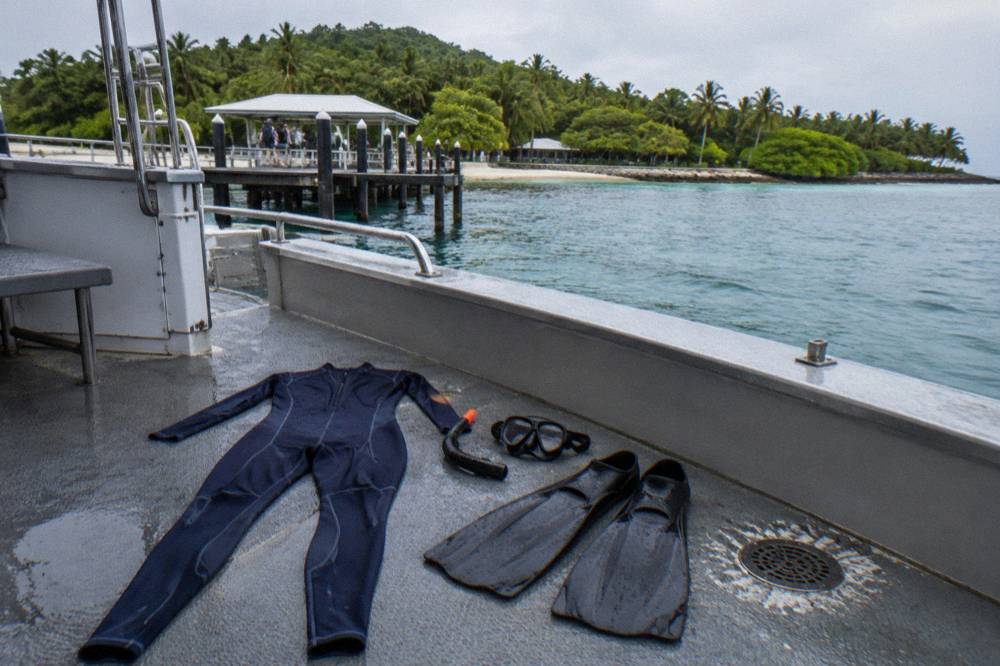
Suits are light, close-fitting and made to swim in. Rental or included suits on reef trips are the same garments as rash vests but with full arms and legs, sometimes a hood. In the hottest months they are arguably more comfortable than bare skin, because they also block the tropical sun, which stings far more people than jellyfish do. If you are buying your own, fit matters more than brand: loose cuffs and gaps at the neck or ankles defeat the purpose.
Which Green Island tours state suit supply? Check each option's inclusions, because what is covered varies tour by tour.
| Listing | What the listing states about suits | From price |
|---|---|---|
| Ocean Free schooner day | Snorkelling equipment listing includes buoyancy vests; no suit line stated on this variant | from A$289 pp |
| Ocean Free sailing with dive options | Top-quality snorkelling gear including wetsuits, lycra suits and buoyancy vests | from A$289 pp |
| Great Adventures catamaran day | Choice of glass-bottom boat or snorkel equipment; no suit line stated | from A$112 pp |
| Big Cat full day cruise | Snorkeling or glass-bottom boat tour and safety gear; no suit line stated | from A$110 pp |
The pattern to notice: when a listing does not mention suits, that is silence, not absence. Operators across the Cairns fleet generally have suits available, but the only claim this site will print is the one on the listing. Where a listing is silent, ask the operator's booking page before you assume. The Ocean Free sailing day with dive options is the clearest on-paper case, naming wetsuits and lycra suits among its inclusions alongside a large smorgasbord lunch and in-water crew assistance.
Three tours stand out for a warm-season day, and the trio below spans the range: a small-group sailing day, the cheapest big-boat full day, and the most-reviewed catamaran.
Which Green Island Tours Supply Suits And Other Gear?
Suit supply is spelled out on only some of these Green Island tours: the Ocean Free sailing day with dive options names wetsuits and lycra suits outright, the Outer Reef pontoon combo pairs lycra suits with snorkel gear, and most Big Cat and Great Adventures day cruises mention snorkel equipment with no suit line at all. When a tour says nothing about suits, that is all it says, so check the operator's booking page before relying on one.
This is the honest version of the gear question, and it avoids the trap of assuming every boat hands out a suit because some boats do. The Moore Reef pontoon combo lists use of snorkelling equipment, buoyancy vests and lycra suits together, which matters because that tour spends three hours at an outer reef platform where you are in the water on and off all afternoon. The Seawalker helmet dive is a different case again: it is built for people who do not swim, with a helmet that keeps your head dry, and it pairs with either a glass-bottom boat tour or snorkel equipment from A$289 per person.
The Ocean Free options deserve a specific note because they tell the clearest suit story of any Green Island tour compared here. The base schooner day, from A$289 per person with a 4.9 rating across 682 reviews, includes snorkelling tuition, tours and in-water crew assistance, transfers between the schooner and Green Island, lunch, morning and afternoon tea, and a complimentary glass of wine on the return sail. The dive-options variant spells out the suit wardrobe: wetsuits, lycra suits and buoyancy vests. In stinger season, that named suit line plus a crew member in the water beside you is exactly the combination a nervous snorkeller wants.
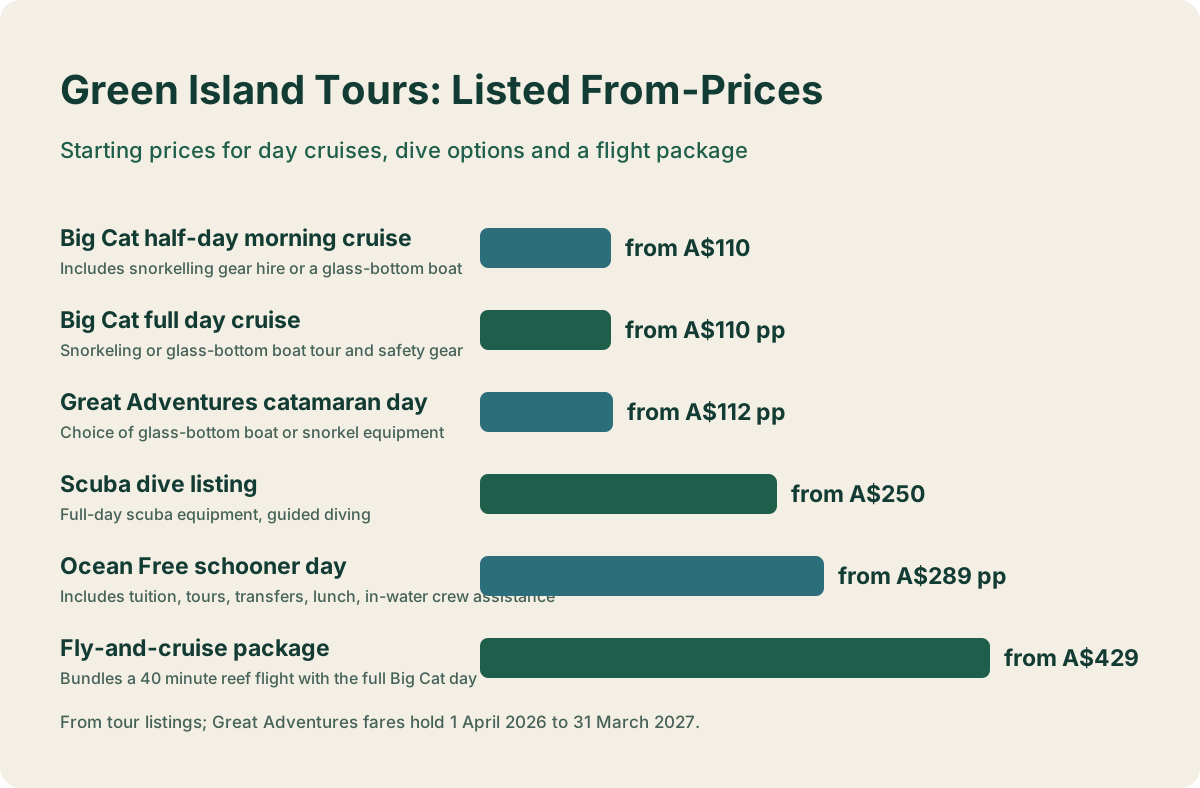
Gear beyond suits follows the same read-the-line rule. The Big Cat half-day morning cruise from A$110 includes snorkelling gear hire or a glass-bottom boat, plus a snorkelling demonstration, which suits first-timers on a short timeline. The fly-and-cruise package from A$429 bundles a 40 minute reef flight with the full Big Cat day, buffet lunch and glass-bottom boat coral viewing or snorkel hire. The two-islands day covering Fitzroy and Green Island from A$196 carries snorkel equipment usable at both islands. Every one of these runs through the season; none of them closes for it.
Is It Safe To Snorkel On Green Island During Stinger Season?
Snorkelling on Green Island through the November to June window is managed risk rather than danger-free: Queensland Parks directs snorkellers to swim between the red and yellow flags, operators use suits and trained crew, and no official source describes inshore reef water as stinger-free at any time. The honest answer is that suits and patrol zones reduce risk, they do not remove it, and the season rewards preparation over avoidance.
The flags matter more than visitors expect. The Queensland Parks discovery guide for Green Island tells snorkellers to stay between the red and yellow flags, which concentrates swimmers where spotters can see them and where boat traffic is excluded. The island also has a patrolled swimming area listed in the parks guide. None of this is a net guarantee against a jellyfish the size of a fingernail, which is why the suit advice and the flag advice travel together in every official document.
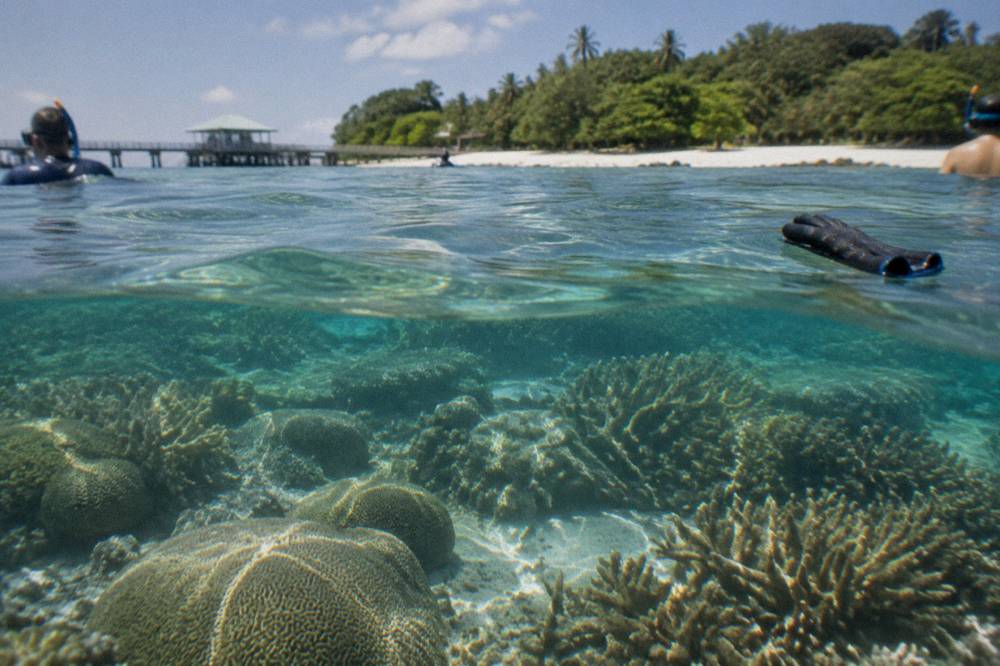
Marine park rules add a second layer that is easy to miss in the stinger conversation. Green Island's surrounding waters are no-take marine park zone: no touching or taking animals, no feeding wildlife, stay on the tracks. A snorkeller who keeps a respectful distance from turtles, rays and coral is both obeying the park code and keeping their hands out of places things sting. We cover the wildlife side, including green turtles in the seagrass beds, in our guide to sea turtles on Green Island.
If the open water worries you, the dry options are real ones. The glass-bottom boat is the classic answer, and our piece on whether the glass-bottom boat tour is worth it goes through it. The semi-submersible runs below deck level with windows on either side. The dive listing with full-day scuba equipment from A$250 exists too, and guided diving keeps you beside a professional through the whole swim, though its review pool is small, only 10 reviews, so judge it on the operator rather than the count.
For travellers who want a suit stated on paper and a crew in the water, this sailing day is the strongest fit among the Green Island tours compared here.
How Stinger Season Shapes Your Booking Window
Stinger season barely closes any doors on Green Island, but it reshapes two decisions: it pushes flexible travellers toward the May to October shoulder for bare-skin snorkelling, and it makes suit-inclusive or crew-supported listings the better pick for anyone booked into the November to June window. Weather cancellations, not stingers, are the thing that actually stops boats in the wet season, so free cancellation is worth more than a calendar workaround.
Green Island pricing comes from two places, and they behave differently. The Great Adventures fare table holds the same prices from 1 April 2026 to 31 March 2027, so no wet-season discount or dry-season surge is baked into the operator's own fares: the ferry transfer sits at A$112, and the glass-bottom boat and snorkel hire extras at A$32 each on the island. The live booking pages can and do move with demand, which is why a from-price is a snapshot, not a law. Across the Green Island tours compared here, the day cruises span A$110 to A$167, and the full range including combos and flights runs to A$429.
The Cairns climate record explains why the shoulder months feel so different. Bureau of Meteorology averages for the Cairns Aero station show the three wettest months, January at 404.8 mm, February at 437.5 mm and March at 422.1 mm, sitting against July and August at 33.2 mm and 26.5 mm, while overnight minimums swing from 23.8 degrees in January to 17.2 in July. The table below puts the stinger window against that record.
| Period | Stinger risk framing | Cairns rainfall and temperature character |
|---|---|---|
| November to January | Of particular concern; suit standard | Wet season building, heavy rain, overnight minimums around 23.8 degrees |
| February to April | Of particular concern; cyclone season overlap | Peak rainfall months, 437.5 mm in February |
| May to June | Concern tapers but season runs to June | Rainfall easing, 92.0 mm in May, cooler nights |
| July to October | Lower risk, possible in any month | Driest and coolest stretch, 26.5 mm in August |
For families, the calendar argument cuts both ways. The wet season brings warmer overnight minimums and often cheaper shoulder airfares, but it also brings the months of highest rainfall. If your Green Island day is one of three in a Cairns week, a wet-season booking with free cancellation is a reasonable bet. If it is your single reef day of a short trip, the dry season is the surer window. Every tour on this site carries free cancellation, so the risk of booking early is low either way.
The reef-tax line item is a small but real seasonal-adjacent cost worth flagging once: the Environmental Management Charge is A$8.50 per person for a full-day passenger, rising to A$9.00 from 1 April 2027, collected by the operator under their permit. Some listings fold it in, like the Big Cat transfer days that name the charge as included, while others are silent; the GBRMPA charge page sets the amount. Full detail lives in our guide to the reef tax and what is included.
One of these tours suits the confidence question particularly well: the pontoon combo puts a stable platform, buffet lunch and named lycra suits between you and the open water for the outer reef section.
What To Do If Someone Is Stung?
The official first aid sequence for a tropical marine sting in Queensland is to call 000 for emergency help, remove the person from the water, flood the sting site with vinegar for at least 30 seconds, and pick off any remaining tentacles with fingers or tweezers while keeping the casualty still. Do not rub the area, do not apply fresh water, and do not use a pressure bandage unless directed, because incorrect measures can worsen envenomation.
Vinegar is the reason those plastic bottles sit on Far North Queensland beaches. It stops unfired nematocysts on the skin from discharging; fresh water and rubbing do the opposite and trigger them. Queensland Parks' Green Island guidance links through to Beachsafe for marine stinger first aid, and the Queensland Government dangerous marine stingers page carries the full current protocol. Operators brief their crew on exactly this sequence, which is one quiet argument for tour-based snorkelling over going it alone: the boat carries vinegar, oxygen and a radio.
Irukandji syndrome is the case that punishes delay. Because symptoms can arrive well after a sting that felt minor, any sting in stinger season deserves observation, not shrugging off. Back pain, muscle cramps, nausea, anxiety or a sense of doom after a sting means hospital, and in Cairns that is a short trip. None of this is a reason to stay out of the water; it is the reason the suit goes on and the vinegar bottle is 20 metres down the beach rather than 20 minutes away.
The seasonal read, then, is not a warning against visiting. It is a packing list.
For a season-proof option that adds a reef flight to the boat day, the fly-and-cruise package is the biggest single-day itinerary among the Green Island tours compared here.
Between the calendar, the suit and the right listing, stinger season is a solved problem rather than a reason to stay home. The fleet that serves Green Island, from the Big Cat catamarans to the Great Adventures fast ferries and the Ocean Free schooner, runs through it every year, and every operator on this site offers free cancellation if the weather turns instead.
Common Questions About Stinger Season In Cairns
When is stinger season in Cairns?
Cairns Regional Council flags marine stingers as of particular concern between November and June. Queensland Parks adds that stingers may be present in coastal waters at any time of year, so no month is officially stinger-free.
Can I swim on Green Island during stinger season?
Yes. Tours run all year and snorkelling continues through the season with a full-body stinger suit, swimming between the red and yellow flags as Queensland Parks directs. The risk is managed by suits and patrol zones, not removed.
Do Green Island tours provide stinger suits?
Some listings state it directly: the Ocean Free sailing day with dive options lists wetsuits and lycra suits, and the Outer Reef pontoon combo lists lycra suits with snorkel gear. Other day cruise listings state snorkel equipment without mentioning suits, so check the operator's booking page where the listing is silent.
What do I do if someone gets stung?
Call 000, get the person out of the water, flood the site with vinegar for at least 30 seconds, and remove tentacles without rubbing. Do not use fresh water. Watch the casualty for delayed Irukandji symptoms such as back pain, cramps or nausea.
Which months are safest for snorkelling at Green Island?
The cooler, drier months from around May to October carry the lower stinger risk and the region's lowest rainfall, but official advice never names a zero-risk month. A suit is standard practice in the warmer months and sensible year-round.
Does stinger season affect tour prices?
The operator fare table for Great Adventures holds the same published fares from 1 April 2026 to 31 March 2027, so there is no official seasonal surge. Aggregator listings can vary with demand, so treat any listed price as a snapshot of the day you check.