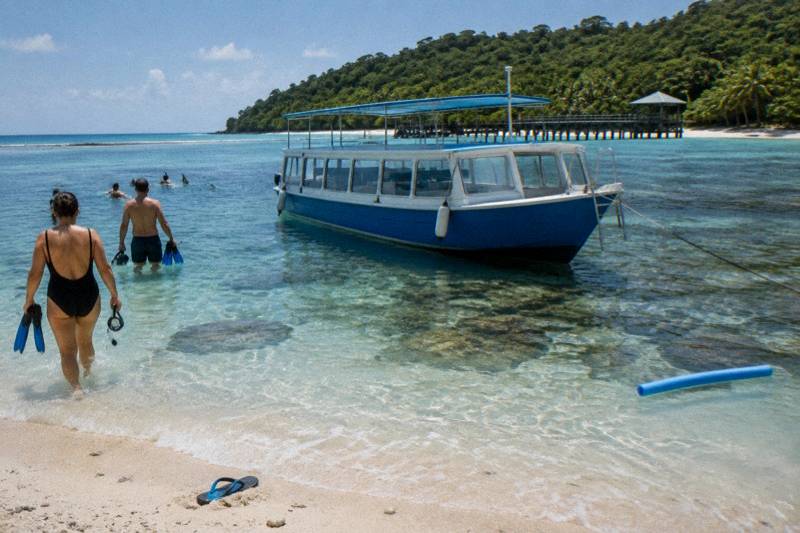
Is The Glass Bottom Boat Tour Worth It At Green Island?
A verdict on the Green Island glass bottom boat: what it shows, what it costs, which tours include it, and who should skip it.
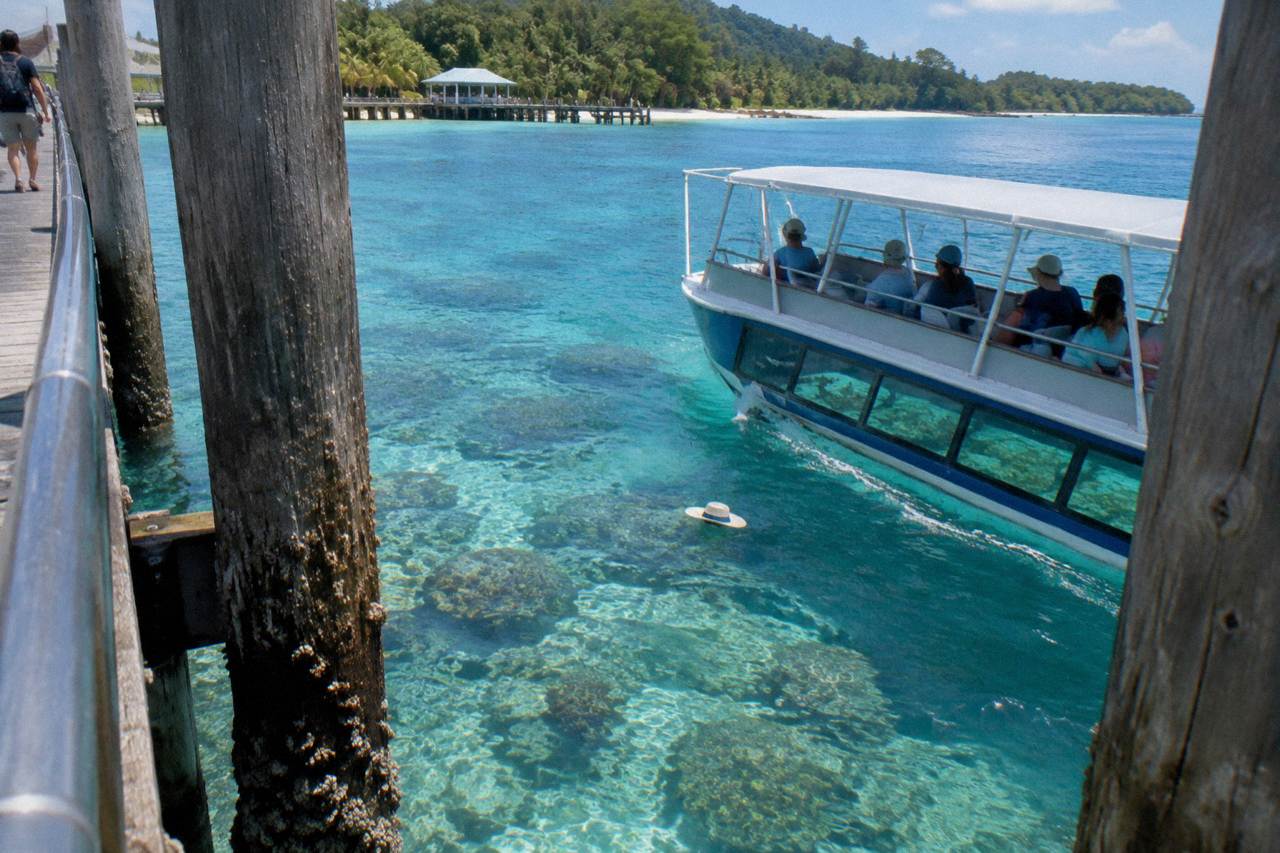
Green Island has been showing visitors the reef through a pane of glass since long before snorkel gear came in beach bags, and the format still sells. Sixteen bookable listings on this site touch the island, and at least nine of them name a glass bottom boat somewhere in their inclusions, either bundled into the fare or offered as a choice against snorkel hire. That popularity is exactly why the question deserves a straight answer rather than a brochure one. This article weighs what the trip actually delivers, what it costs from each operator, and which kind of traveller walks off the pontoon feeling shortchanged. The short version: for swimmers it is a pleasant extra, for everyone else it is the reef.
Is The Glass Bottom Boat Tour Worth It At Green Island?
For most visitors, yes: it is the cheapest and least demanding way to see living coral at Green Island, it runs in almost any weather a cruise departs in, and it suits children, nervous swimmers and anyone who cannot or will not get in the water. Strong snorkellers will find it slow and secondhand, and anyone expecting a guided marine biology lecture should temper that too.
The honest way to answer the question is to separate the boat from the hype. A glass bottom boat at Green Island is a short coral-viewing circuit in a vessel with transparent panels set into the hull, crewed by someone who points out coral bommies, tropical fish and, on days when they happen to be there, turtles and rays. Queensland Parks notes that turtles live and feed in the seagrass around the island, and tourism bodies describe them as commonly sighted, but no operator promises a sighting on any given circuit, and a quiet pass is a real possibility. What the boat reliably delivers is dry, effortless viewing of a reef that surrounds a 6,000 year old coral cay 27 km offshore from Cairns.
The comparison that matters is not glass bottom boat versus nothing. It is glass bottom boat versus snorkelling, versus the semi-submersible, and versus simply standing on the jetty. Snorkelling at Green Island is free once you have gear, and the Green Island snorkelling guide covers it in depth; the glass bottom boat's job is to serve the people in that comparison who stay dry. The verdict therefore splits by traveller type, and the table further down breaks it cleanly.
For planning, the three listings below cover the main ways to bundle a glass bottom boat into a Green Island day from Cairns, from the fare with the tour included to the bare catamaran ticket where you add it on the island.
What Does The Glass Bottom Boat Actually Show You?
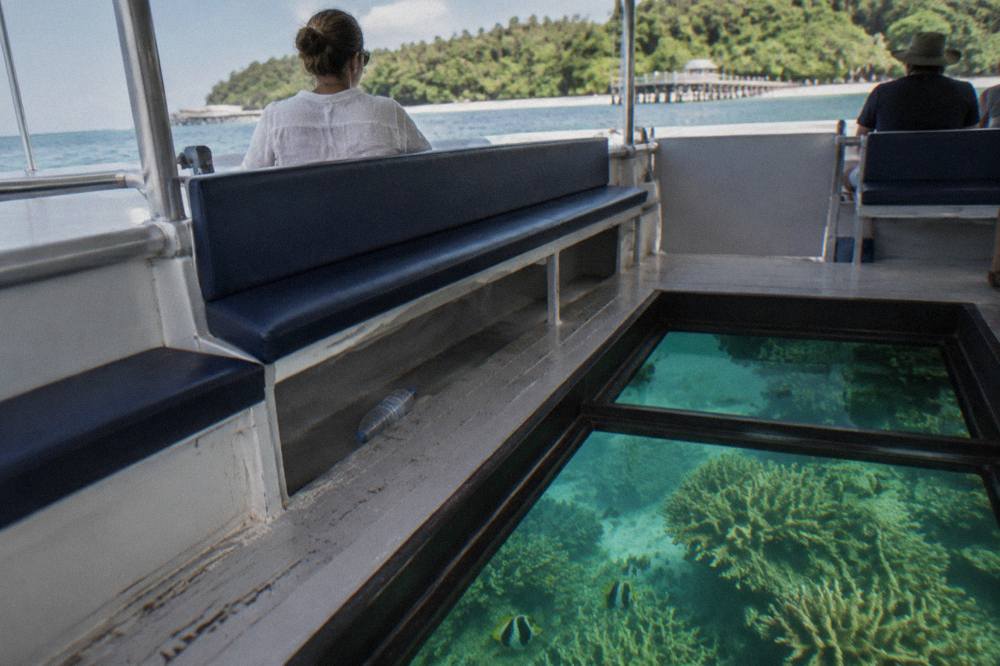
You see coral bommies, seagrass beds, tropical reef fish and, on many circuits, turtles and rays gliding beneath the hull, all narrated by the crew and viewed through hull windows while you sit dry and shaded. It is a moving window onto the same reef that surrounds the island's snorkel zone, not a distant or artificial exhibit.
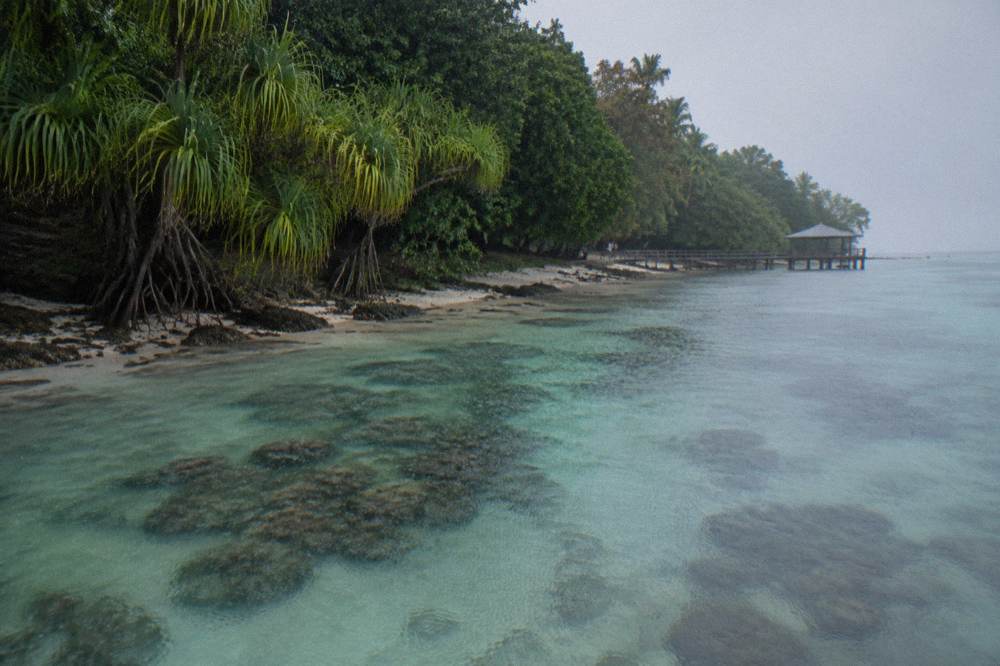
The reef at Green Island is the real thing: coral reef and seagrass beds surround the entire cay, and Queensland's park guide describes coral bommies with tropical fish and turtles feeding in the seagrass. The glass bottom boat travels over that living structure rather than a curated tank. Fish behave as fish do around a slow hull, and parrotfish, butterflyfish and damselfish are the staple sightings guest reviews mention again and again. Rays and reef sharks appear in visitor reports too, though those are wild animals and every review that names them also implies the day they saw one was a day, not a guarantee.
What it does not show you is the wide blue of the outer reef. Green Island sits on an inshore patch of the Great Barrier Reef Marine Park, and the water is greener and shallower than the postcard outer-reef platforms 90 minutes further out. This is not a criticism of the boat; it is a fact about where the island sits. Anyone whose heart is set on high-vis outer-reef coral should be comparing the pontoon combos instead, a decision the island versus outer reef guide treats properly.
One point in the boat's favour that first-time visitors underrate: the narration. Crew on these circuits name the coral types, explain the seagrass, and point out animals most snorkellers swim straight past. For a family with children, that running commentary is often what turns twenty minutes of looking through glass into the part of the day the kids recount at dinner. Marine stingers may be present in coastal waters in any month and occur more frequently in the warmer months, per Queensland Parks, which is another quiet argument for the boat: it has no stinger season.
How Much Does A Glass Bottom Boat Tour Cost On Green Island?
As a standalone island extra, Great Adventures publishes the glass bottom boat at A$32 per person as its own operator fare; on the two Great Adventures bundling listings it is folded into fares from A$127 to A$156 per person, and on Big Cat listings it is one of the choices that comes with the cruise fare from A$110 per person.
The cheapest path to a glass bottom boat is not buying one at all. Every Big Cat cruise option compared here, from the A$110 half days to the full day at the same from-price, offers either snorkelling gear or a glass bottom boat tour as the included choice, so the viewing comes with the ticket. The Great Adventures half-day option at A$127 per person and the combined snorkel and glass bottom boat option at A$156 per person work the same way at a higher fare tier. The bare Great Adventures catamaran ticket at A$112 leaves you buying the boat on the island at the operator's published A$32 fare if you decide you want it.
| Option | How you get the glass bottom boat | From price | Notes |
|---|---|---|---|
| Big Cat full day (A$110 pp) | Included as the fare choice: snorkel gear or glass bottom boat | A$110 per person | Semi-submarine is a further option on some fares |
| Big Cat half days (A$110 pp) | Included choice on morning and afternoon half days | A$110 per person | 4-hour format leaves less island time |
| Great Adventures catamaran (A$112 pp) | Not included; add on the island at the operator's A$32 fare | A$112 per person | Most reviewed listing, 4.4 from 1,933 reviews |
| Great Adventures half day (A$127 pp) | Included choice: snorkel equipment or glass bottom boat | A$127 per person | Morning tea and coffee on board |
| Great Adventures Discovery (A$156 pp) | Included, alongside snorkel equipment | A$156 per person | Both reef-viewing formats in one fare |
The Great Adventures fares page lists the A$32 glass bottom boat alongside its other published extras, and that is the figure to check on the day rather than any forum price from a past season. The operator's fare table is valid to 31 March 2027, and the same page confirms the government Environmental Management Charge of A$8.50 per person is already inside the fare rather than added at the counter.
There is also the reef tax question, which travellers ask constantly: some listings spell out the charge, some stay silent, and the honest answer is on the booking page of whichever fare you choose. The full picture of what each fare does and does not include sits in the reef tax and inclusions guide, which breaks the charge down listing by listing.
Still weighing whether to book a bundled fare before you travel? The Discovery listing includes the glass bottom boat and the snorkel gear in one price, which removes the decision entirely.
Which Green Island Tours Include The Glass Bottom Boat?
Nine of the sixteen listings on this site name a glass bottom boat as an inclusion or a selectable choice: all four Big Cat cruise fares, the three Great Adventures fares that offer it as an option or inclusion, the transfer-inclusive Big Cat day trips, and the Seawalker listing, which pairs the helmet dive with a choice of glass bottom boat or snorkel gear.
Across the Green Island tours compared here, the pattern is that glass bottom boats are treated as one of two standard ways to view the reef, with snorkel gear as the twin. The Big Cat full day at 4.5 from 1,727 reviews offers "snorkeling or glass-bottom boat tour" in the base fare. The Big Cat half-day morning and afternoon options do the same at 4 hours. The Great Adventures catamaran, the most reviewed tour on this site at 4.4 from 1,933 reviews, sells the cruise alone and lets you add the boat, while its half-day and Discovery fares build it in. The later-start Big Cat full day, the 11am departure at 4.3 from 273 reviews, extends the choice to snorkel gear, semi-sub, glass bottom boat or lunch.
A few listings leave the boat out deliberately. The Ocean Free schooner days, both the 4.9-rated sailing tour from 682 reviews and its dive-option sister at 4.8 from 413 reviews, are built around being in the water, and their exclusions note that island extras like the glass bottom boat are paid directly on the island. The Moore Reef pontoon combo at 4.6 from 98 reviews and the two-islands Fitzroy and Green Island day at 4.1 from 187 reviews prioritise water time and a second destination over hull windows. The fly-and-cruise package folds in a glass bottom coral viewing tour with the Big Cat full day, so the aerial crowd gets their reef twice.
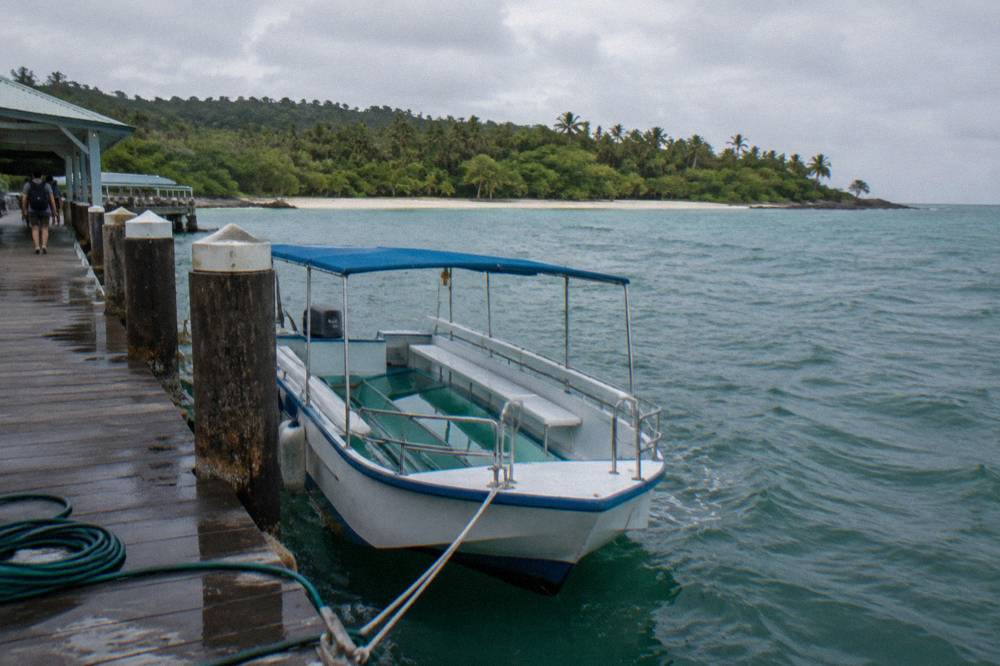
For families comparing formats, the kids and accessibility guide covers how each option handles prams, wheelchairs and small children; the glass bottom boat wins that contest more often than the water-based alternatives.
Glass Bottom Boat Or Semi Submarine: Which Is Better?
The semi-submersible takes you lower, with windows beside you rather than beneath you, and it feels closer to a submarine ride; the glass bottom boat is shorter, cheaper on the island and available on more fares. Neither guarantees more wildlife, and the semi-sub is the pick for the novelty, the glass bottom boat for the price.
The two formats get confused constantly, and the island's dedicated glass bottom boat versus semi-submarine comparison handles the full breakdown. In short: a glass bottom boat keeps you on deck with panels in the floor, while a semi-submersible seats you a metre or so below the waterline with port-holes on the sides. The semi-sub feels more immersive and children rate it as an event; the glass bottom boat is the quicker, more widely available circuit, and at the Great Adventures published fare of A$32 it undercuts the semi-sub experience that the Big Cat transfer listings price at AU$20 as a locally payable extra.
The decision usually comes down to time and who is aboard. On a half-day fare with four hours total, the roughly 45 minute crossing each way leaves barely two hours of island time, and stacking both viewing boats plus a walk is not realistic. On a full day there is room for one dry-viewing format and a swim, which is exactly why the Discovery fare, which bundles the glass bottom boat and the snorkel gear, is such a clean answer for indecisive groups. The rest of the planning pages sit on Green Island Great Barrier Reef Tours.
The Big Cat full day below is the classic fare for this experiment: the base choice covers the glass bottom boat or snorkel gear, and the semi-sub can be added as a locally payable option where the fare allows it.
Is The Glass Bottom Boat Good For Kids And Non Swimmers?
Yes, and for these two groups it is often the only realistic reef viewing on offer: children too small for confident snorkelling, adults who never learned, travellers with limited mobility, and anyone medically advised against saltwater exposure all get a genuine coral experience from a seat.
Non-swimmers are the clearest case. The alternative formats at Green Island all involve water: snorkelling obviously, but also the Seawalker helmet dive at A$289 per person, which keeps your head dry but still puts you standing on the seabed. The glass bottom boat asks nothing of its passengers except sitting. The park's own guidance tells snorkellers to stay between the red and yellow flags, a constraint that simply does not apply two metres above the reef, and the boat's shaded seating is a mercy in the build-up months when Cairns maxima sit above 31 degrees.
Children respond to it differently by age. Under about six, the magic is largely the boat itself, the fish appearing under their feet, and the crew commentary over their heads. Older children who can snorkel tend to treat the glass bottom boat as a warm-up and then lobby hard for the water. Families splitting across both formats can do it on one fare: the Big Cat transfer-inclusive listings let some passengers take the glass bottom boat choice while others take snorkel gear, subject to how the options are selected at booking.
One honest caveat for parents: it is a short experience. Nobody books a Green Island day for the glass bottom boat alone; it is one tile in a day that also holds rainforest boardwalks, a patrolled swimming beach and the crocodile shows at Marineland Melanesia, open 9am to 4pm with presentations at 10.30am and 1.30pm. Manage expectations accordingly and the boat over-delivers.
What Do Reviews Say About The Glass Bottom Boat?
Across the listings that include or offer it, review sentiment is steady rather than ecstatic: the Great Adventures catamaran holds 4.4 from 1,933 reviews, the Big Cat full day 4.5 from 1,727, and the Discovery bundle 4.2 from 410, with the glass bottom boat most often praised by families and most often called brief by confident snorkellers.
Reviews of the boat arrive bundled inside reviews of the whole day, so the signal needs reading carefully. The pattern is consistent. Guests travelling with children or non-swimmers describe the glass bottom boat as the highlight and the equal of the swim. Confident snorkellers tend to rank it behind the water time and describe the circuit as pleasant but short. The 4.1 from 335 reviews on the Great Adventures half day and 4.1 from 473 on the Big Cat morning half day show the same spread compressed into shorter formats, where the boat is a bigger share of the day and the reviews run slightly cooler.
The review record also offers a quiet lesson in expectation: the listings whose fares include both the glass bottom boat and snorkel gear, like the Discovery day and the Seawalker listing, collect the warmest glass-bottom commentary, because those passengers chose it rather than defaulting into it. The Seawalker and Marineland guide covers how that helmet-dive pairing works for the fully dry-averse.
For a different lens entirely, the Seawalker listing below pairs the helmet dive with a choice of glass bottom boat or snorkel gear, giving the dry-averse a full day of reef contact without a swim.
When Is The Glass Bottom Boat The Wrong Choice?
Skip it if you are a confident snorkeller on a short fare, if your day already includes two reef-viewing formats, or if you are booking an outer-reef pontoon combo where a semi-sub and underwater observatory come with the platform, because in each case the A$32 or the island time is better spent in the water or on the walking tracks.
The clearest wrong choice is duplication. The pontoon combo at 4.6 from 98 reviews spends three hours at an outer-reef platform that already carries a glass bottom boat, semi-submersible and underwater observatory in its day; adding the island-format boat beforehand would be paying twice for the same idea. The two-islands day similarly fills its hours with Fitzroy and Green Island between them, and its listed focus is water time and commentary rather than hull windows.
The second wrong choice is time pressure. On a four-hour half day, the island visit is roughly two hours after the crossing. The beach walk circuit alone is 1.5 km and takes an hour, and the boardwalk is 1.3 km return at 50 minutes, per Queensland Parks. A glass bottom boat circuit plus a walk plus a swim does not fit; something gives. Confident swimmers on these fares should take the snorkel gear choice, since the gear is in the fare either way and the reef sits literally off the beach.
The third is the weather window, sort of. Rough conditions rarely stop the boats but do churn the water column, and green days happen on an inshore cay. No operator quotes visibility figures and this site will not either; the honest framing is that some circuits look crystalline and some look like weak tea, and the fare is the same. Anyone whose whole day hangs on water clarity should read the weather and best time to visit guide before choosing a date at all.
So Is It Worth It? The Verdict By Traveller Type
Yes for families with young children, non-swimmers, limited-mobility travellers and anyone visiting in the November-to-June stinger months who wants reef time without a suit; a qualified yes for mixed groups booking a bundled fare; no for confident snorkellers on half-day fares and anyone already booked on an outer-reef platform day.
| Traveller type | Verdict | Best fare |
|---|---|---|
| Family with children under 8 | Worth it | Big Cat full day, A$110, glass bottom boat as the fare choice |
| Non-swimmer or limited mobility | Worth it, clearly | Discovery day, A$156, boat included with gear |
| Confident snorkeller, full day | Skip it, spend the time in the water | Great Adventures catamaran, A$112, add snorkel hire |
| Confident snorkeller, half day | Skip it | Big Cat half day, A$110, take the gear choice |
| Mixed group of swimmers and non-swimmers | Worth it as a bundle | Discovery day, A$156, covers both formats |
| Traveller on an outer-reef combo | Skip it, the platform has its own | Pontoon combo, A$312 |
The economics, finally, are almost too simple. On fares where the glass bottom boat is one of the included choices, it costs nothing marginal: you are on the boat already, the fare is paid, the choice is free. As a standalone island add-on at the operator's published A$32, it is a fair price for twenty minutes of dry coral viewing in a region where Great Adventures publishes its Seawalker and intro-dive extras at A$205 each. The verdict was never really about the money. It is about knowing which kind of Green Island visitor you are, and being honest about whether you were ever going to get in the water.
Common Questions About The Glass Bottom Boat
Is The Glass Bottom Boat Tour Worth It At Green Island?
For most visitors yes, especially families, non-swimmers and limited-mobility travellers, because it is the cheapest dry way to view living coral. Confident snorkellers on short fares get more from the water, since snorkel gear is offered as the alternative in the same fares.
How much does the glass bottom boat cost on Green Island?
As a standalone extra, Great Adventures publishes it at A$32 per person. On many cruise fares it is included as a choice against snorkel gear, including the Big Cat fares from A$110 per person and the Great Adventures fares from A$127 per person.
Will I see turtles from the glass bottom boat?
Turtles live and feed in the seagrass around Green Island and are commonly sighted from the boats, but they are wild animals and no circuit can promise one. Reviews frequently report turtle sightings, and equally there are quiet passes.
Is the glass bottom boat better than the semi-submarine?
The semi-submersible sits you lower with side windows and feels more immersive; the glass bottom boat is shorter, cheaper on the island and available on more fares. Neither format guarantees more wildlife than the other.
Can you do the glass bottom boat if you cannot swim?
Yes. You stay fully dry and seated on deck the whole time, which is exactly why the format suits non-swimmers, young children and travellers who prefer not to enter the water at all.
Which tours include the glass bottom boat for free?
The Big Cat cruise fares from A$110 per person offer it as the included choice against snorkel gear, and the Great Adventures half-day and Discovery fares at A$127 and A$156 include or offer it within the fare. The bare A$112 catamaran ticket leaves it as a paid extra.