Do I Pay A Reef Tax On A Green Island Trip?
The Environmental Management Charge on Green Island day trips: A$8.50 full day, A$4.25 part day, the April 2027 rise, and which Cairns listings include it in the fare.
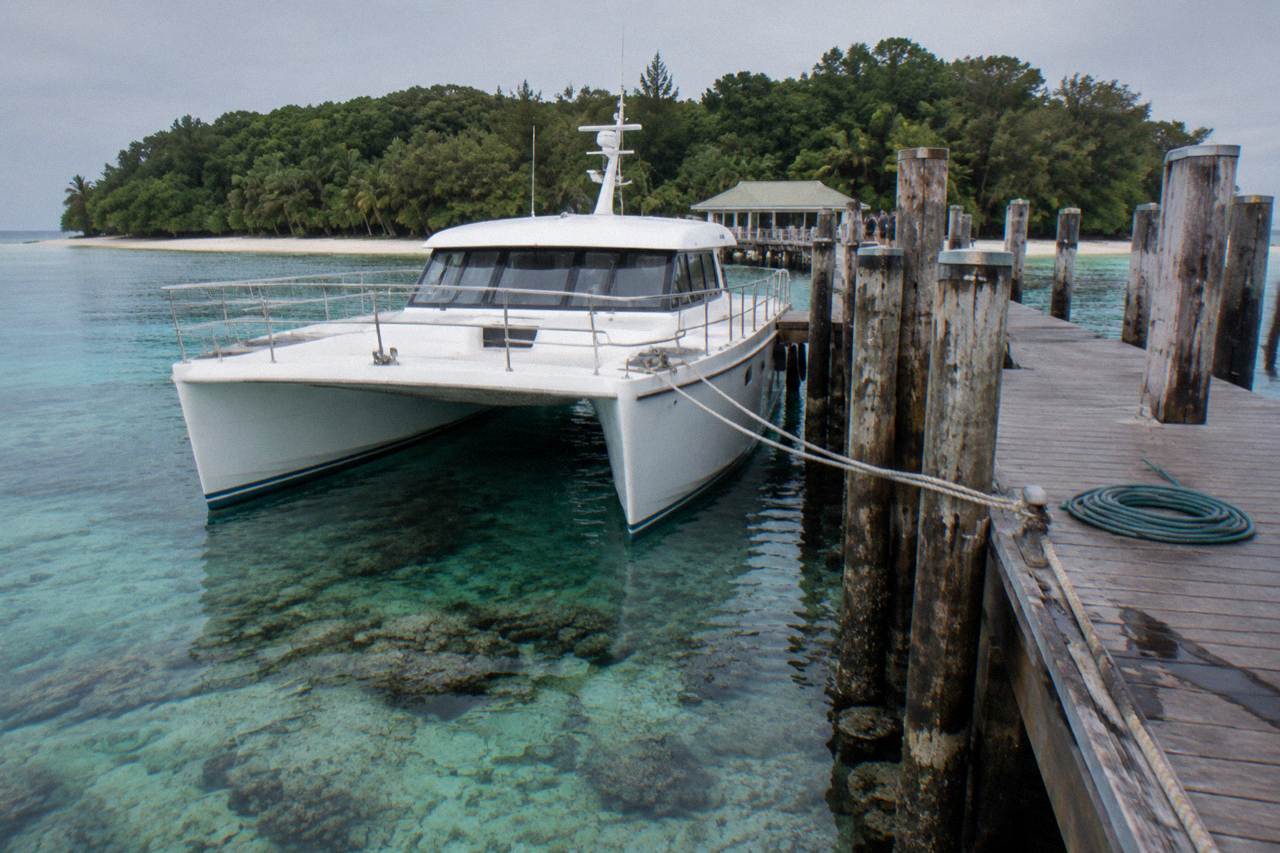
A 45 minute catamaran ride out of Cairns puts you on a coral cay inside the Great Barrier Reef Marine Park, and that single fact is what triggers the charge most people call the reef tax. It is not a Cairns council levy and it is not a Green Island entry fee. It is the Environmental Management Charge, or EMC, a per person per day charge the Great Barrier Reef Marine Park Authority applies to almost everyone who enters the Marine Park on a commercial trip. This article walks through the exact rates, the rise coming in April 2027, and, just as important, how the charge appears, or does not appear, on the Green Island listings you are actually comparing. If you are weighing an overnight stay against a day trip, our comparison of Green Island Resort overnight stays and day trips shows how the daily charge affects each option.
Do I Pay A Reef Tax On A Green Island Trip?
Yes, in almost every case. If you travel to Green Island on a commercial tour or ferry, a per person Environmental Management Charge applies: A$8.50 for a full day passenger and A$4.25 for a part day passenger, rising to A$9.00 and A$4.50 from 1 April 2027. The operator collects it and remits it to the Marine Park Authority, and some listings build it into the fare while others leave it to check.
The mechanics are simple even when the ticket pages are not. The charge attaches to the permit holder, meaning the cruise operator, not to you directly. When you buy a Green Island day trip, the operator either folds the EMC into the printed price or adds it at check in, and either way the money ends up with the Great Barrier Reef Marine Park Authority, which pools it with government funding for reef field management. The rates and the 2027 increase are published on the GBRMPA charges page, which is the authoritative source for the numbers in this article.
A "full day passenger" is anyone on a trip of three hours or more that enters the Marine Park before 5 pm, which covers every standard Green Island cruise from Cairns, including the four hour half day options. The part day rate applies to shorter trips, so it rarely comes into play on this route. Children aged four and over pay the same as adults for EMC purposes, and children under four are exempt. Once you've budgeted for the tax, the guide to where to stay in Cairns before your Green Island reef trip helps you pick a base that keeps the early cruise departure painless.
The practical question for a trip planner is not whether the charge exists, it is whether the price you are staring at already contains it. That varies by listing, and the rest of this article compares the main Green Island options on exactly that point. For a broader look at what is bundled in each fare, from glass bottom boats to buffet lunch, the Green Island reef tax and inclusions guide breaks down every listing line by line.
How Much Is The Reef Tax And Who Collects It?
The current rates are A$8.50 per person per day for a full day passenger and A$4.25 for a part day passenger, and both rise on 1 April 2027 to A$9.00 and A$4.50. The tour operator collects the charge as permit holder and remits it quarterly to the Great Barrier Reef Marine Park Authority.
The Great Barrier Reef Marine Park Authority sets the charge under the Great Barrier Reef Marine Park Regulations, and it has been part of reef tourism for decades. Operators holding a tourism permit record passenger numbers and pass the money on each quarter, so from your side of the counter it behaves like a small tax inside, or on top of, your ticket. There is no booth on Green Island where you pay it separately, and there is nothing to pay if you never enter the Marine Park through a commercial operator.
| Charge type | Current rate | Rate from 1 April 2027 | Who pays it |
|---|---|---|---|
| Full day passenger (trip of 3 hours or more, entering before 5 pm) | A$8.50 per person per day | A$9.00 per person per day | Every passenger 4 years and over |
| Part day passenger (shorter trips) | A$4.25 per person | A$4.50 per person | Every passenger 4 years and over |
| Children under 4 | No charge | No charge | Exempt |
Because the increase is dated to 1 April 2027, anyone booking a Green Island trip for the current fare year will pay the existing rates. The fare tables on the operator pages, including the Great Adventures fares valid 1 April 2026 to 31 March 2027, sit inside that window, and the EMC is stated as included in the fare price on the operator's own fares page. If you are booking for April 2027 or later, expect the higher figure, roughly 50 cents more per full day passenger.
Which Green Island Tours Include The EMC In The Price?
Two listings state the Environmental Management Charge as included: the Big Cat full day with Cairns city transfers and the Big Cat day trip with Northern Beaches transfers, both of which list the reef tax among the inclusions. The Great Adventures operator fares also include it. Most other Green Island listings are silent, which means you should confirm on the booking page before you assume.
This is where comparing listings honestly matters, because "silent" is not the same as "excluded". A listing that does not mention the EMC may still have it folded into the price, or the operator may collect it as part of the check in process. Where a fare names the reef tax, it is noted below; check the live booking page to confirm before you book.
| Listing | Card name | From price | EMC stated? |
|---|---|---|---|
| Big Cat full day with city transfers | City Hotel Transfers Included | A$157 pp | Yes, Environmental Management Charge (Reef Tax) listed as included |
| Big Cat day trip with Northern Beaches transfers | Northern Beaches Transfers | A$167 pp | Yes, Environmental Management Charge (Reef Tax) listed as included |
| Ocean Free sailing day | Small Group Sailing | A$289 pp | Yes, Environmental Management Charge listed as included |
| Great Adventures catamaran | Catamaran, Half or Full Day | A$112 pp | Operator fares page states EMC included in fare price |
| Big Cat full day | Big Cat Full Day, Snorkel Choice | A$110 pp | Not stated on the listing |
| Big Cat later start | 11am Start, Full Day | A$110 pp | Not stated on the listing |
| Big Cat morning half day | 4-Hour Morning Half Day | A$110 pp | Not stated on the listing |
| Great Adventures Discovery tour | Snorkel and Glass-Bottom Boat Included | A$156 pp | Not stated on the listing |
The two Big Cat transfer listings are the clearest cases: reef tax is named in the inclusions, alongside hotel pickup and the catamaran transfers, so the A$157 and A$167 from prices are genuinely all in for the charge itself. The base Great Adventures catamaran listing at A$112 per person does not spell the EMC out in the listing text, but the operator's own fare page, which is the price the listing is built on, states that the charge is included in the fare. That is a distinction worth knowing when you are comparing a A$110 Big Cat fare against a A$112 Great Adventures fare and wondering whether one hides an extra fee.
There is also a family arithmetic angle worth doing before you book. On a full day trip, a family of two adults and two children aged four and over carries four Environmental Management Charges, which at the current rate adds up to A$34 in charges across the booking. That is real money on top of four fares from A$110 each, and it is exactly the kind of cost that silently shifts the ranking between the cheapest listings once it is counted. Where a listing names the charge as included, that arithmetic is already done for you.
What If The Listing Does Not Mention The Reef Tax?
If a listing is silent on the Environmental Management Charge, the honest reading is "not stated", not "not charged". The charge still applies to the operator, so the practical move is to check the booking page or the operator's own fare table before you book, and to treat any fare comparison as approximate until you have confirmed it.
There is a reason so many listings stay quiet on the EMC, and it is not dishonesty. The charge is small, universal across reef tourism, and often absorbed into the headline fare at the operator level, so listing copy written for a booking page can leave it out the same way it leaves out insurance or GST. The gap only bites when two listings look 50 cents or a few dollars apart and one of them is quietly carrying an extra A$8.50. Other pages covering the same trip are gathered on Green Island Great Barrier Reef Tours.
A few practical habits close that gap. Read the inclusions and exclusions blocks on each tour's booking page, not just the card summary, because that is where the transfer tours name the reef tax. Check the operator's own website, since Great Adventures and Big Cat both publish fare pages that state what the price contains. And if you are booking a package that layers options, such as the Green Island and Moore Reef pontoon combo at A$312 per person, remember the fare covers two Marine Park entries in one day, the island and the outer reef platform, under one full day charge structure stated by the operator.
The same caution applies to the optional extras you add on the island. Great Adventures publishes island prices for add ons such as the glass bottom boat at A$32 and snorkel hire at A$32, and those are separate from the EMC question entirely. For a fuller picture of what each fare contains, the Green Island tours compared guide lines up all sixteen listings on price, duration and inclusions.
Why The Charge Rises In April 2027
The Environmental Management Charge is indexed upward over time by regulation, and the next step takes effect on 1 April 2027, lifting the full day rate from A$8.50 to A$9.00 and the part day rate from A$4.25 to A$4.50. The rise is announced in advance by the Great Barrier Reef Marine Park Authority so operators can adjust fares.
Fifty cents per person sounds trivial, and for a single traveller it is, but across the visitor days the reef tourism industry records each year, indexation keeps the charge tracking the real cost of field management. Operators typically fold the new rate into fares at the start of the new fare year, which is why the Great Adventures fare tables run 1 April to 31 March and why a trip booked for early April 2027 can sit on a different price than one booked for late March.
For Green Island travellers the timing detail matters in one specific case. The Great Adventures fares current now are valid to 31 March 2027, and the operator has also introduced a fuel surcharge of A$10 adult and A$5 child on the Great Barrier Reef Adventure fares from 1 April 2026. A traveller comparing this year's price against next year's may see movement from the surcharge, the EMC rise, or both, and the only way to separate them is the operator's published fare table.
Is The Reef Tax The Same As A National Park Fee?
No. The Environmental Management Charge is a Marine Park charge collected by tour operators for entering the Great Barrier Reef Marine Park, while Green Island itself is a national park with free access and no separate entry gate or day fee. Two different authorities, two different rules, and on a Green Island day trip only the Marine Park charge reaches your wallet.
Green Island National Park covers the cay itself, the rainforest and the walking tracks, and Queensland Parks manages it. There is no entry station, no day pass and no per person fee for walking the boardwalk or the beach circuit, which is why the free things on the island, the tracks, the beach and the snorkel zone between the flags, genuinely cost nothing once you are there. The Queensland Parks Green Island page describes the park and its rules, including the no take, no feed marine park zoning around it, and charges nothing for access.
The distinction explains a common confusion in reviews. A traveller sees "reef tax" on a Big Cat transfer listing, sees no fee at the national park, and concludes the charge is an island entry cost. It is not. It is a charge for entering the Marine Park on a permitted commercial operation, and it would apply even if the island itself were closed. The one place a genuine separate admission does exist on Green Island is Marineland Melanesia, the family run crocodile and marine attraction near the jetty, which charges its own entry and is not part of any cruise fare. If you're curious whether the island's waters hold wild crocodiles as well as the captive ones at Marineland, this guide to crocodiles at Green Island covers the honest answer.
It also means the free day on the island is only free after you have paid to get there. A walk along the 1.5 kilometre beach circuit, the boardwalk through the rainforest, and a swim between the flags cost nothing beyond your fare and your EMC. Budget the boat, budget the charge, and everything you do with your feet on the cay is included in the national park's open access.
How The Charge Is Actually Used
The Environmental Management Charge is pooled with government funding to pay for Great Barrier Reef field management: ranger patrols, compliance, crown-of-thorns starfish control, reef health monitoring and incident response. In the 2025/26 reporting period that work included culling or surveying crown-of-thorns starfish on 47 reefs as of 30 August 2026.
This is the part of the story that makes the charge easier to swallow than most taxes. The money does not disappear into general revenue. It funds the boats, divers and rangers who work on the reef, and the results are published in monitoring reports anyone can read. The Australian Institute of Marine Science reported in August 2026 that hard coral cover in the Northern Great Barrier Reef reached 35.1 percent, up from 30.0 percent the previous year and above the long term average of 27.0 percent, an early sign of recovery after the 2024 bleaching event. Those are regional figures for the Northern reef, not a Green Island specific measurement, and honest reporting keeps them that way.
The same monitoring caught the pressures of the recent summer: a regional bleaching event in the Northern management region that became apparent in March 2026, and Severe Tropical Cyclone Narelle crossing the Far Northern reef the same month. Field management funded partly by the EMC is what measures that damage, targets the crown-of-thorns outbreaks that follow it, and reports the recovery. When you hand over A$8.50 on a Green Island catamaran, that is the work you are buying into.
| What the EMC funds | Recent example |
|---|---|
| Crown-of-thorns starfish control | Teams surveyed or culled on 47 reefs as of 30 August 2026 |
| Reef health monitoring | AIMS surveys across 121 reefs in the 2025/26 season |
| Compliance and patrols | Permit checks on commercial reef operations |
| Incident response | Assessments after Cyclone Narelle, March 2026 |
For travellers who want the deeper picture on reef condition and what it means for a snorkelling day, the is the Great Barrier Reef dead article takes the monitoring data apart in plain language.
Common Questions About The Green Island Reef Tax
Do I Pay A Reef Tax On A Green Island Trip?
Yes. The Environmental Management Charge applies to commercial trips into the Great Barrier Reef Marine Park, so any Green Island cruise or ferry from Cairns carries it: A$8.50 per person for a full day passenger, rising to A$9.00 from 1 April 2027. Some listings include it in the fare, others do not state it.
How much is the reef tax on a Green Island day trip?
A$8.50 per person per day for a full day passenger, which covers trips of three hours or more entering the Marine Park before 5 pm, so all standard Green Island cruises qualify. The part day rate is A$4.25. Both rates rise on 1 April 2027 to A$9.00 and A$4.50.
Do children pay the reef tax?
Children aged four years and over pay the same Environmental Management Charge as adults. Children under four are exempt. The charge is per person, so a family of two adults and two school age children carries four charges on a full day trip.
Which Green Island tours include the reef tax in the price?
The Big Cat full day with Cairns city transfers (from A$157 per person) and the Big Cat day trip with Northern Beaches transfers (from A$167 per person) both list the Environmental Management Charge among the inclusions. The Great Adventures operator fares also state the charge is included in the fare price. Other listings are silent, so check the booking page.
Do I pay the reef tax if I walk around Green Island National Park?
No. Green Island National Park, the cay itself with its rainforest and walking tracks, has no entry fee. The Environmental Management Charge is a Marine Park charge collected by commercial operators for entering the Great Barrier Reef Marine Park, so it attaches to your boat trip, not to the island.
Where does the reef tax money actually go?
The Great Barrier Reef Marine Park Authority pools the charge with government funding for field management: ranger patrols, compliance, crown-of-thorns starfish control and reef health monitoring. Operators remit the collected charges quarterly as permit holders.