Are There Crocs At Green Island?
The honest answer on crocodiles at Green Island: captive crocs at Marineland Melanesia, wild croc risk in Cairns waters, and which tours suit a reef day.
Are There Crocs At Green Island?
Yes, in one specific and controlled sense: Marineland Melanesia, a wildlife attraction five minutes' stroll from the jetty, keeps up to 15 captive crocodiles on the island, according to its own site. There is no verified evidence of wild saltwater crocodiles living at or regularly visiting Green Island, an offshore coral cay 27 km from Cairns. The distinction matters for swimmers, snorkellers and families, so this article separates the two cleanly. If seeing those captive crocodiles up close appeals, our guide to Sea Walker and Marineland Melanesia on Green Island explains what the visit involves and how to fit it around snorkelling.
That two-part answer surprises people who have just googled the question. Search results blend two very different things: a licensed crocodile attraction that has operated on the island since the early 1960s, and the general fact that saltwater crocodiles exist in Far North Queensland. Both are true. Neither implies that a wild crocodile is patrolling the beach where the snorkel tours operate.
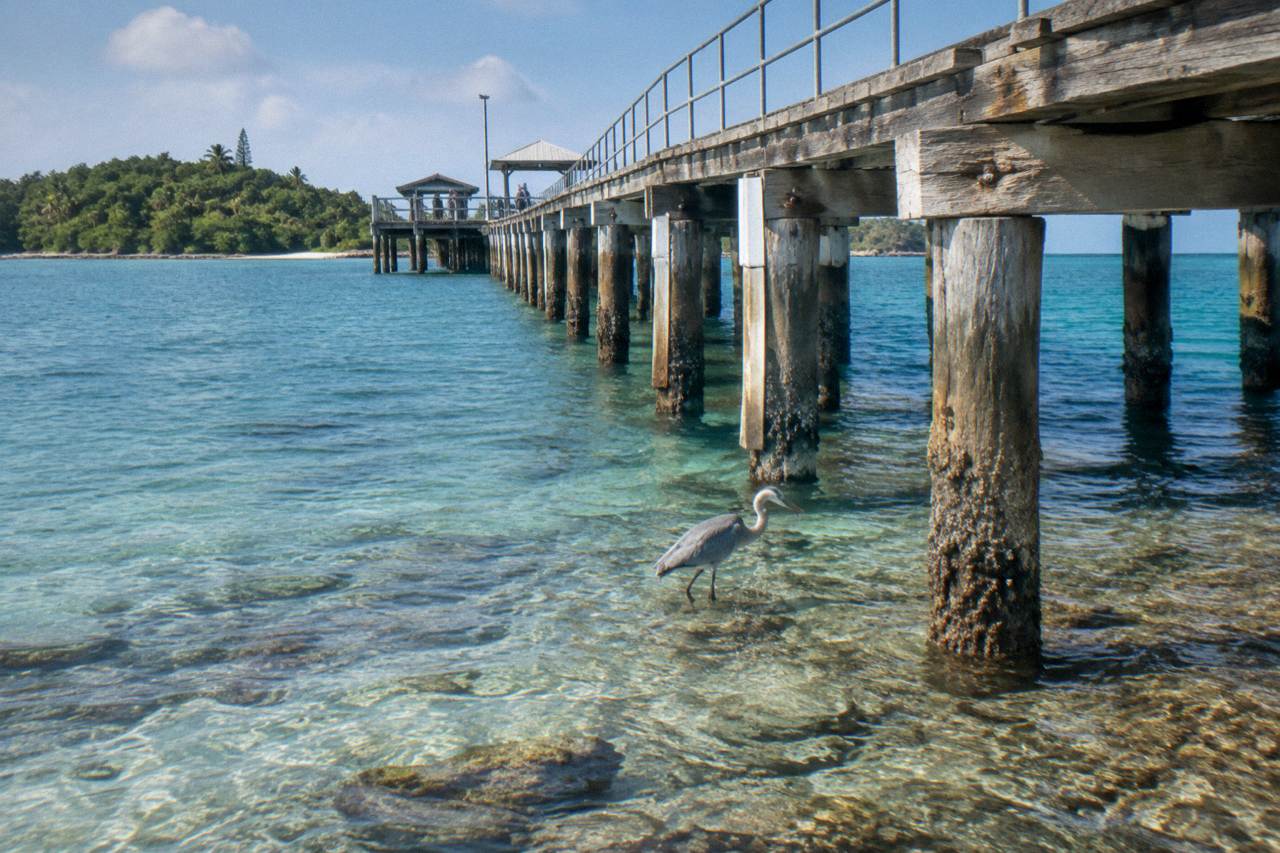
Green Island sits 27 km offshore from Cairns, according to Queensland Parks, and the waters around it form part of the Great Barrier Reef Marine Park. The island is a coral cay, built entirely by reef growth over roughly 6,000 years in the wording of the resort's own history. Offshore cays of this kind are not typical estuarine crocodile habitat: crocodiles favour brackish river mouths, mangrove-lined creeks and muddy estuaries on the mainland, not clear coral lagoons.
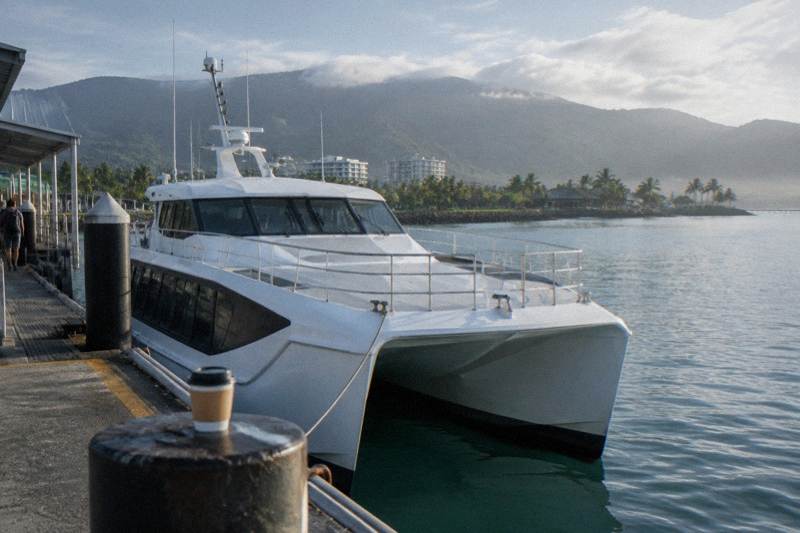
The practical upshot for a visitor is straightforward. You can book a standard day cruise, such as the Great Adventures catamaran from A$112 per person, or the Big Cat full day from A$110 per person, and spend your time snorkelling between the flags, riding a glass-bottom boat, or walking the rainforest boardwalk, without treating a wild crocodile encounter as a realistic scenario. If you want to see a crocodile on Green Island, you walk to Marineland Melanesia and buy a ticket.
For readers weighing the wider question, there is a companion piece worth reading: our long answer on whether it is safe to snorkel at Green Island covers stingers, patrolled swimming areas and the marine park rules that matter more than crocodiles do in practice.
Where Do The Island's Crocodiles Actually Live?
All of Green Island's crocodiles live at Marineland Melanesia, a family-owned attraction a five minute walk from the jetty. Its own site states it keeps up to 15 crocodiles, opens 9am to 4pm every day except Christmas Day, and runs interactive wildlife shows at 10.30am and 1.30pm, with turtle presentations at 10.20am and 1.20pm. Entry fees apply separately and are not included in any cruise fare.
Marineland Melanesia is not a new arrival. It was built by two partners in the early 1960s, and the Great Adventures operator page records that it has been owned and operated by the Craig family since 1971, more than fifty years of continuous operation. Alongside the crocodiles it houses over ten aquariums, a coral nursery available as an optional upgrade, and a collection of Melanesian artefacts that gives the attraction its name.
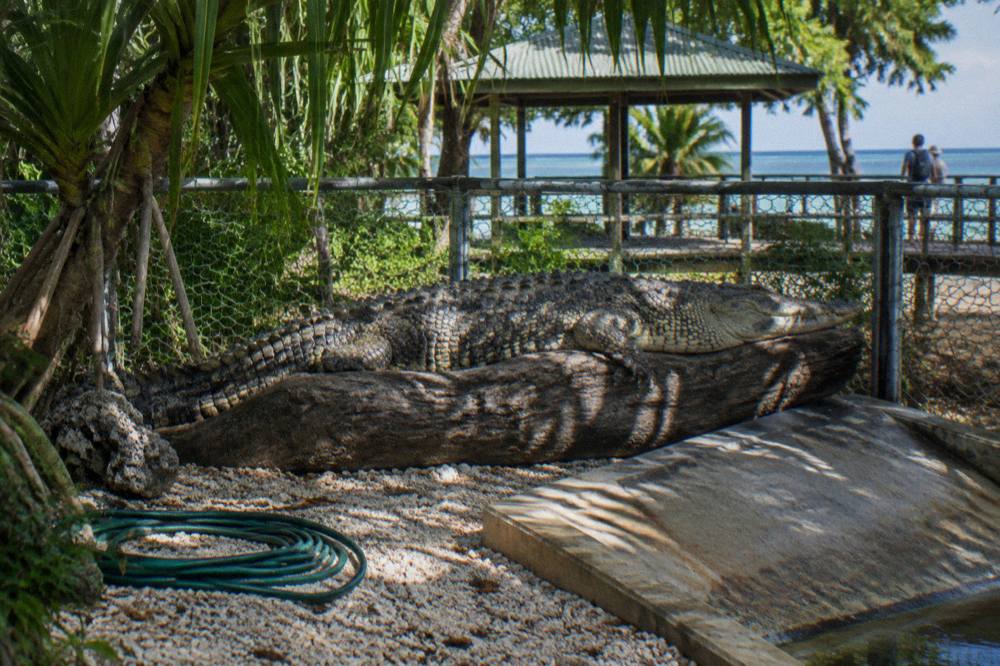
The most famous resident is no longer there. Cassius, recorded as the largest crocodile in captivity, died in October 2024. The attraction remains fully open, and its 10.30am and 1.30pm crocodile shows are timed to work around the standard ferry timetable: the Great Adventures catamaran departs Cairns at 8.30am and 10.30am and returns from the island at 2.30pm and 4.30pm, so a passenger on the 8.30am sailing can comfortably make the 1.30pm show before the last boat back.
Planning the day around those show times is worth doing. A morning arrival gives you the beach and snorkel session first, lunch at one of the island's outlets, then the afternoon crocodile show, then the 4.30pm return. Anyone on a half-day cruise, such as the Big Cat morning half day from A$110 per person, should check whether the sailing window overlaps a show time before counting on a visit.
One island development should not be confused with the crocodiles. The Green Island Turtle Rehabilitation Centre turned its ceremonial first sod in April 2026 and is expected to be operational by December 2026, on land provided by the Quicksilver Group with Queensland Government funding of A$600,000. It is not open yet, and it is about turtles, not crocodiles. Nothing on the verified pages describes it as a visitor attraction you can book today.
Should You Plan Your Cruise Around a Crocodile Show?
If crocodiles are the reason a family member agreed to the trip, yes. The show times slot neatly into a full-day itinerary, and the walk from the jetty is short.
| Itinerary item | Timing on a full-day cruise | Notes |
|---|---|---|
| 8.30am catamaran from Cairns | Arrive island about 9.15am | Board 30 minutes before departure |
| Morning snorkel or beach time | 9.30am to 11.30am | Snorkel between the red and yellow flags |
| 10.30am crocodile show | Alternative to morning snorkel | Turtle presentation 10.20am |
| Lunch | 11am to 1pm | Island outlets open from late morning |
| 1.30pm crocodile show | After lunch, before departure | Turtle presentation 1.20pm |
| 2.30pm or 4.30pm return sailing | About 45 minutes to Cairns | Later sailing allows beach time |
Is It Safe To Swim And Snorkel Around Green Island?
Verified sources do not flag wild crocodiles as a specific hazard at Green Island. Queensland Parks' visiting-safely guidance for the island focuses on marine stingers, sun exposure, tides and coral instead. Stingers are the wildlife risk that official advice actually emphasises, with concern highest November to June, and snorkellers are directed to swim between the red and yellow flags.
That is the honest reading of the official material. The Queensland Parks page for Green Island National Park and its discovery guide list the real safety considerations: marine stingers, which may be present in coastal waters at any time of year but occur more frequently in warmer months; tropical sun; and the no-take, no-touch rules of the surrounding marine park. Crocodiles do not appear as an island-specific warning. One April 2026 travel article went as far as calling crocodiles "not a normal practical concern" at the island given its offshore location, while still advising the general caution you would apply anywhere in Far North Queensland. If stinger timing or storm season is shaping your plans, our guide to when not to visit Cairns spells out which months rain, cyclone risk and box jellyfish all stack against a reef day trip.
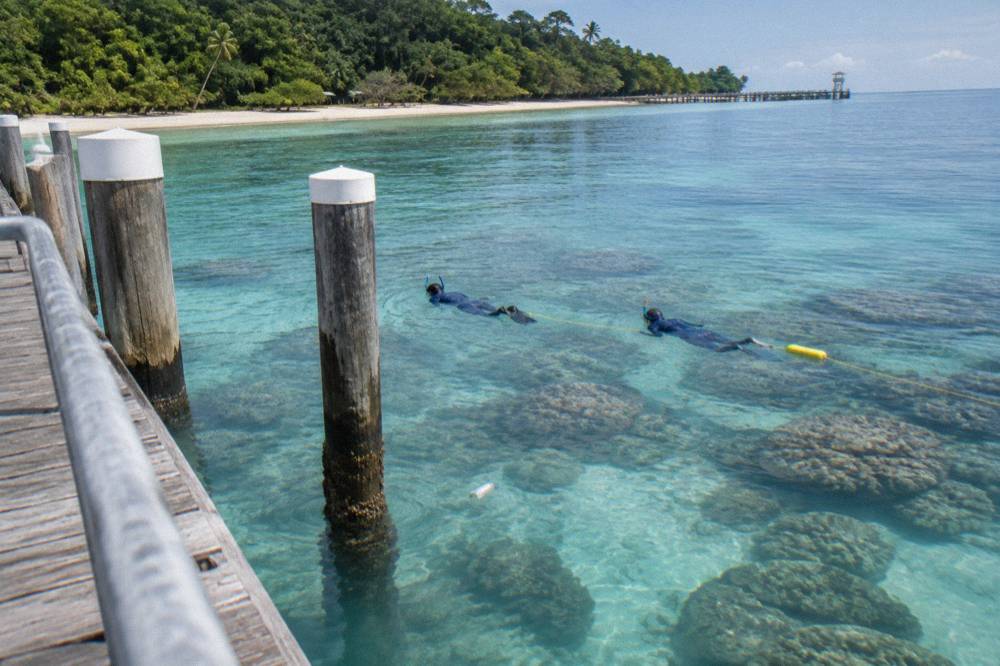
No source, official or otherwise, can promise a crocodile-free ocean, and this article will not either. Saltwater crocodiles are wide-ranging animals, and Queensland's estuarine crocodile management area includes Cairns waterways. The point is one of habitat and probability. Trinity Inlet and the river mouths south of Cairns are estuarine crocodile country; a coral cay 27 km out in the marine park, ringed by patrolled swimming areas and visited by cruise passengers on day trips from Cairns, is a different environment entirely.
For a fuller treatment of the water-safety question, including stinger suits and what operators supply, read our guide to snorkelling safely at Green Island. And for the wildlife you are genuinely likely to meet in the water, the article on sea turtles at Green Island reports what Queensland Parks and the resort actually say: turtles live and feed in the seagrass beds around the island, and green turtles are described by Queensland tourism sources as commonly sighted near the jetty, though no honest page will promise a sighting on any given day.
The tours themselves reinforce the flag-and-patrol system. The Great Adventures listings include access to an island swimming pool exclusive to its passengers; the Ocean Free schooner, 4.9 from 682 reviews, includes full snorkelling gear with wetsuits and lycra suits and in-water crew assistance; and the Seawalker helmet dive from A$289 per person was designed for people who want the reef without swimming at all.
What About Saltwater Crocodiles In The Waters Around Cairns?
Saltwater crocodiles are native to Far North Queensland and live in estuaries, rivers and coastal waters around Cairns, which is why mainland swimming holes sign their warnings. Green Island, 27 km offshore on a coral reef, is not estuarine habitat, and no verified current source reports wild crocodile sightings or warnings specific to the island. The risk profile that matters for a reef day is stingers, weather and sun.
The distinction between estuary and reef is the whole story here. Crocodiles hunt in murky, tidal, mangrove-fringed water where they can ambush prey at the edge. The Daintree River, Trinity Inlet and the river systems between Cairns and Cooktown are that habitat, and commercial crocodile-spotting cruises operate on the Daintree precisely because the animals are reliably there. Nobody runs a wild crocodile cruise at Green Island, because there is no resident population to spot. The wider set of guides lives on Green Island Great Barrier Reef Tours.
This is also why the island's own crocodile attraction exists in the form it does. Visitors who want a guaranteed look at a large saltwater crocodile, with a keeper explaining its biology, get that certainty at Marineland Melanesia. Visitors who want the reef get the reef. The two experiences sit five minutes apart on foot, which is genuinely unusual: very few places let you watch a crocodile show at lunchtime and snorkel over coral bommies in the same afternoon, all on one 45-minute ferry ride from a city terminal.
| Question | Verified answer | Source basis |
|---|---|---|
| Are there crocodiles on Green Island? | Yes, up to 15 in captivity at Marineland Melanesia | Attraction's own site |
| Are there wild crocodiles at Green Island? | No verified reports or warnings; not estuarine habitat | Absence in Queensland Parks safety guidance |
| Are crocodiles a listed island hazard? | No; stingers, sun, tides and coral are the listed hazards | Queensland Parks visiting-safely page |
| Where are wild crocs near Cairns? | Estuaries and river mouths, notably the Daintree system | Queensland crocodile management region |
| Can a visit include crocodiles and reef? | Yes; crocodile shows at 10.30am and 1.30pm fit cruise timetables | Attraction site plus Great Adventures timetable |
Which Tour Should You Book To See Crocodiles And The Reef?
For a crocodile-plus-reef day, the Great Adventures catamaran from A$112 per person is the natural pick: its 8.30am and 10.30am departures align with the 10.30am and 1.30pm shows, and its listings include up to 7 hours of island time plus a marine biologist reef talk. The Big Cat full day from A$110 per person works equally well on timing.
The comparison is worth spelling out, because the three operators structure the day differently and the differences decide how much crocodile time you get. Families wanting in-water reef time without swimming can add the Seawalker helmet dive from A$289 per person.
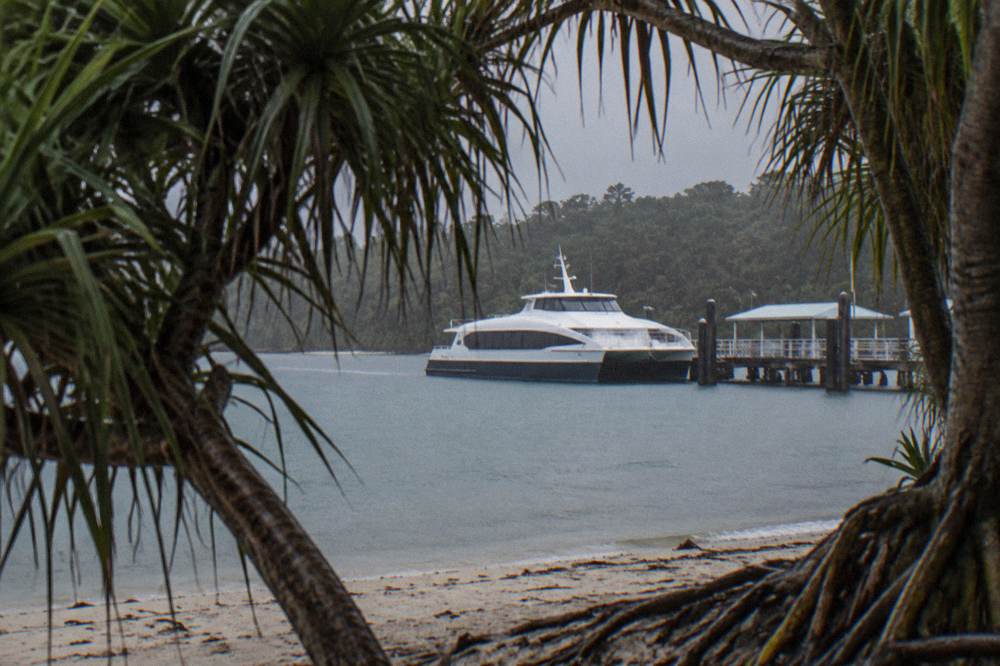
The Great Adventures cruise, 4.4 from 1,933 reviews, is the most reviewed of the Green Island tours compared here and the one most tightly coupled to the island's timetable: it is the same Quicksilver Group family that owns the resort and provided the land for the turtle centre. Its full-day option gives up to 7 hours on the island, and its fare tiers let you choose cruise-only or cruise with a glass-bottom boat or snorkel gear. The booking page states the government Environmental Management Charge is included in the fare price, which is A$8.50 per person for a full-day passenger.
The Big Cat full day, 4.5 from 1,727 reviews, runs about 8 hours with roughly 5.5 hours on the island, departing at 9am or 11am. That still clears the 1.30pm crocodile show comfortably. Its base fare includes the catamaran trip and a choice of snorkelling or the glass-bottom boat, with lunch and the semi-submarine as selectable options. The two Big Cat transfer options are the only tours compared here that include hotel pickup, from A$157 per person for Cairns city accommodation, which matters if you are staying away from the Esplanade. Since every one of these cruises puts you in the water off the same reef, this side by side comparison of Cairns snorkelling tours helps you weigh which package suits you best.
| Tour | From price | Rating and reviews | Island time | Crocodile show fit |
|---|---|---|---|---|
| Great Adventures catamaran | A$112 pp | 4.4 from 1,933 | Up to 7 hours | Both shows fit; 8.30am sailing suits both |
| Big Cat full day | A$110 pp | 4.5 from 1,727 | About 5.5 hours | 1.30pm show fits; 9am sailing best |
| Big Cat later start | A$110 pp | 4.3 from 273 | About 6 hours, 11am start | Afternoon show tight; check times |
| Great Adventures Discovery | A$156 pp | 4.2 from 410 | 7 hours | Snorkel plus glass-bottom boat included |
| Seawalker helmet dive | A$289 pp | 4.1 from 98 | 7 hours | Reef without swimming; show times still fit |
Families with non-swimmers should look closely at the Seawalker option. It pairs the helmet dive, which keeps your head dry and requires no swimming ability, with a choice of glass-bottom boat or snorkel gear, all on the Great Adventures fast catamaran. The listing's inclusions run to morning tea and coffee on board and use of the island swimming pool. With only 98 reviews behind its 4.1 rating, it is a smaller review pool than the headline cruises, and we print the count so you can weigh it honestly.
What Will You Actually See In The Water, Then?
The wildlife verified for Green Island's waters is reef wildlife: turtles feeding in the seagrass beds, tropical fish around coral bommies, and the birds of the national park. Queensland Parks' own guide describes turtles living and feeding in the seagrass, and green turtles are described as commonly sighted near the jetty, though any single day can be quiet. Crocodiles belong to the attraction, not the lagoon.
That division, attraction versus lagoon, is the cleanest way to hold the whole question in your head. On land, five minutes from the jetty, crocodiles behind fences and a hawksbill turtle named Billy in scheduled presentations. In the water, a no-take marine park zone where the rules are strict and simple: never touch or take plants or animals, never feed wildlife, stay on the walking tracks, and snorkel between the flags. Drones are not permitted on the island, per the Queensland Parks discovery guide.
The reef itself is in documented recovery. The Australian Institute of Marine Science reported Northern Great Barrier Reef hard coral cover at 35.1 percent in its 2025/26 survey, up from 30.0 percent the previous year and above the 27.0 percent long-term average. That is a regional Northern figure, not a Green Island-specific measurement, and no official Green Island snorkel-reef condition report exists. The same reporting cycle recorded a regional bleaching event in March 2026 and two cyclones, Koji and Narelle, so an honest account expects variability rather than postcard perfection on every visit.
For readers planning around seasons, the stinger calendar matters more than any crocodile question. Cairns Regional Council flags marine stingers as of particular concern between November and June, and Queensland Parks notes they may be present in any month. Full-coverage stinger suits are the standard mitigation. Among the Green Island tours compared here, the Ocean Free options are the ones that explicitly include wetsuits and lycra suits in the base fare.
The official reference points are easy to keep straight. Marineland Melanesia's own site is the source for everything about the captive crocodiles, show times and opening hours. Queensland Parks' visiting-safely page is the source for what actually hazards-listed at the island: stingers, sun, tides and coral. Neither official source treats wild crocodiles as a Green Island hazard.
One last framing note for the cautious traveller. The choice in front of you is not between a crocodile-free paradise and a risk. It is between a managed reef day with a licensed crocodile attraction attached, and the ordinary Far North Queensland precautions that apply from November to June. Book the cruise that fits your clock, walk to the 1.30pm show if crocodiles are on the list, swim between the flags, and treat the estuary warning signs you will see on the mainland drive with the respect they deserve. Across every operator, the pattern holds: all of them run the same patrolled-swimming message, and none of them sells a crocodile story, because there is not one to sell.
Common Questions About Crocodiles At Green Island
Are There Crocs At Green Island?
Yes, in captivity only. Marineland Melanesia, five minutes from the jetty, keeps up to 15 crocodiles and runs shows at 10.30am and 1.30pm daily. No verified source reports wild crocodiles living at the island, which is an offshore coral cay 27 km from Cairns, not estuarine crocodile habitat.
Can you see crocodiles on a Green Island day trip?
Yes. Marineland Melanesia is open 9am to 4pm every day except Christmas Day, and its 10.30am and 1.30pm show times fit the standard cruise timetables. Entry fees apply separately and are not part of any cruise fare, and the entry price is not published in our verified sources, so check the attraction's own page.
Is it dangerous to swim at Green Island because of crocodiles?
Crocodiles are not listed as an island hazard by Queensland Parks, whose safety guidance for Green Island covers marine stingers, sun, tides and coral. The practical precautions are swimming between the red and yellow flags and wearing a stinger suit in the warmer months, since stingers are of particular concern November to June and possible in any month.
Where are the wild crocodiles near Cairns?
Wild saltwater crocodiles live in the estuaries and river systems of Far North Queensland, including Trinity Inlet near Cairns and the Daintree River to the north. Crocodile-spotting cruises operate on the Daintree for that reason. Green Island's clear offshore reef waters are a different habitat entirely.
Did the big crocodile Cassius die?
Yes. Cassius, recorded as the largest crocodile in captivity, died in October 2024 at Marineland Melanesia on Green Island. The attraction remains open daily with up to 15 crocodiles and its regular show schedule.
Which cruise gives the most island time around the crocodile shows?
The Great Adventures full-day option lists up to 7 hours on the island, with 8.30am and 10.30am departures and returns at 2.30pm and 4.30pm, from A$112 per person. The Big Cat full day, from A$110 per person, gives roughly 5.5 hours on the island and also fits the 1.30pm show.